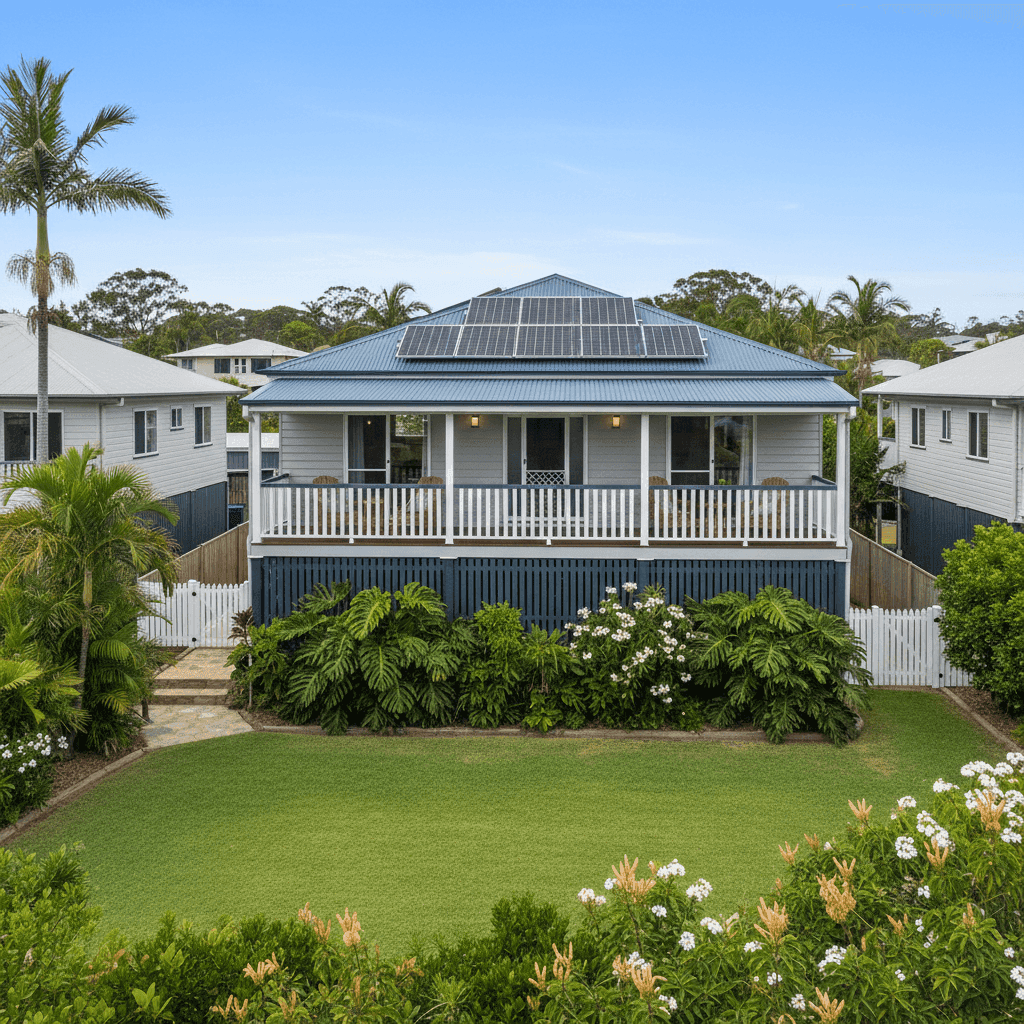
Innes Park is a coastal suburb sitting just south of Bundaberg in Queensland's Wide Bay region — a relaxed beachside community that attracts families and sea-changers alike. Like many Queensland suburbs, it comes with its own unique insurance considerations, from elevated construction styles to the broader coastal environment. This article breaks down a real building insurance quote for a four-bedroom, free-standing home in Innes Park, and puts the numbers in context so you can make a more informed decision about your own cover.
---
Is This Quote Fair?
The quote in question comes in at $2,331 per year (or $236 per month) for building-only cover on a four-bedroom, three-bathroom home with a sum insured of $639,000 and a building excess of $4,000.
Our price rating for this quote is FAIR — Around Average, and the data backs that up. Within the Innes Park suburb, the average annual premium sits at $3,235 and the median at $3,013. That means this quote is tracking noticeably below both the average and the median for the area — a solid result for the homeowner.
It's worth noting that the 25th percentile for Innes Park premiums is $2,027 per year, meaning roughly a quarter of comparable quotes come in cheaper. The 75th percentile sits at $3,809, so this quote is well within the middle range — closer to the cheaper end, in fact. For a property of this size and construction type, landing below the suburb median is a reasonable outcome.
The "Fair" rating reflects that there's still room to potentially find a better deal, but this quote is by no means overpriced relative to what others in the area are paying.
---
How Innes Park Compares
To put this quote in broader perspective, here's how Innes Park stacks up against Queensland state averages and national benchmarks:
| Benchmark | Average Premium | Median Premium |
|---|---|---|
| Innes Park (4670) | $3,235/yr | $3,013/yr |
| Queensland | $4,547/yr | $3,931/yr |
| National | $2,965/yr | $2,716/yr |
A few things stand out here. First, Queensland premiums are substantially higher than the national average — the state average of $4,547 is more than $1,500 above the national figure of $2,965. This reflects the elevated risk profile of Queensland properties generally, including exposure to severe weather events, flooding, and storm damage across many parts of the state.
Innes Park itself sits below the Queensland state average, which is encouraging. The suburb median of $3,013 is also slightly above the national median of $2,716, which is consistent with the coastal Queensland context. The quote analysed here — at $2,331 — comes in below both the national average and the national median, which is a genuinely competitive result.
Based on 72 quotes sampled for this suburb, there's a reasonable spread of pricing, suggesting that shopping around in Innes Park can make a meaningful difference to what you end up paying.
---
Property Features That Affect Your Premium
Several characteristics of this property have a direct bearing on its insurance premium — some working in the homeowner's favour, others adding complexity.
Hardiplank/Hardiflex external walls are a fibre cement cladding product that is generally well-regarded by insurers. It's durable, resistant to rot and termites, and handles Queensland's humid coastal climate reasonably well. This type of cladding is typically viewed more favourably than timber weatherboard, which can be a plus for premium pricing.
Steel/Colorbond roofing is another positive. Colorbond is one of the most common and trusted roofing materials in Australia, particularly in Queensland. It performs well in high-wind events and is resistant to corrosion — both relevant factors in a coastal environment like Innes Park.
Elevated construction (at least 1 metre) is a classic Queensland building feature, often associated with the traditional Queenslander style. Elevation can help reduce flood and storm surge risk by keeping the living areas above ground level, which some insurers factor into their risk assessments. It can also improve airflow and reduce moisture-related issues.
Stumps foundation aligns with the elevated construction — this is the traditional subfloor system used in raised Queensland homes. While it requires periodic maintenance (checking for deterioration or pest damage), it's a well-understood construction type for local insurers.
Solar panels are present on this property. While solar systems add value to a home, they can also add a small amount of complexity to insurance — it's important to confirm that your policy covers the panels as part of the building sum insured, and that the coverage amount reflects their replacement cost.
Vinyl flooring and standard fittings quality suggest a functional, no-frills interior fit-out. This keeps the rebuild cost estimate more straightforward and helps avoid the premium uplift that can come with high-end finishes or custom fixtures.
No pool and no ducted climate control also simplify the risk profile. Pools and complex HVAC systems can add to both the sum insured and the likelihood of certain types of claims.
At 214 square metres and built in 2010, this is a relatively modern, mid-sized home — new enough to benefit from contemporary building standards but not so new as to carry the premium associated with brand-new construction costs.
---
Tips for Homeowners in Innes Park
1. Review your sum insured regularly. With a building sum insured of $639,000 on a 214 sqm home, it's worth periodically checking whether that figure keeps pace with rising construction costs. Building costs in Queensland have increased significantly in recent years, and being underinsured at claim time can leave you significantly out of pocket.
2. Confirm solar panel coverage. If your solar system isn't explicitly listed in your policy schedule, ask your insurer whether it's included under the building sum insured. Some policies cover it automatically; others may require a specific endorsement or a higher sum insured.
3. Maintain your stumps and subfloor. Elevated homes on stumps require periodic inspection — particularly for timber stumps, which can be susceptible to rot or termite activity over time. Keeping on top of maintenance not only protects your home structurally but can also support a smoother claims process if issues arise.
4. Compare quotes before renewal. The 72-quote sample for Innes Park shows a wide spread between the 25th percentile ($2,027) and the 75th percentile ($3,809). That's a difference of nearly $1,800 per year for broadly similar properties. Shopping around at renewal time — rather than simply accepting an automatic rollover — can lead to meaningful savings.
---
Compare Your Home Insurance at CoverClub
Whether you're a long-time Innes Park local or new to the area, it pays to know what you're actually paying for — and whether you could be paying less. At CoverClub, we help Australian homeowners compare building and contents insurance quotes quickly and easily, with suburb-level data to put your premium in context. Get a quote today and see how your current cover stacks up.