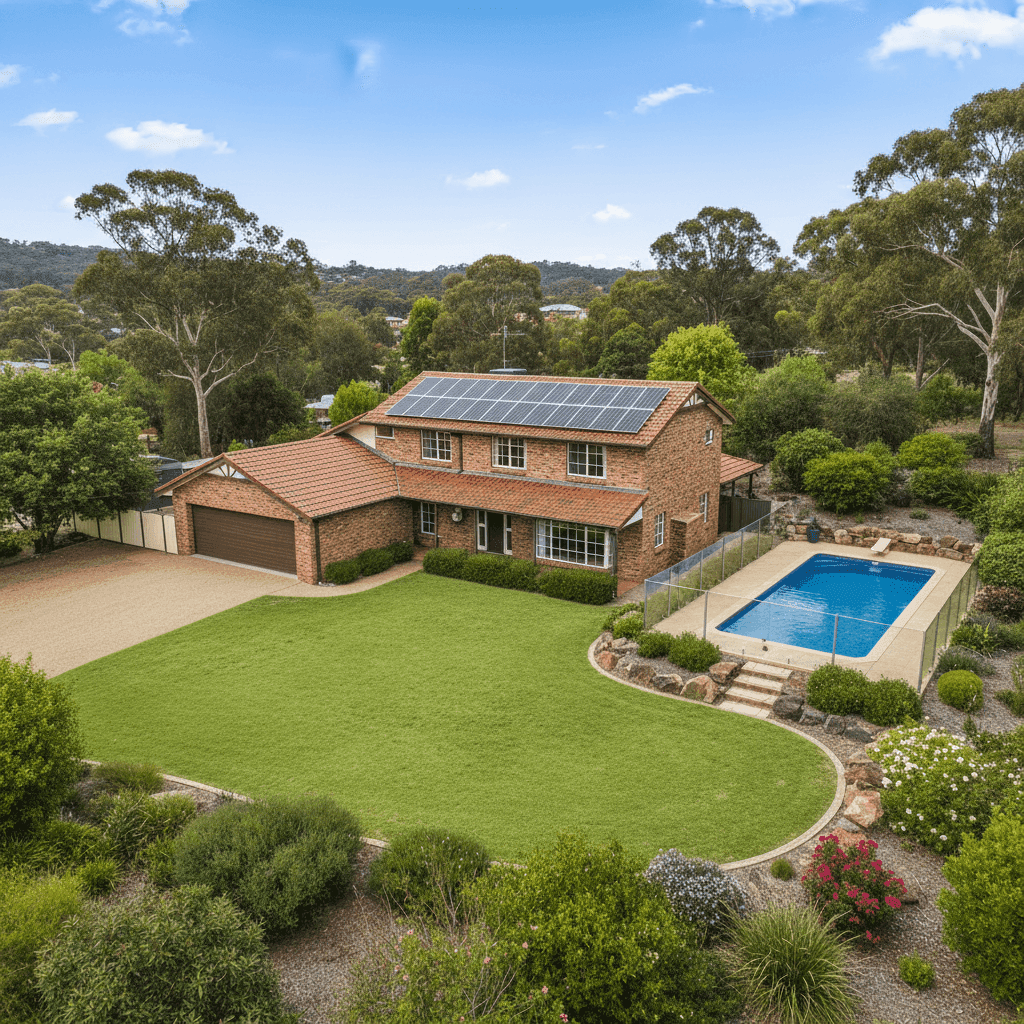
Nestled in the Adelaide Hills, Ironbank (SA 5153) is a quiet semi-rural suburb known for its leafy surrounds, acreage properties, and relaxed lifestyle. It's also a suburb where home insurance can carry a meaningful price tag — and understanding why is the first step to making sure you're getting value for money. This article breaks down a real home and contents insurance quote for a four-bedroom, free-standing home in Ironbank, comparing it against South Australian and national benchmarks to help you decide whether the premium stacks up.
---
Is This Quote Fair?
The quote in question comes in at $4,541 per year (or $448/month) for combined home and contents cover, with a building sum insured of $1,191,000 and contents valued at $50,000. CoverClub's pricing engine rates this as Expensive — Above Average.
To put that in perspective: the average home insurance premium across South Australia sits at $1,933 per year, with a state median of $1,787. Nationally, the average is $2,965, with a median of $2,716. On the surface, $4,541 looks steep — but context matters enormously here.
A building sum insured of $1,191,000 is well above what you'd find on a standard suburban policy, and the property itself has several features that legitimately push premiums higher (more on those shortly). That said, "above average" is still a signal worth taking seriously. It's worth shopping around to confirm whether this is truly the best available rate for this risk profile.
---
How Ironbank Compares
While there isn't enough suburb-level data to produce a reliable Ironbank-specific average, we can look at the broader SA insurance landscape and the Local Government Area (LGA) data for context.
| Benchmark | Annual Premium |
|---|---|
| This quote | $4,541 |
| LGA (Alexandrina) average | $7,391 |
| SA state average | $1,933 |
| SA state median | $1,787 |
| National average | $2,965 |
| National median | $2,716 |
One figure stands out immediately: the Alexandrina LGA average of $7,391 per year. That's significantly higher than both the state and national averages, which tells us that insurers price properties in this region as higher risk — likely due to a combination of bushfire exposure, the rural-urban interface, and the higher rebuild costs associated with larger, older homes in the Hills.
Against that LGA backdrop, this quote of $4,541 actually looks more competitive. It's well below the LGA average, suggesting this particular property may benefit from some favourable risk factors. You can explore suburb-level stats for Ironbank here as more data becomes available.
For a broader picture of how Australian home insurance premiums are tracking, visit our national stats page.
---
Property Features That Affect Your Premium
Every property is different, and insurers weigh up dozens of variables when calculating your premium. Here's how the key features of this particular home influence the price:
Double Brick Walls & Tiled Roof
Double brick construction is generally viewed favourably by insurers — it's durable, fire-resistant, and holds up well over time. A tiled roof similarly signals longevity and low maintenance risk. These are premium-stabilising features that may help keep costs lower than comparable homes with timber frames or metal cladding.
Built in 1985
At roughly 40 years old, this home sits in a bracket where insurers start to factor in the age of plumbing, electrical systems, and structural components. Older homes can carry higher risk of water damage from ageing pipes or electrical faults — something worth keeping in mind when reviewing your policy inclusions.
Slab Foundation & Tiled Flooring
A concrete slab foundation is standard for the era and generally considered stable. Tiled flooring throughout reduces the risk of water damage claims compared to carpet or timber, which can be a minor positive from an underwriting perspective.
Above-Average Fittings Quality
The property is noted as having above-average fittings — think stone benchtops, quality appliances, and premium fixtures. This directly increases the cost to rebuild or repair, which flows through to a higher sum insured and, in turn, a higher premium. It's important that your sum insured accurately reflects replacement cost, not market value.
Swimming Pool
Pools add liability exposure and increase the overall insured value of the property. Most insurers include pool cover under the building policy, but it's worth checking your PDS to understand exactly what's covered — including fencing compliance requirements.
Solar Panels
Solar panels are increasingly common in the Adelaide Hills, and most standard home policies now include them under building cover. However, coverage for damage to the panels themselves (e.g., hail, storm) and any associated inverter equipment can vary. Confirm these are explicitly listed in your policy.
Ducted Climate Control
Ducted systems are a significant fixed asset and are typically covered under the building sum insured. Given the cost of replacement, make sure your building sum insured accounts for this system — it's easy to underinsure when these items aren't top of mind.
No Cyclone Risk
Ironbank is not in a cyclone-risk zone, which removes one of the more significant premium loading factors that affect properties in northern Australia. This is a meaningful saving compared to equivalent homes in Queensland or the Northern Territory.
---
Tips for Homeowners in Ironbank
1. Review Your Bushfire Risk Rating
The Adelaide Hills is one of South Australia's most bushfire-prone regions. Check whether your property carries a Bushfire Attack Level (BAL) rating and confirm your policy covers bushfire damage without exclusions or sub-limits. Some insurers apply loadings or restrictions in high-BAL areas — always read the fine print.
2. Don't Underinsure — But Don't Overinsure Either
With a building sum insured of $1,191,000, it's critical this figure reflects the actual cost to rebuild — not the market value of the land and property combined. Use a quantity surveyor or your insurer's calculator to validate this number annually, especially given rising construction costs across SA.
3. Consider a Higher Excess to Reduce Your Premium
This quote carries a $3,000 building excess and a $600 contents excess. If you have the financial capacity to absorb a larger out-of-pocket cost in the event of a claim, increasing your excess further could meaningfully reduce your annual premium. Run the numbers — even a modest increase can add up over several years.
4. Compare Quotes Before Renewal
Given this quote is rated as above average in price, it's well worth comparing alternatives before your renewal date. Insurers price risk differently, and a policy that suits one property may not be the best fit for another. Use CoverClub to benchmark your options quickly and without the hassle.
---
Ready to Compare?
Whether you're a new homeowner in the Adelaide Hills or simply reviewing your existing cover, CoverClub makes it easy to compare home and contents insurance quotes in one place. Don't pay more than you need to — get a quote today at CoverClub and see how your current premium stacks up.