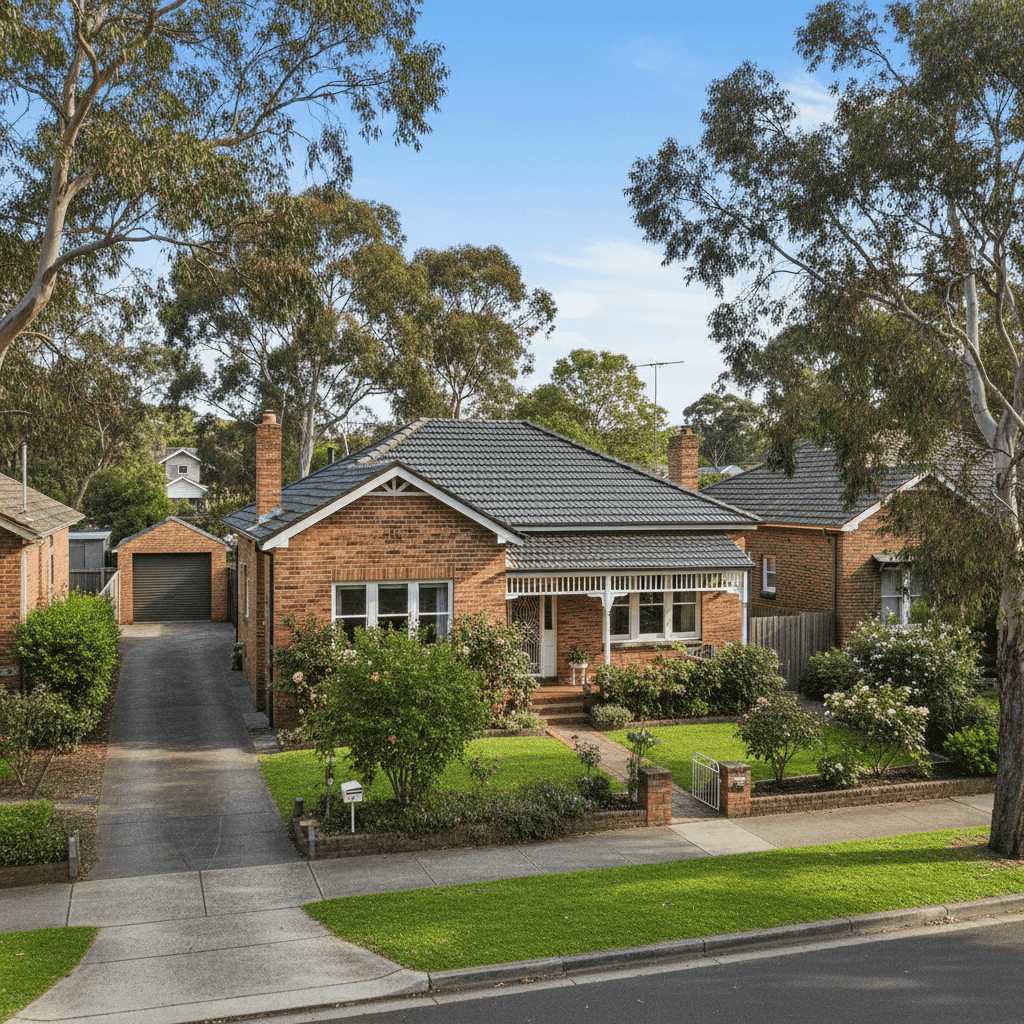
Ivanhoe East is one of Melbourne's most sought-after inner-north suburbs — a leafy, character-filled pocket of Victoria known for its period homes, tree-lined streets, and proximity to the Yarra River. If you own a free standing home here, understanding what you should be paying for home and contents insurance is an important part of managing your household finances. This article breaks down a real quote for a 3-bedroom, 2-bathroom brick veneer home in Ivanhoe East (postcode 3079) and puts it in context against local, state, and national benchmarks.
---
Is This Quote Fair?
The quote in question comes in at $3,508 per year (or $336/month) for combined home and contents cover, with a building sum insured of $1,203,000 and contents valued at $482,000. Both the building and contents carry a $500 excess.
Our price rating for this quote is FAIR — Around Average, and the data backs that up. The suburb median premium for Ivanhoe East sits at $3,519 per year, meaning this quote lands almost exactly on the midpoint of what locals are paying. It also falls comfortably within the middle of the market — between the 25th percentile ($2,880/yr) and the 75th percentile ($4,297/yr).
In plain terms: this isn't a bargain, but it's not an overpriced outlier either. The homeowner is paying roughly what their neighbours are paying, which is a reasonable starting point — though there's always room to do better.
---
How Ivanhoe East Compares
To properly judge whether $3,508 is competitive, it helps to zoom out and look at the broader picture. Here's how this quote stacks up across different geographic benchmarks:
| Benchmark | Average Premium | Median Premium |
|---|---|---|
| Ivanhoe East (3079) | $3,830/yr | $3,519/yr |
| Victoria (VIC) | $3,000/yr | $2,718/yr |
| Australia (National) | $5,347/yr | $2,764/yr |
| Banyule LGA | $2,085/yr | — |
A few things stand out here. First, Ivanhoe East premiums run notably higher than the broader Victorian state average of $3,000/yr. This is consistent with the suburb's higher property values and the correspondingly higher sums insured that come with them — insuring a home for $1.2 million naturally costs more than insuring one for $600,000.
Second, the national average of $5,347/yr is significantly elevated compared to the median of $2,764/yr, which tells us the national average is being pulled upward by high-risk areas — think cyclone-prone parts of Queensland and Northern Australia. Since Ivanhoe East carries no cyclone risk, the national average isn't a particularly meaningful comparison here.
Perhaps the most interesting figure is the Banyule LGA average of just $2,085/yr. This is considerably lower than the Ivanhoe East suburb average, suggesting that other parts of Banyule — which includes suburbs like Heidelberg, Rosanna, and Greensborough — tend to attract lower premiums. Ivanhoe East's premium positioning likely reflects its higher-value properties and rebuilding costs.
You can explore more localised data on the Ivanhoe East suburb stats page.
---
Property Features That Affect Your Premium
Every home is different, and insurers price risk based on a range of property-specific factors. Here's how the key features of this particular home influence its premium:
Brick Veneer Walls Brick veneer is one of the most common external wall types in Melbourne's middle-ring suburbs, and it's generally viewed favourably by insurers. It offers good fire resistance and structural durability, which can help moderate premiums compared to weatherboard or lightweight cladding.
Tiled Roof A tiled roof — whether terracotta or concrete — is considered a relatively low-risk roofing material. Tiles are durable, fire-resistant, and long-lasting, which insurers tend to reward with more competitive pricing compared to older Colorbond or fibrous cement roofing.
Stump Foundation (1955 Construction) This home was built in 1955, which is typical of Ivanhoe East's housing stock. Older homes on stump foundations can attract slightly higher premiums due to the potential for subfloor movement, timber decay, or the need for restumping over time. Insurers may factor in the age of the structure and the complexity of repairs or rebuilding.
Timber and Laminate Flooring Timber floors are a premium feature in period homes, but they also carry a higher replacement cost compared to tiles or carpet. This contributes to the overall contents and building valuation — and by extension, the premium.
Ducted Climate Control The presence of ducted heating and cooling adds to the building's replacement value. Systems like these are expensive to reinstall, and their inclusion in the sum insured is important to avoid being underinsured.
Building Size: 139 sqm At 139 square metres, this is a modest but well-appointed home. The sum insured of $1,203,000 reflects the high cost of rebuilding in Melbourne's inner suburbs, where labour, materials, and site access all contribute to elevated construction costs.
---
Tips for Homeowners in Ivanhoe East
1. Review your sum insured regularly Construction costs in Melbourne have risen sharply in recent years. If your building sum insured hasn't been updated lately, you may be underinsured — meaning a total loss payout might not cover a full rebuild. Use a building cost calculator or speak to a quantity surveyor to sense-check your figure annually.
2. Consider your excess strategically Both the building and contents excess on this policy are set at $500 — a standard starting point. Opting for a higher voluntary excess (say, $1,000 or $2,000) can meaningfully reduce your annual premium if you're comfortable covering smaller claims out of pocket.
3. Don't overlook contents valuation $482,000 in contents cover is substantial. It's worth doing a proper home inventory to make sure this figure is accurate — both over-insuring and under-insuring have real financial consequences. Pay particular attention to high-value items like jewellery, art, electronics, and musical instruments, which may need to be listed separately.
4. Compare quotes at renewal time The insurance market is competitive, and loyalty doesn't always pay. Even if your current quote is rated "Fair," there may be providers offering equivalent cover at a better price. Shopping around at renewal — or even mid-policy — can yield meaningful savings.
---
Compare Your Options with CoverClub
Whether you're reviewing your existing policy or shopping for cover on a new home, CoverClub makes it easy to see how your quote stacks up. Get a home insurance quote today and compare your options side by side — so you can make a confident, informed decision about protecting one of your most valuable assets.