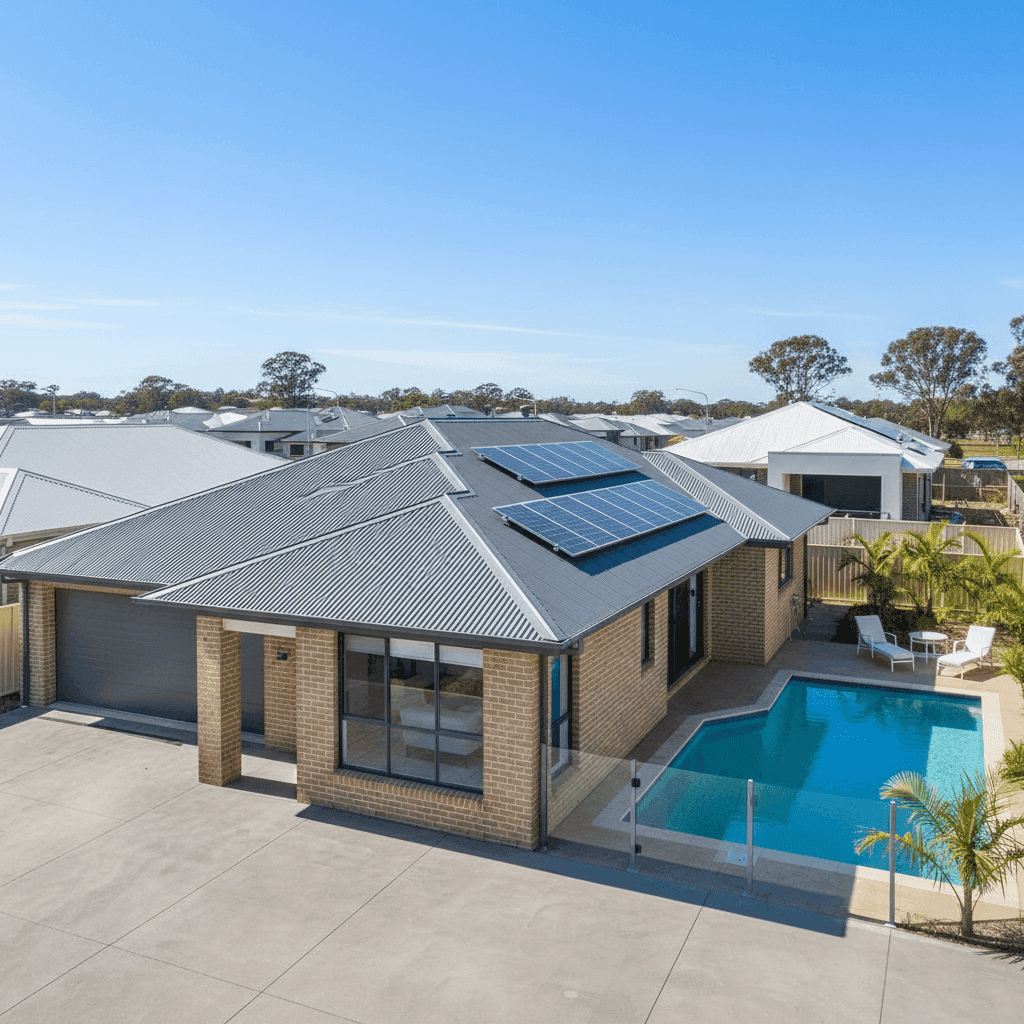
Jacobs Well is a quiet coastal community on the southern Gold Coast, known for its waterways, relaxed lifestyle, and proximity to Moreton Bay. It's also an area where home insurance premiums can vary enormously — making it all the more important to understand exactly what you're paying and why. This article breaks down a real home and contents insurance quote for a four-bedroom, two-bathroom free standing home in Jacobs Well (postcode 4208), and puts the numbers in context so you can make an informed decision.
---
Is This Quote Fair?
The quote in question comes in at $4,032 per year (or $386 per month), covering a building sum insured of $917,000 and contents valued at $116,000. Both the building and contents excess are set at $1,000.
Our price rating for this quote is FAIR — Around Average, which is a reasonable outcome for a property of this size and specification in the Jacobs Well area. It sits comfortably above the suburb's 25th percentile ($3,752/yr), meaning roughly a quarter of comparable quotes come in cheaper — but it falls well below the suburb median of $5,144/yr and is a long way from the suburb average of $20,858/yr, which is heavily skewed by high-risk or high-value outliers.
In practical terms, this homeowner is paying less than the typical Jacobs Well policyholder, while still securing a solid level of cover for a well-appointed modern home. That's a reasonable position to be in, though there's always room to explore whether a better price is available elsewhere.
---
How Jacobs Well Compares
To put this quote in perspective, here's how it stacks up across different benchmarks:
| Benchmark | Annual Premium |
|---|---|
| This Quote | $4,032 |
| Jacobs Well 25th Percentile | $3,752 |
| Jacobs Well Median | $5,144 |
| Jacobs Well Average | $20,858 |
| Jacobs Well 75th Percentile | $10,869 |
| Gold Coast LGA Average | $8,161 |
| QLD State Average | $9,129 |
| QLD State Median | $3,903 |
| National Average | $5,347 |
| National Median | $2,764 |
(Based on 81 quotes sampled for the Jacobs Well area.)
A few things stand out here. First, the gap between the suburb average ($20,858) and the median ($5,144) is striking — a sign that a small number of very expensive policies are pulling the average up significantly. This is not uncommon in coastal Queensland suburbs, where flood-prone or waterfront properties can attract eye-watering premiums.
Second, this quote is actually below both the QLD state average of $9,129 and the national average of $5,347, which is encouraging. Queensland homeowners typically pay more than their interstate counterparts due to the state's elevated exposure to natural hazards including cyclones, flooding, and severe storms.
You can explore the full breakdown of insurance costs for Jacobs Well and surrounding areas on the Jacobs Well suburb stats page.
---
Property Features That Affect Your Premium
Every property is different, and insurers weigh up a range of characteristics when calculating your premium. Here's how the features of this particular home are likely to influence its pricing:
Brick Veneer Walls & Colorbond Roof Brick veneer is generally viewed favourably by insurers — it's durable, fire-resistant, and holds up well in storms. Paired with a steel Colorbond roof, this home has a construction profile that tends to attract more competitive premiums than, say, weatherboard cladding or older tile roofs prone to cracking.
Concrete Slab Foundation Slab-on-ground construction is considered low-risk from an insurance perspective. It eliminates the underfloor space that can be vulnerable to moisture, pests, and storm surge — a meaningful factor in a coastal area like Jacobs Well.
Built in 2021 A relatively new home is a significant advantage when it comes to insurance. Modern builds must comply with current Australian building codes, which include improved standards for wind resistance, waterproofing, and structural integrity. Insurers typically reward newer construction with lower premiums.
Above Average Fittings The quality of internal fittings — think stone benchtops, premium appliances, and high-end fixtures — directly influences the building sum insured and, by extension, the premium. Above average fittings mean higher replacement costs, which is reflected in the $917,000 building sum insured for a 214 sqm home.
Swimming Pool Pools add liability exposure and increase the overall replacement value of the property, which can nudge premiums upward. Ensuring your policy explicitly covers pool infrastructure (including pumps, fencing, and surrounds) is worth confirming with your insurer.
Solar Panels Solar systems are a common feature on modern Queensland homes, but they're not always automatically covered under a standard building policy. It's essential to confirm that your solar panels — including inverters and mounting hardware — are included in your sum insured.
Ducted Climate Control Ducted air conditioning is a significant fixed asset and contributes to the overall building replacement value. Like solar panels, it's worth verifying that your policy covers the full system, including ductwork within the roof cavity.
No Cyclone Risk Jacobs Well falls outside Queensland's designated cyclone risk zone, which is a meaningful cost advantage. Properties further north — particularly those above the Tropic of Capricorn — can face substantial cyclone-related premium loadings. This property avoids that exposure entirely.
---
Tips for Homeowners in Jacobs Well
1. Review your sum insured regularly Construction costs have risen sharply in recent years. A building sum insured set a few years ago may no longer reflect what it would actually cost to rebuild your home today. Use an independent building cost calculator or speak with a quantity surveyor to make sure you're not underinsured.
2. Confirm coverage for solar and pool assets As noted above, solar panels and pool equipment aren't always included as standard. Read your Product Disclosure Statement (PDS) carefully and contact your insurer if you're unsure — the cost of adding these to your policy is usually modest compared to the replacement cost if something goes wrong.
3. Compare quotes at renewal time Insurance loyalty rarely pays. Insurers often reserve their best pricing for new customers, meaning long-term policyholders can quietly drift into overpriced territory. Make it a habit to compare quotes at least once a year — even if you're happy with your current provider.
4. Consider your excess strategically Both the building and contents excess on this policy are set at $1,000. Opting for a higher excess (say, $2,000 or $2,500) can reduce your annual premium meaningfully, particularly if you have a solid emergency fund and are unlikely to make small claims. Conversely, a lower excess may be worth the extra cost if your property has features — like a pool — that carry a higher likelihood of incidental claims.
---
Ready to Compare?
Whether you're renewing your existing policy or shopping for cover on a new purchase, it pays to see what's available in the market before you commit. Get a home insurance quote at CoverClub and see how your premium stacks up against real data from Jacobs Well and across Queensland. It only takes a few minutes, and you might be surprised by what you find.