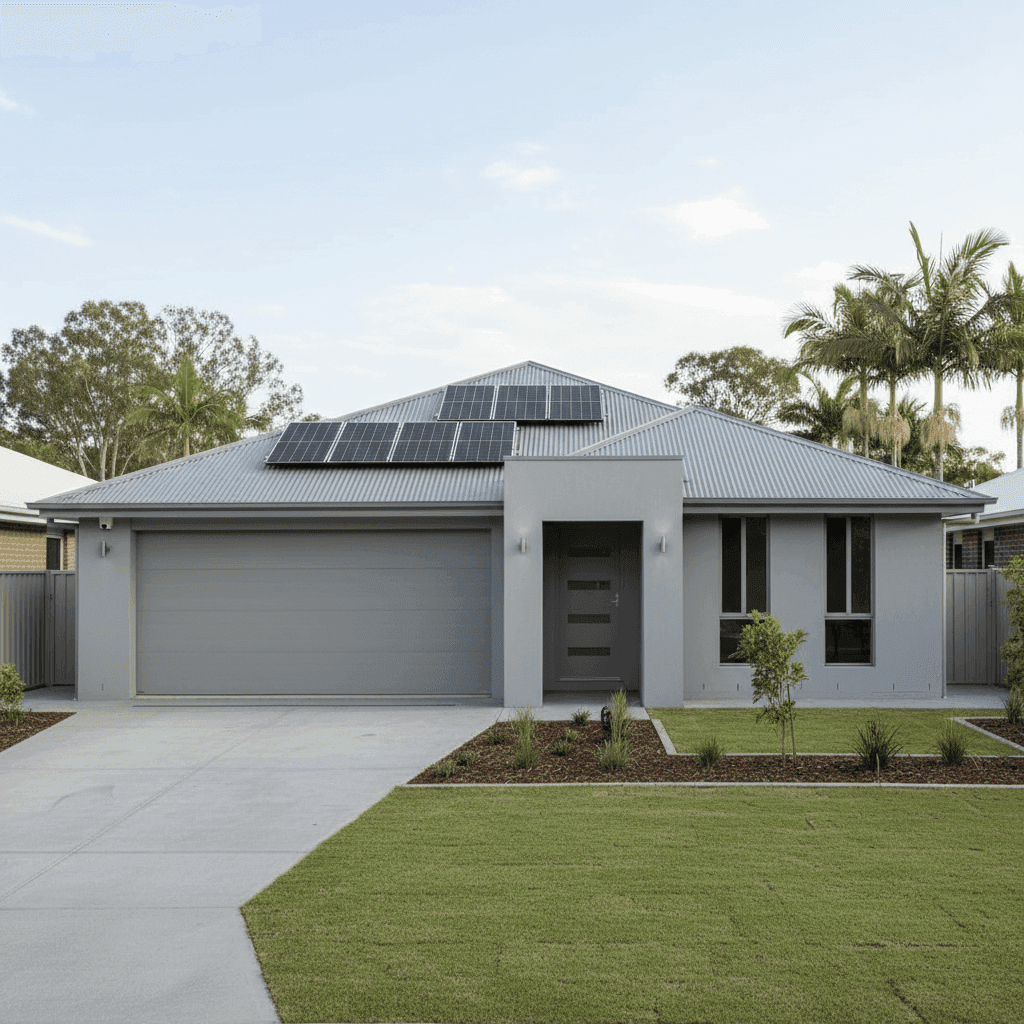
Jacobs Well is a quiet coastal community tucked along the western shore of Moreton Bay in South East Queensland — and like much of the Gold Coast region, home insurance here can vary enormously depending on your property's characteristics, location, and the level of cover you choose. This article breaks down a recent home and contents insurance quote for a four-bedroom, free-standing home in Jacobs Well (postcode 4208), helping you understand what's driving the premium and how it stacks up against local, state, and national benchmarks.
---
Is This Quote Fair?
The annual premium for this property came in at $3,765 per year (or roughly $354 per month), covering a building sum insured of $554,000 and contents valued at $245,000, each with a $1,000 excess. Our price rating for this quote is FAIR — Around Average.
That rating reflects a genuine middle-ground position. The premium isn't a bargain, but it's far from alarming — particularly given the level of cover involved. A combined building and contents policy at these insured values is comprehensive protection, and the per-dollar cost of cover is reasonable when you consider the risk profile of the area and the quality of the home.
For homeowners wondering whether they're overpaying, the short answer here is: probably not. But there's always room to shop around, and even a "fair" quote can sometimes be beaten with the right insurer.
---
How Jacobs Well Compares
To put this quote in proper context, it helps to look at what other homeowners in the same postcode, state, and across Australia are actually paying. You can explore the full data on the Jacobs Well insurance stats page.
Jacobs Well (Postcode 4208)
Based on a sample of 81 quotes collected for this suburb:
| Metric | Premium |
|---|---|
| 25th Percentile | $3,752/yr |
| Median | $5,144/yr |
| 75th Percentile | $10,869/yr |
| Average | $20,858/yr |
At $3,765 per year, this quote sits almost exactly at the 25th percentile for the suburb — meaning roughly three-quarters of quotes in Jacobs Well are higher. The suburb average of $20,858 is dramatically inflated by high-end outliers (think waterfront properties, larger homes, or higher-risk builds), which is why the median of $5,144 is a more useful reference point. Against that median, this quote is 27% below, which is a solid outcome.
Queensland State Context
Across Queensland, the average home insurance premium sits at $9,129 per year, with a median of $3,903. This quote comes in just below the state median — a reasonable result for a Gold Coast LGA property, where the LGA average is $8,161 per year.
National Picture
Zooming out to the national average, Australians pay an average of $5,347/yr for home insurance, with a national median of $2,764. This quote is above the national median, which makes sense — Queensland properties, particularly in coastal and flood-adjacent areas, typically attract higher premiums than the national norm.
---
Property Features That Affect Your Premium
Several characteristics of this property will have influenced the quoted premium — some favourably, others less so.
Hebel External Walls
Hebel (autoclaved aerated concrete) is generally viewed positively by insurers. It's non-combustible, resistant to termites, and has solid thermal performance. Compared to weatherboard or fibre cement, Hebel-clad homes can attract slightly lower fire risk ratings, which may moderate premiums.
Steel / Colorbond Roof
Colorbond steel roofing is one of the most insurer-friendly roofing materials available in Australia. It's durable, resistant to ember attack, and holds up well in high winds — all factors that reduce the likelihood of a claim. This is a meaningful positive for the premium calculation.
Concrete Slab Foundation
A slab foundation is standard for modern Queensland builds and is generally considered low-risk by insurers. It eliminates the underfloor moisture and pest access issues sometimes associated with older elevated or timber-framed foundations.
Construction Year: 2020
A home built in 2020 is subject to modern Australian building codes, which include improved cyclone-resistance standards, better waterproofing, and updated electrical requirements. Newer homes are statistically less likely to generate claims, and insurers typically reflect this in pricing.
Solar Panels
Solar panels are increasingly common on Queensland rooftops, but they do add a layer of complexity for insurers. They increase the replacement value of the roof structure, can complicate repairs, and carry a small electrical fire risk. Most policies cover them under the building sum insured, so it's worth confirming your $554,000 building cover adequately accounts for the panels' replacement cost.
Above-Average Fittings
The above-average fittings quality noted for this property — think stone benchtops, quality appliances, and premium fixtures — will push the building sum insured higher than a comparable home with standard finishes. This is reflected in the $554,000 building value and is a key driver of the overall premium.
Ducted Climate Control
Ducted air conditioning is a significant asset but also a notable item for insurers. The system adds to the rebuild cost and, if damaged, can be expensive to replace. Ensuring it's properly included in your sum insured is important.
---
Tips for Homeowners in Jacobs Well
1. Review Your Sum Insured Annually
Construction costs in South East Queensland have risen sharply in recent years. A building sum insured set even two or three years ago may no longer reflect the true cost of rebuilding your home. Use an independent building cost calculator or speak with a quantity surveyor to validate your $554,000 figure — underinsurance is one of the most common and costly mistakes homeowners make.
2. Confirm Solar Panel Coverage
Check your policy documents to ensure your solar panel system is explicitly covered under your building insurance. Some policies include panels automatically; others require you to specify them. Given the cost of a quality solar system, this is a detail worth a five-minute phone call to your insurer.
3. Shop Around at Renewal Time
Even a "fair" premium can be improved with a bit of comparison shopping. Insurers reprice risk differently, and the market moves. Set a reminder to compare at least three quotes before renewing each year — a task that takes minutes on CoverClub but could save you hundreds.
4. Consider Your Excess Strategically
Both the building and contents excess on this policy are set at $1,000. Increasing your excess — say, to $2,000 — can meaningfully reduce your annual premium. If you have the financial buffer to absorb a larger out-of-pocket cost in the event of a claim, a higher excess is often a smart trade-off.
---
Compare Your Quote with CoverClub
Whether you're a first-time buyer in Jacobs Well or a long-term homeowner reviewing your renewal, it pays to know where your premium stands. CoverClub makes it easy to benchmark your quote against real data from your suburb, your state, and across Australia. Get a home insurance quote today and see how your premium compares — in minutes, not hours.