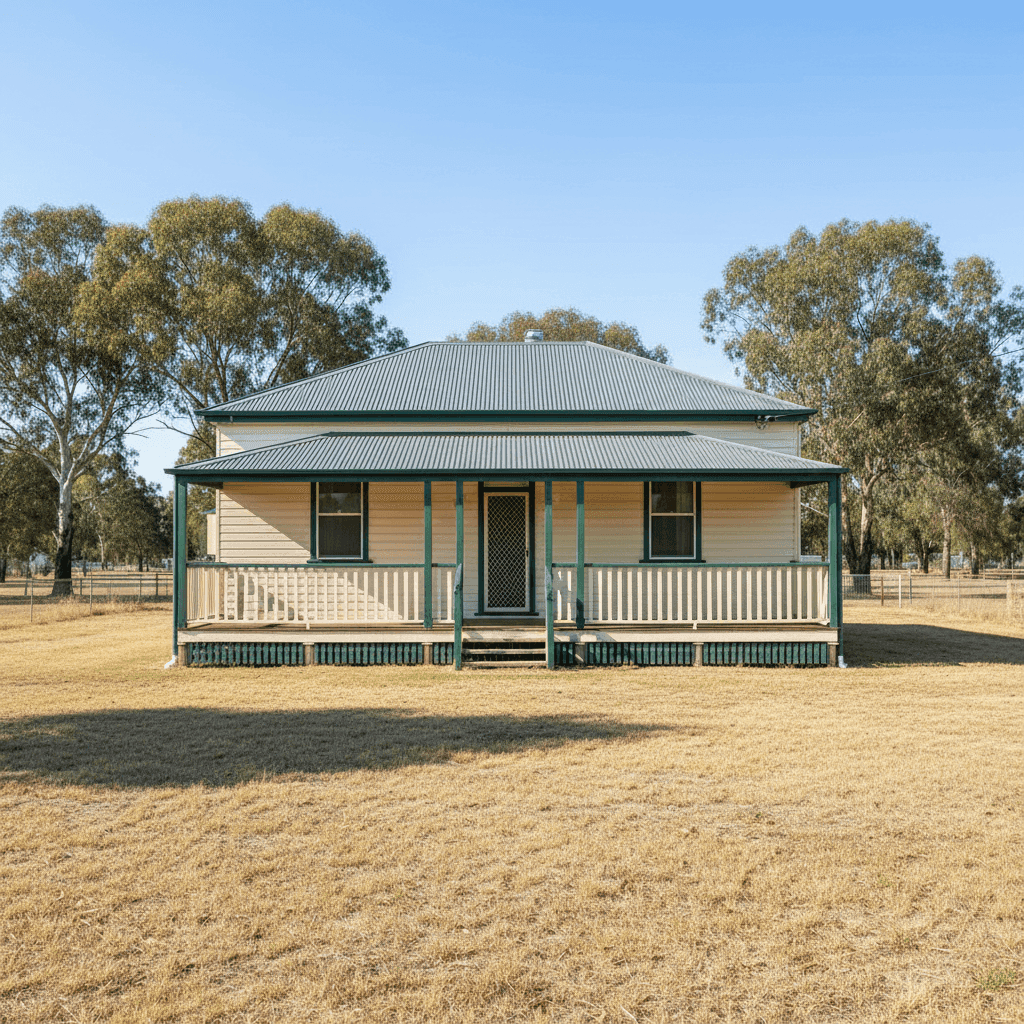
If you own a free standing home in Jandowae, QLD 4410, you're probably well aware that insurance costs in regional Queensland can vary enormously. This article breaks down a real home and contents insurance quote for a two-bedroom weatherboard property in the area, compares it against local, state, and national benchmarks, and offers practical tips to help you get the best value cover.
---
Is This Quote Fair?
The quote in question comes in at $3,181 per year (or roughly $311 per month) for combined home and contents cover. The building is insured for $492,000, with contents valued at $149,000. The building excess sits at $2,000, and the contents excess at $1,000.
Our price rating for this quote is FAIR – Around Average, and the data backs that up. At $3,181 per year, this premium sits comfortably between the suburb's 25th percentile ($2,900/yr) and the 75th percentile ($3,852/yr), placing it squarely in the middle of the range for comparable Jandowae properties. It also comes in noticeably below the suburb median of $3,466/yr — meaning this quote is actually performing better than half the quotes we've seen in the area.
In short: this isn't a bargain-basement price, but it's a reasonable, competitive result for the property type and location.
---
How Jandowae Compares
To put this quote in proper context, it helps to look at the broader picture. You can explore the full data on the Jandowae suburb stats page, the Queensland state overview, and national insurance benchmarks.
| Benchmark | Average Premium | Median Premium |
|---|---|---|
| Jandowae (suburb) | $5,469/yr | $3,466/yr |
| Queensland (state) | $9,129/yr | $3,903/yr |
| Australia (national) | $5,347/yr | $2,764/yr |
| Western Downs (LGA) | $18,732/yr | — |
A few things stand out here. The LGA average for Western Downs is a striking $18,732/yr — one of the highest we've seen at a local government level. This figure is heavily skewed by outlier properties (think large rural holdings, high-value homesteads, or properties with significant flood or storm exposure), so it's not a reliable benchmark for a standard residential home. The suburb-level data is far more relevant for a property like this one.
What's particularly encouraging is that this quote of $3,181/yr sits well below both the Queensland state average ($9,129/yr) and the national average ($5,347/yr). Even when comparing medians — which strip out the influence of extreme outliers — this quote tracks closely to the suburb median and comes in below the state median of $3,903/yr. For a regional Queensland property with the characteristics described below, that's a solid result.
---
Property Features That Affect Your Premium
Several features of this property have a direct bearing on what insurers charge. Understanding them helps explain both the pricing and where risk sits.
Age and Construction (Built 1930, Weatherboard Walls)
This home was built in 1930, making it nearly a century old. Older homes often attract higher premiums because they can be more expensive to repair or rebuild to modern standards, and ageing materials may be more susceptible to damage. The weatherboard timber exterior is a common construction type in rural Queensland, but it carries a higher fire risk compared to brick or rendered masonry, which insurers factor into their pricing.
Elevated on Stumps
The home sits on stumps, elevated less than one metre. This classic Queensland construction style offers some natural protection against minor flooding and moisture ingress. It also allows for easier access to underfloor plumbing and wiring, which can reduce repair costs — a modest positive for insurers.
Steel/Colorbond Roof
A Colorbond steel roof is generally viewed favourably by insurers. It's durable, low-maintenance, and performs well in high-wind and storm conditions — all relevant considerations in regional QLD. Compared to older tile or fibrous cement roofing, Colorbond typically represents a lower risk profile.
Ducted Climate Control
The presence of ducted climate control adds to the building's replacement value and is factored into the sum insured. It's a meaningful inclusion in a regional Queensland home where summer temperatures regularly exceed 35°C.
No Pool, No Solar Panels
The absence of a swimming pool and solar panels simplifies the risk profile. Both can add complexity and cost to insurance — pools introduce liability considerations, while solar panels add to rebuilding costs and can complicate roofing claims.
Vinyl Flooring, Standard Fittings
Vinyl flooring and standard-quality fittings keep the rebuild cost estimate grounded. High-end finishes like stone benchtops, hardwood floors, or custom cabinetry can push sum insured figures — and therefore premiums — significantly higher.
---
Tips for Homeowners in Jandowae
1. Review Your Sum Insured Regularly
With a building insured for $492,000, it's worth checking this figure annually. Construction costs in regional QLD have risen considerably in recent years, and being underinsured at claim time can be a costly mistake. Use an independent building calculator or ask your insurer how they determine replacement value.
2. Consider a Higher Excess to Lower Your Premium
The current building excess is $2,000. If you have a financial buffer and are unlikely to make small claims, opting for a higher voluntary excess can meaningfully reduce your annual premium. Just make sure the saving is worth the out-of-pocket risk.
3. Maintain the Weatherboard Exterior
Timber weatherboard requires regular upkeep — painting, sealing, and checking for rot or pest damage. Insurers may scrutinise the condition of older timber homes at claim time, and poor maintenance could affect your payout. Keeping records of any repairs or treatments is a smart habit.
4. Compare Quotes at Renewal Time
Even a "fair" quote can be beaten. The insurance market shifts constantly, and loyalty doesn't always pay. Running a fresh comparison at renewal — especially given the wide spread of premiums seen in the Jandowae area — could save you hundreds of dollars a year.
---
Ready to Compare?
Whether you're reviewing your current policy or shopping for the first time, comparing quotes is the single most effective way to make sure you're not overpaying. Head to CoverClub to enter your property details and see how your current premium stacks up against the market in minutes.