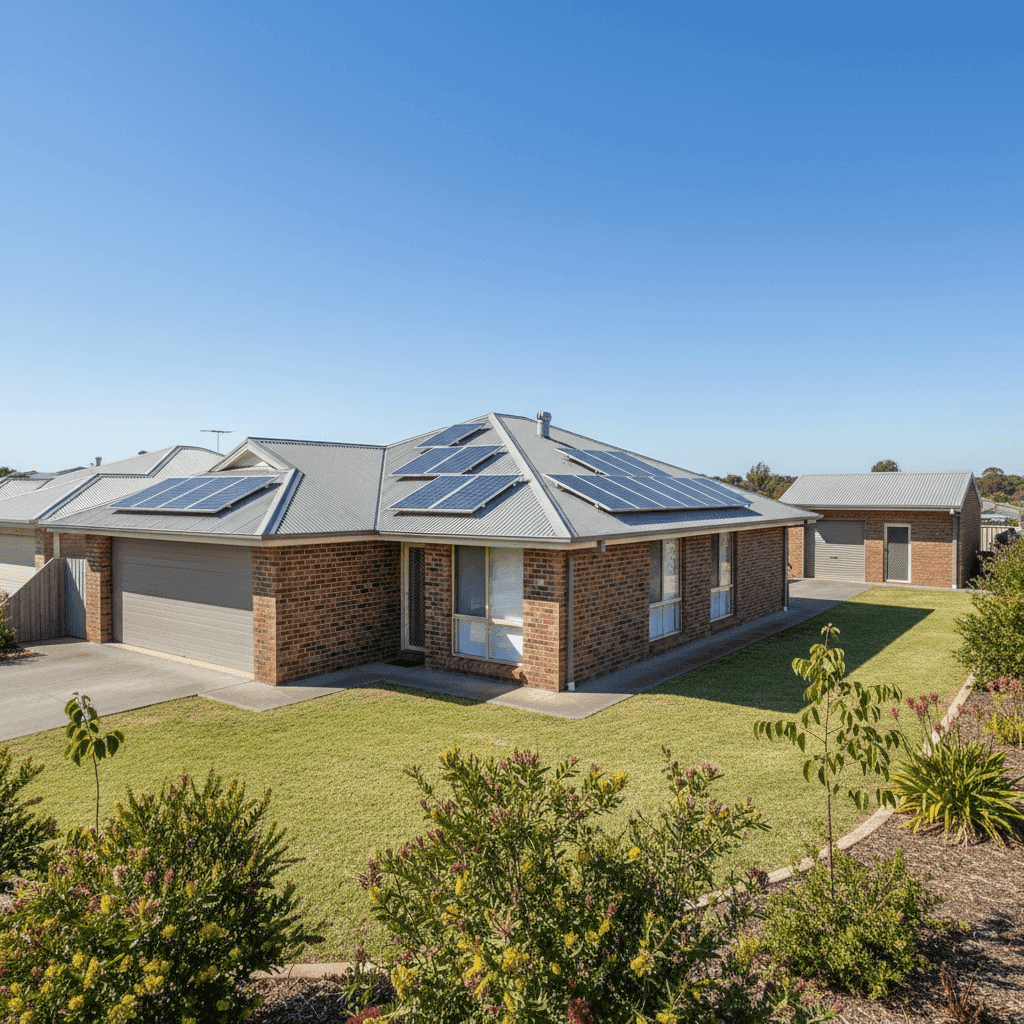
If you own a free standing home in Jerilderie, NSW 2716, you might be wondering whether your building insurance premium is reasonable — or whether you're leaving money on the table. This article breaks down a real building-only insurance quote for a two-bedroom, brick veneer home in Jerilderie, compares it against local, state, and national benchmarks, and offers practical tips to help you get the best value cover.
---
Is This Quote Fair?
The quote in question comes in at $1,929 per year (or $189/month) for building-only cover, with a sum insured of $423,000 and a building excess of $5,000.
Our price rating for this quote is FAIR — Around Average.
So what does that actually mean? Based on 32 quotes collected for the Jerilderie area, the suburb's median premium sits at $2,073/year. This quote lands below that median, which is a positive sign. It also falls between the 25th percentile ($1,566/yr) and the 75th percentile ($2,377/yr), placing it firmly in the middle of the pack for the local market.
In other words, this isn't a bargain-basement price, but it's also not an overpriced outlier. For a homeowner in Jerilderie, it represents a competitive — if not exceptional — result.
---
How Jerilderie Compares
One of the more striking findings here is just how much cheaper Jerilderie is compared to the broader market.
| Benchmark | Average Premium | Median Premium |
|---|---|---|
| Jerilderie (suburb) | $2,730/yr | $2,073/yr |
| Edward River LGA | $1,911/yr | — |
| NSW (state) | $3,801/yr | $3,410/yr |
| National | $2,965/yr | $2,716/yr |
Jerilderie homeowners are paying significantly less than the NSW state average of $3,801/year — a difference of over $1,800 annually compared to the state mean. Even against the national average of $2,965/year, Jerilderie sits well below the mark.
This is largely attributable to the region's risk profile. Jerilderie is located in the Riverina, away from coastal flood plains, bushfire-prone hinterlands, and cyclone corridors. The Edward River LGA average of just $1,911/year further underscores how relatively affordable insurance can be in this part of rural NSW.
For this particular quote at $1,929/year, the homeowner is paying almost exactly in line with the LGA average — a solid outcome by any measure.
---
Property Features That Affect Your Premium
Several characteristics of this property influence the premium, both positively and negatively.
Brick Veneer Walls & Colorbond Roof
Brick veneer is one of the more insurer-friendly wall materials available. It's durable, fire-resistant, and widely understood by underwriters. Combined with a steel/Colorbond roof — which performs well in high-wind events and is resistant to ember attack — this construction profile generally attracts more competitive premiums than, say, weatherboard or fibrous cement cladding.
Slab Foundation
A concrete slab foundation is considered low-risk by most insurers. It's less susceptible to subsidence and termite damage than timber stumps, which can translate into modest premium savings.
Solar Panels
This property includes solar panels, which are typically covered under building insurance as a fixed structure. It's worth confirming with your insurer that the panels and their associated inverter and wiring are explicitly included in your sum insured. If they were installed after the original policy was taken out, they may need to be added as a specific item.
Granny Flat
The presence of a granny flat on the property is a meaningful factor. A secondary dwelling adds to the total replacement cost of the property, which is reflected in the sum insured. Homeowners should ensure the granny flat's structure is fully accounted for in the $423,000 building sum insured — underinsurance is a common and costly mistake.
Standard Fittings & Vinyl Flooring
Standard-quality fittings and vinyl flooring keep the replacement cost estimate grounded. High-end finishes like stone benchtops, hardwood floors, or imported tiles would push the sum insured — and therefore the premium — higher.
No Pool, No Ducted Climate Control, No Cyclone Risk
The absence of a pool removes a common liability and maintenance cost from the insurer's calculations. No ducted HVAC system means one less complex mechanical installation to cover. And being outside a designated cyclone risk zone is a significant advantage — cyclone-rated premiums in northern Australia can be several times higher.
---
Tips for Homeowners in Jerilderie
1. Review Your Sum Insured Annually
Construction costs across regional NSW have risen sharply in recent years. The $423,000 sum insured should reflect the full cost to rebuild your home — including the granny flat, solar installation, fencing, and any outbuildings — not just the market value of the land and structure. Use a building cost calculator or speak to a quantity surveyor if you're unsure.
2. Consider Your Excess Carefully
This quote carries a $5,000 building excess, which is on the higher end. A higher excess generally reduces your premium, but it also means a larger out-of-pocket expense if you ever need to make a claim. Make sure this figure is genuinely affordable for your household before locking it in.
3. Compare at Least Three Quotes
Even though this quote is rated as fair, the spread of premiums in Jerilderie — from $1,566/yr at the 25th percentile to $2,377/yr at the 75th percentile — shows there's real variation in the market. Shopping around could save you several hundred dollars a year for equivalent cover.
4. Bundle Where It Makes Sense
If you also need contents insurance, some insurers offer meaningful discounts when you bundle building and contents policies. Given this is currently a building-only policy, it's worth exploring whether a combined policy from the same insurer delivers better overall value.
---
Compare Your Own Quote
Curious how your own premium stacks up? CoverClub makes it easy to compare home insurance quotes from multiple Australian insurers in one place. Whether you're in Jerilderie or anywhere else across NSW, you can get a quote in minutes and see exactly where your premium sits relative to your neighbours. Don't settle for the first price you're offered — the data shows there's often significant room to save.