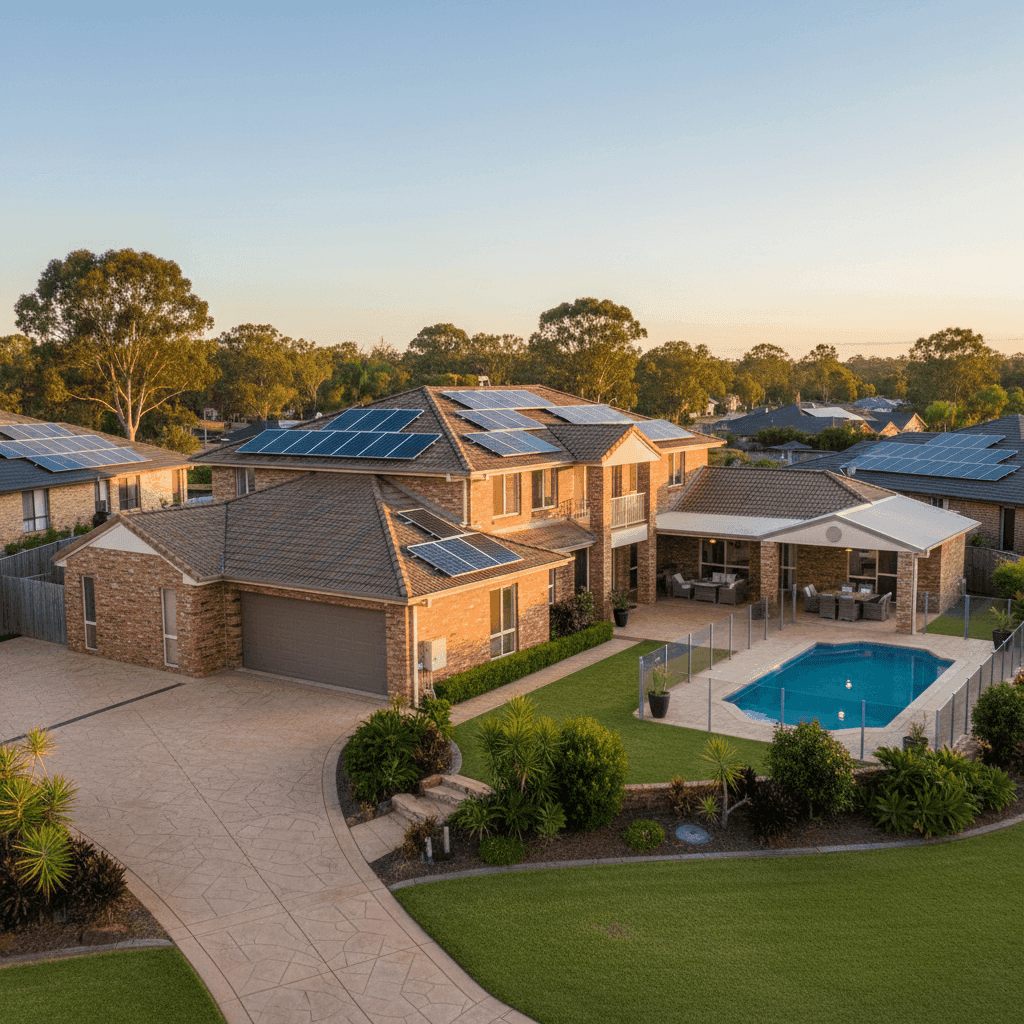
Jimboomba is a growing semi-rural suburb in Logan City, about 45 kilometres south of Brisbane. It's popular with families seeking larger blocks, quieter streets, and that classic Queensland lifestyle — but with size and space comes a more complex home insurance picture. This article breaks down a recent home and contents insurance quote for a six-bedroom free standing home in Jimboomba (QLD 4280), assessing whether the premium stacks up against local, state, and national benchmarks.
---
Is This Quote Fair?
The annual premium for this property came in at $7,817 per year (or $800/month), covering both building (sum insured: $1,378,000) and contents ($50,000). Our analysis rates this quote as Expensive — Above Average.
To put that in context: the average home and contents premium across Jimboomba sits at around $3,665 per year, with a median of $2,830. This quote is more than double the suburb median, which is a significant gap worth unpacking.
That said, it's important to note that this is not a typical Jimboomba property. At 354 square metres with six bedrooms, three bathrooms, a pool, solar panels, and ducted climate control, this is a large and well-appointed home. The building sum insured of $1,378,000 reflects the substantial replacement cost of a property this size — and insurers price accordingly. A higher sum insured directly increases the premium, as the insurer's potential liability is greater.
The building excess is set at $3,000, with a separate contents excess of $1,000. Higher excesses like these can sometimes help moderate premiums, but they also mean a larger out-of-pocket cost at claim time — something worth factoring into your overall value assessment.
---
How Jimboomba Compares
Here's how this quote sits relative to broader market data:
| Benchmark | Average Premium | Median Premium |
|---|---|---|
| Jimboomba (4280) | $3,665/yr | $2,830/yr |
| Logan LGA | $4,617/yr | — |
| Queensland | $9,129/yr | $3,903/yr |
| National | $5,347/yr | $2,764/yr |
(Based on [41 quotes in the Jimboomba area](https://coverclub.com.au/stats/QLD/4280/jimboomba). [View QLD state stats](https://coverclub.com.au/stats/QLD) or [national benchmarks](https://coverclub.com.au/stats/national).)
A few things stand out here. First, Queensland's state average of $9,129/yr is notably high — driven largely by cyclone-prone coastal and far-north Queensland properties that attract significant risk loadings. This quote of $7,817 actually sits below the QLD state average, which provides some reassurance that it isn't wildly out of step with what Queenslanders in larger homes are paying.
Second, Jimboomba's own suburb average of $3,665 is pulled up by larger, higher-value properties — just like this one. The 75th percentile for the suburb is $4,709, meaning roughly 25% of quotes in the area exceed that figure. Given the property's size and features, landing above the 75th percentile is not entirely surprising.
The national average of $5,347 also sits below this quote, though again, comparing a 354 sqm six-bedroom home to the national average (which includes apartments, townhouses, and modest homes) isn't an apples-to-apples exercise.
---
Property Features That Affect Your Premium
Several characteristics of this home have a meaningful influence on the final premium — both positively and negatively.
Size and sum insured At 354 square metres, this is a large home. The $1,378,000 building sum insured reflects the true cost of rebuilding a property of this scale with standard fittings, and it's the single biggest driver of the premium. Underinsuring to reduce costs is risky — if your sum insured doesn't cover full rebuild costs, you could face a significant shortfall at claim time.
Double brick construction Double brick walls are generally viewed favourably by insurers. They offer strong resistance to fire, wind, and general wear, which can help moderate risk assessments. Compared to timber-framed homes, double brick properties often attract more competitive premiums.
Tiled roof Terracotta or concrete tiles are considered durable and low-risk roofing materials in non-cyclone areas. Jimboomba falls outside the designated cyclone risk zone, so there's no cyclone premium loading applied here — a meaningful saving compared to properties in North Queensland.
Swimming pool Pools add value to a property but also increase insurer liability. Pool-related incidents, equipment damage, and surrounding structures (fencing, pumps, decking) all factor into the risk profile and can nudge premiums upward.
Solar panels Solar systems are a growing consideration for insurers. Panels add to the replacement value of the property and can be a source of claims if damaged by storms or hail. Ensuring your building sum insured accounts for the solar system's replacement cost is essential.
Ducted climate control Ducted air conditioning is a significant fixed asset. Like solar panels, it contributes to the overall rebuild cost and should be reflected in your sum insured to avoid being caught short.
Slab foundation and tiled flooring A concrete slab foundation is generally stable and low-risk. Tiled flooring throughout is durable and less susceptible to water damage than timber or carpet — both factors that can work in the homeowner's favour from a risk perspective.
---
Tips for Homeowners in Jimboomba
1. Review your sum insured annually Building costs in South East Queensland have risen sharply in recent years. The $1,378,000 sum insured on this property should be reviewed each year to ensure it reflects current construction costs — not what it would have cost to rebuild three or four years ago. Many insurers offer automatic indexation, but it's still worth checking.
2. Compare quotes — don't auto-renew The gap between the cheapest and most expensive quotes in Jimboomba is significant (25th percentile: $2,220 vs 75th percentile: $4,709). Loyalty doesn't always pay in insurance. Use a comparison tool like CoverClub to benchmark your renewal quote before accepting it.
3. Check your pool and solar are properly covered Make sure your policy explicitly covers your pool equipment and solar panel system. Some standard policies have sub-limits or exclusions for these items. Ask your insurer directly, or check the Product Disclosure Statement (PDS) carefully.
4. Consider your excess settings This policy carries a $3,000 building excess. While a higher excess typically reduces your premium, it also means you'll need to fund that amount before your insurer steps in. Make sure the excess level is one you could comfortably cover in the event of a claim — particularly for a property of this size where repair costs can escalate quickly.
---
Ready to Compare?
Whether you're reviewing an existing policy or shopping for cover on a new purchase, it pays to see what's available in the market. Get a home insurance quote at CoverClub and see how your premium stacks up against real data from Jimboomba and across Queensland. With transparent benchmarking and side-by-side comparisons, CoverClub makes it easier to find cover that's genuinely fair — not just familiar.