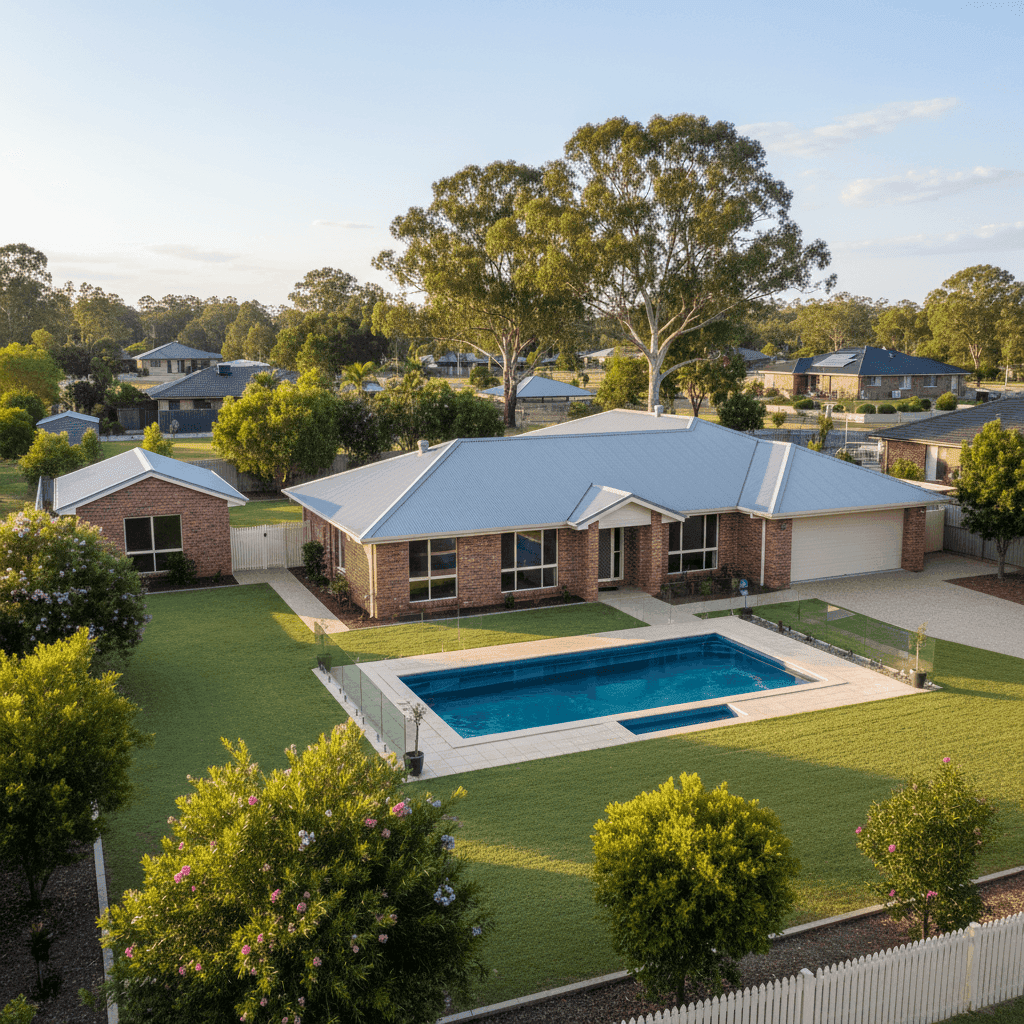
Jimboomba is a leafy, semi-rural suburb on the southern fringe of Greater Brisbane, popular with families looking for space without straying too far from the city. It's the kind of place where large blocks, established homes, and lifestyle features like pools and granny flats are the norm — and all of those things have a direct bearing on what you'll pay for home insurance. This article breaks down a real insurance quote for a six-bedroom free-standing home in Jimboomba (postcode 4280) and puts the numbers in context so you can judge whether you're getting a fair deal.
---
Is This Quote Fair?
The quote in question comes in at $5,945 per year (or $580/month) for combined home and contents cover, with a building sum insured of $1,899,000 and contents valued at $125,000. The building excess sits at $3,000 and the contents excess at $1,000.
Our price rating for this quote is Expensive — Above Average.
To understand why, it helps to look at the benchmarks. The suburb average for Jimboomba sits at just $3,013 per year, and the median is $3,117 — meaning this quote is nearly double what a typical Jimboomba homeowner pays. Even at the 75th percentile (the top quarter of quotes in the suburb), premiums reach $4,254 per year, which is still well below this figure.
That said, context matters enormously. This is not a typical Jimboomba property. At 411 square metres with six bedrooms, above-average fittings, a pool, ducted climate control, and a granny flat, the rebuild cost and replacement value are substantially higher than a standard three-or-four-bedroom home. A building sum insured of $1,899,000 is significant, and insurers price accordingly. So while the premium looks high relative to suburb averages, the property itself sits well outside the suburb's typical profile.
---
How Jimboomba Compares
Here's how the premium stacks up against broader benchmarks:
| Benchmark | Average Premium |
|---|---|
| Jimboomba (4280) average | $3,013/yr |
| Jimboomba (4280) median | $3,117/yr |
| Logan LGA average | $3,411/yr |
| Queensland average | $4,547/yr |
| Queensland median | $3,931/yr |
| National average | $2,965/yr |
| National median | $2,716/yr |
| This quote | $5,945/yr |
(Based on 53 quotes collected for the Jimboomba area.)
Interestingly, Queensland as a state carries notably higher premiums than the national average — a reflection of the elevated weather-related risks across much of the state, including cyclones, flooding, and severe storms. You can explore Jimboomba-specific insurance data, Queensland-wide statistics, and national benchmarks on CoverClub to dig deeper into the numbers.
Even against the Queensland state average of $4,547, this quote runs about 31% higher — though again, the property's size and features go a long way toward explaining the gap.
---
Property Features That Affect Your Premium
Several characteristics of this home push the premium above the suburb norm. Here's what insurers are likely factoring in:
Size and sum insured At 411 sqm, this is a large home by any measure. The building sum insured of $1,899,000 reflects the cost of rebuilding a property of this scale with above-average fittings — and insurers base your premium directly on that figure. A higher rebuild cost means a higher premium, full stop.
Construction: Brick veneer walls and Colorbond roof Brick veneer is generally well-regarded by insurers — it offers solid fire resistance and durability. A steel Colorbond roof is similarly viewed favourably: it's lightweight, resistant to ember attack, and holds up well in storms. These features likely work in the homeowner's favour and may be keeping the premium lower than it would be with, say, a timber-framed or tiled roof combination.
Slab foundation A concrete slab foundation is considered low-risk by most insurers. Unlike elevated or suspended floors, slabs offer stability and reduce exposure to certain water-related damage scenarios. This is a neutral-to-positive factor for pricing.
Swimming pool Pools add to the insurable value of a property and introduce liability considerations. They're a standard feature in Jimboomba, but they do contribute to a higher overall sum insured and can nudge premiums upward.
Granny flat The presence of a granny flat effectively adds a second dwelling to the policy. Whether it's used for family members or as a rental, it represents additional structure, fixtures, and liability exposure — all of which insurers account for in the premium.
Ducted climate control Ducted air conditioning systems are expensive to repair or replace and are included in the building sum insured. Above-average fittings throughout the home compound this effect, as insurers must account for the higher cost of like-for-like replacement.
No cyclone risk Jimboomba sits outside designated cyclone risk zones, which is a meaningful saving compared to properties in Far North Queensland. This likely keeps the premium lower than it would be for a comparable home further north.
---
Tips for Homeowners in Jimboomba
If you're looking to manage your home insurance costs without compromising on protection, here are some practical steps worth considering:
1. Review your sum insured carefully A building sum insured of $1,899,000 is substantial — make sure it accurately reflects the rebuild cost (not the market value) of your home. Overinsuring pushes premiums up unnecessarily, while underinsuring leaves you exposed. Use a building cost calculator or speak with a quantity surveyor to validate the figure.
2. Increase your excess strategically The building excess on this policy is $3,000. If you have the financial buffer to absorb a higher out-of-pocket cost in the event of a claim, opting for a higher excess can reduce your annual premium meaningfully. Just make sure the saving justifies the added risk.
3. Bundle home and contents — but compare the combined price This quote already bundles home and contents cover, which often attracts a discount. However, it's worth checking whether splitting the policies across different insurers might actually save money, particularly if your contents value is modest relative to the building.
4. Compare quotes annually Insurance premiums can shift significantly from year to year, and loyalty doesn't always pay. Running a fresh comparison at renewal time — especially for a property with this profile — is one of the simplest ways to avoid overpaying. Get a new quote through CoverClub to see what's available in the current market.
---
Ready to Compare?
Whether this quote looks right for your situation or you suspect there's a better deal out there, CoverClub makes it easy to compare home and contents insurance options across Australia. Start by entering your address and see how your premium stacks up against the suburb, state, and national benchmarks — all in one place.