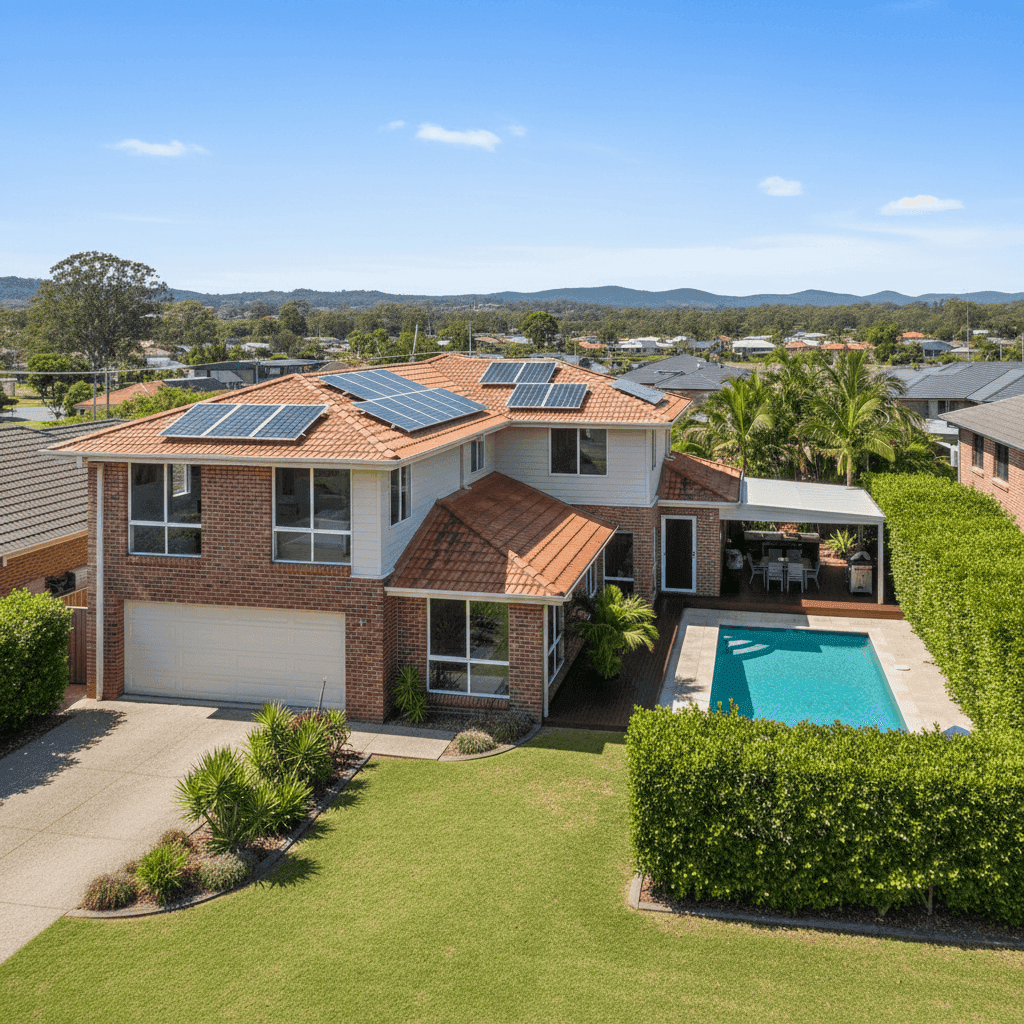
Jindalee is a well-established residential suburb in Brisbane's western corridor, sitting roughly 14 kilometres from the CBD along the Brisbane River. It's a popular choice for families, and its mix of older character homes and newer builds makes it an interesting suburb from a home insurance perspective. This article breaks down a real building insurance quote for a four-bedroom, free-standing home in Jindalee — and examines whether the price stacks up against local, state, and national benchmarks.
---
Is This Quote Fair?
The quote in question comes in at $1,994 per year (or $196 per month) for building-only cover on a brick veneer home with a sum insured of $682,000 and a $1,000 excess. CoverClub's pricing engine rates this as CHEAP — below average for the area.
That's genuinely good news for the homeowner. In a suburb where premiums can vary wildly (more on that below), landing a quote well under the local median is a meaningful saving. For context, the suburb median premium in Jindalee sits at $12,094 per year — meaning this quote is roughly 83% cheaper than what the typical Jindalee homeowner pays. Even against the 25th percentile (the cheapest quarter of quotes in the area, at $4,185/yr), this quote still comes in well under.
It's worth noting that the suburb average of $80,852 is dramatically skewed — likely by a small number of very high-risk or high-value properties in the dataset of 33 quotes. The median is a far more reliable indicator of what most locals pay, and even by that measure, $1,994 is an excellent result.
---
How Jindalee Compares
To put this quote in proper context, here's how Jindalee stacks up against broader benchmarks:
| Benchmark | Average Premium | Median Premium |
|---|---|---|
| Jindalee (4074) | $80,852/yr | $12,094/yr |
| Brisbane LGA | $16,277/yr | — |
| Queensland | $9,129/yr | $3,903/yr |
| National | $5,347/yr | $2,764/yr |
A few things stand out here. First, Jindalee's median premium of $12,094 is notably higher than both the Queensland state median of $3,903 and the national median of $2,764. This suggests that insurers price Jindalee properties at a premium — likely due to the suburb's proximity to the Brisbane River and associated flood risk, which can significantly inflate premiums for properties in lower-lying pockets.
Second, the Brisbane LGA average of $16,277 reflects the broad spread of risk across the city, from flood-prone riverside suburbs to elevated, low-risk areas. Jindalee's median sits below the LGA average, but still well above state and national norms.
For this particular property, the $1,994 quote is not only below the suburb median — it's also below the national median of $2,764. That's a standout result by any measure.
---
Property Features That Affect Your Premium
Several characteristics of this property likely contribute to its competitive premium:
Brick veneer construction is generally viewed favourably by insurers. It's durable, fire-resistant, and widely understood by underwriters — making it easier to price accurately and often resulting in lower premiums compared to timber-framed or clad homes.
Tiled roof is another positive. Concrete or terracotta tiles are considered a resilient roofing material in Queensland's climate, holding up well against hail and high winds. They're typically associated with lower premiums than colorbond or, particularly, older materials like fibrous cement sheeting.
Slab foundation is standard for homes of this era in Queensland and generally presents no elevated risk to insurers.
Construction year (2006) means the home was built to relatively modern Australian Standards, including updated building codes that improved structural resilience — a factor that can work in the homeowner's favour at assessment time.
Pool, solar panels, and ducted climate control are worth noting. These features add to the replacement value of the home and are correctly factored into the $682,000 sum insured. Underinsuring a home with these extras is a common mistake — if the sum insured doesn't reflect the full cost of rebuilding, including these installations, a claim could leave you significantly out of pocket.
No cyclone risk is a meaningful factor in Queensland, where properties in northern coastal regions can attract substantial cyclone loading on premiums. Being outside a designated cyclone risk zone keeps this property's premium profile more straightforward.
---
Tips for Homeowners in Jindalee
1. Check your flood risk status before renewing Jindalee has areas that experienced significant flooding during the 2011 and 2022 Brisbane floods. Your specific flood risk — based on your land's elevation and proximity to waterways — can have a dramatic effect on your premium. Use the Queensland Government's flood mapping tools and always disclose your address accurately when getting quotes.
2. Make sure your sum insured reflects today's rebuild costs Construction costs in south-east Queensland have risen sharply in recent years. A sum insured set a few years ago may no longer cover the full cost of rebuilding your home — especially with a pool, solar system, and ducted air conditioning to factor in. Review your sum insured annually and use a building cost calculator to sense-check the figure.
3. Compare quotes at renewal, not just at purchase The fact that this quote came in well below the suburb median is a reminder that premiums vary enormously between insurers. Loyalty doesn't always pay — many homeowners find their renewal premium creeps up each year while better deals are available elsewhere. Compare building insurance quotes at CoverClub to make sure you're not overpaying.
4. Consider your excess level carefully A $1,000 excess is fairly standard, but increasing your excess can reduce your annual premium meaningfully. If you have a solid emergency fund and are primarily insuring against major events (rather than minor claims), a higher excess might be worth exploring.
---
Ready to Find a Better Rate?
Whether you're renewing your policy or insuring a new home, comparing quotes is the single most effective way to avoid overpaying. Get a building insurance quote at CoverClub and see how your premium stacks up against the Jindalee suburb average and beyond. It takes just a few minutes — and the savings can be substantial.
---
Premium data is based on quotes collected by CoverClub and reflects market conditions at the time of analysis. Individual premiums will vary based on insurer, property characteristics, and risk profile.