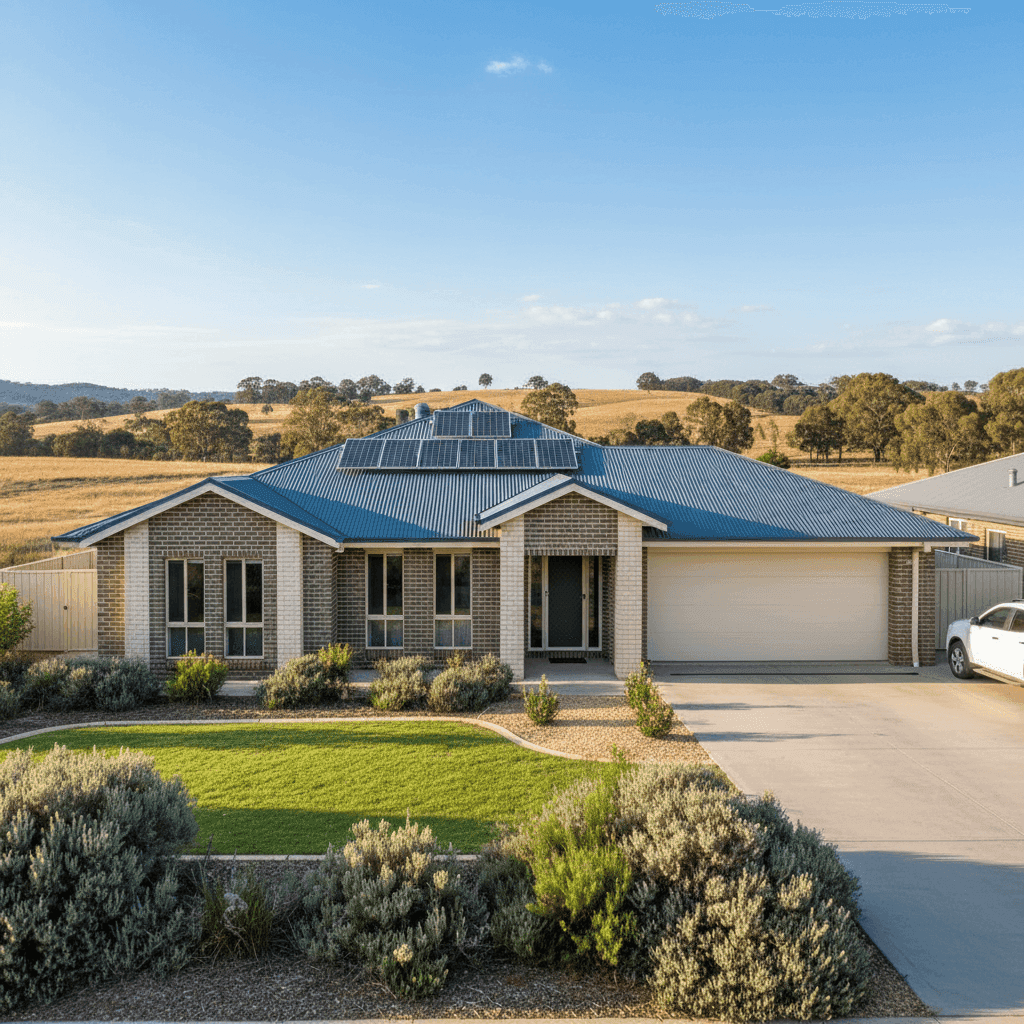
If you own a free standing home in Jindera, NSW 2642, you've probably wondered whether your home insurance premium is reasonable — or whether you're quietly paying more than you need to. Jindera is a growing township in the Federation local government area, sitting just south of Albury in the Riverina region. It's a popular spot for families seeking a quieter lifestyle close to regional amenities, and like any suburb, the cost of insuring your home here comes with its own set of variables.
In this article, we analyse a recent home and contents insurance quote for a 3-bedroom, 1-bathroom free standing home in Jindera, breaking down what's driving the premium and how it stacks up against local, state, and national benchmarks.
---
Is This Quote Fair?
The quote in question came in at $2,911 per year (or roughly $285 per month) for combined home and contents cover, with a building sum insured of $626,000 and contents valued at $99,000. Both the building and contents excess sit at $1,000.
Our pricing engine rates this quote as Fair — Around Average, and when you dig into the numbers, that assessment holds up well.
The suburb average for Jindera sits at $2,421 per year, and the median is $2,104 per year, based on a sample of 49 quotes in the 2642 postcode. This particular quote is above both those figures, but it's worth noting the higher building sum insured ($626,000) and the inclusion of contents cover likely push the premium upward compared to simpler policies in the same area. At $2,963 per year, the 75th percentile for the suburb isn't far away — meaning roughly one in four Jindera homeowners with similar cover are paying around that level or more.
So while this isn't the cheapest quote available in the suburb, it's not an outlier either. For a well-specified policy covering a mid-sized home with a solid replacement value, the pricing is broadly in line with what the local market reflects.
---
How Jindera Compares
One of the most reassuring things about insuring a home in Jindera is just how favourably the suburb compares to broader benchmarks. Take a look:
| Benchmark | Average Premium | Median Premium |
|---|---|---|
| Jindera (2642) | $2,421/yr | $2,104/yr |
| NSW State | $9,528/yr | $3,770/yr |
| National | $5,347/yr | $2,764/yr |
| Federation LGA | $7,789/yr | — |
The NSW state average of $9,528 per year looks alarming at first glance, but it's heavily skewed by high-risk and high-value properties across the state — particularly in flood-prone areas, coastal zones, and Sydney's premium suburbs. The median of $3,770 is a more grounded comparison, and Jindera's median of $2,104 sits comfortably below it.
Similarly, the national average of $5,347 is pulled upward by cyclone-prone regions in Queensland and Western Australia, and flood risk corridors across multiple states. Jindera's relatively benign risk profile — no cyclone risk, inland location, and stable soil conditions — keeps premiums well below these national figures.
The Federation LGA average of $7,789 is notably high, likely influenced by rural properties with large structures, farm-related assets, or elevated flood risk in parts of the region. Jindera's own suburb figures are far more modest by comparison, suggesting it's one of the more affordable pockets within the LGA.
---
Property Features That Affect Your Premium
Every home is different, and insurers assess a range of property characteristics when calculating your premium. Here's how the features of this particular home influence its pricing:
Brick Veneer Walls Brick veneer is one of the most common external wall materials in regional NSW, and insurers generally view it favourably. It offers solid fire resistance and durability, which can contribute to more competitive premiums compared to timber-clad homes.
Steel/Colorbond Roof Colorbond roofing is widely regarded as a low-maintenance, weather-resistant option. It performs well in hail events and doesn't carry the same risk profile as older terracotta or asbestos-based roofing materials. This is a positive factor for pricing.
Slab Foundation Concrete slab foundations are generally stable and don't carry the subsidence or pest risks associated with raised timber stumps. Insurers typically treat slab homes as lower risk from a structural standpoint.
Construction Year: 1980 Homes built in 1980 are now over 40 years old, which can introduce some considerations around the age of electrical wiring, plumbing, and roofing materials. Insurers may factor this into their risk assessment, though a well-maintained 1980s brick home is still considered a solid, insurable property.
Solar Panels This property has solar panels installed, which adds to the replacement cost of the building. Solar systems can be damaged by hail, storms, or fire, and their inclusion in the sum insured is important to ensure you're not underinsured. The $626,000 building sum insured should account for the cost of replacing the solar system as part of the overall structure.
Ducted Climate Control Ducted systems are a significant fixed asset within the home and are typically covered under building insurance. Their presence contributes to a higher replacement cost, which flows through to a higher sum insured and, in turn, a slightly higher premium.
No Pool The absence of a swimming pool removes a liability and maintenance risk that some insurers price into their premiums, keeping things a little simpler.
---
Tips for Homeowners in Jindera
1. Review your sum insured annually Building costs in regional NSW have risen significantly over the past few years, driven by labour shortages and material price increases. A sum insured of $626,000 for a 214 sqm brick veneer home is reasonable, but it's worth checking against a current building cost calculator each year to make sure you're not underinsured — or paying for more cover than you need.
2. Consider your excess level Both the building and contents excess on this policy sit at $1,000. Opting for a higher voluntary excess (say, $2,000 or $2,500) can reduce your annual premium meaningfully. If you have a solid emergency fund and are unlikely to make small claims, a higher excess can be a smart trade-off.
3. Check what's included for solar panels and ducted systems Not all policies treat fixed assets like solar panels and ducted air conditioning the same way. Before renewing, confirm that your policy explicitly covers these items under building cover and check whether there are any sub-limits that might leave you short in a claim.
4. Shop around at renewal time The insurance market is competitive, and loyalty doesn't always pay. The 25th percentile for Jindera sits at $1,638 per year — a significant saving compared to the quote analysed here. That gap may reflect different cover levels or excess structures, but it's worth comparing options to make sure you're getting the right balance of price and protection.
---
Compare Home Insurance Quotes in Jindera
Whether you're reviewing your current policy or shopping for cover on a new home, comparing quotes is the smartest way to find the right deal. At CoverClub, you can get a home and contents insurance quote tailored to your property in Jindera and see how it stacks up against real market data. It only takes a few minutes — and the savings could be well worth it.