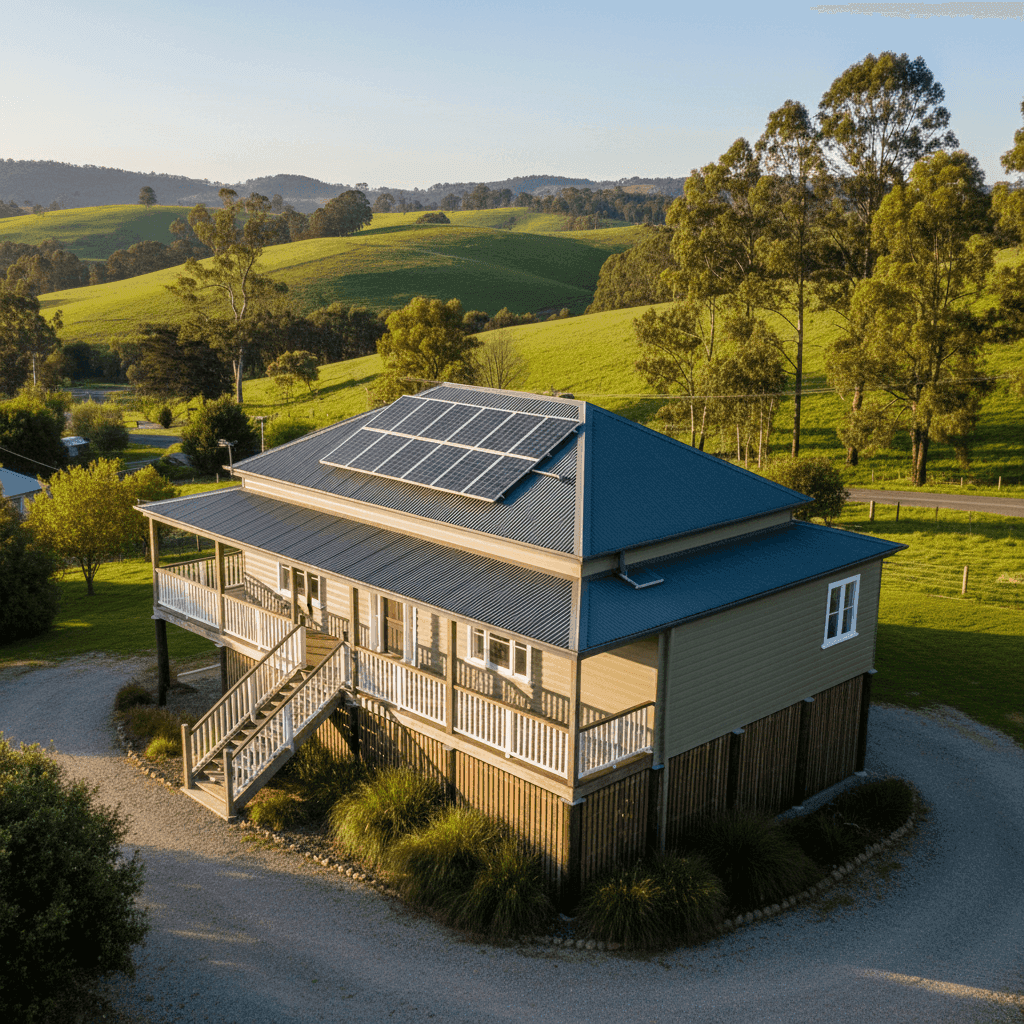
Nestled in the lush green hills of West Gippsland, Jindivick is a small rural locality in Victoria's Baw Baw Shire — known for its scenic farmland, tall timber, and tight-knit community. It's a beautiful place to call home, but like many semi-rural and elevated areas across Victoria, insuring a property here comes with its own set of considerations. This article takes a close look at a real home and contents insurance quote for a four-bedroom, two-bathroom free-standing home in Jindivick VIC 3818, and unpacks whether the price stacks up.
---
Is This Quote Fair?
The annual premium for this property came in at $5,363 per year (or $527/month), covering a building sum insured of $885,000 and $110,000 in contents. Our price rating for this quote is Expensive — above average when benchmarked against comparable policies.
To put that in perspective:
- The VIC state average premium is $2,921/yr, and the median sits at $2,694/yr
- The national average is $2,965/yr, with a median of $2,716/yr
- The Baw Baw LGA average is just $2,498/yr
This quote is roughly 83% above the Victorian state average and more than double the Baw Baw LGA average. Even accounting for the higher-than-typical building sum insured ($885,000 is a substantial rebuild cost), the premium is notably elevated. Homeowners in Jindivick should be aware that this kind of pricing isn't necessarily fixed — shopping around and comparing multiple insurers can make a meaningful difference.
You can explore how VIC premiums compare across the state or check out national home insurance benchmarks to get a broader picture.
---
How Jindivick Compares
While there isn't enough suburb-level data to produce a specific Jindivick average, the Jindivick suburb stats page is updated as more quotes are collected — so it's worth bookmarking if you're a local homeowner.
What we do know is that the Baw Baw LGA average of $2,498/yr is actually below both the state and national averages, suggesting that, as a region, Baw Baw is not considered especially high-risk by insurers in aggregate. That makes the $5,363 quote for this particular property stand out even more — pointing to property-specific factors rather than a blanket regional loading.
| Benchmark | Annual Premium |
|---|---|
| This Quote | $5,363 |
| Baw Baw LGA Average | $2,498 |
| VIC State Average | $2,921 |
| National Average | $2,965 |
---
Property Features That Affect Your Premium
Several characteristics of this property are likely contributing to the above-average premium. Here's a breakdown of the key factors:
Weatherboard Timber Construction
The external walls are weatherboard wood, which is one of the most common building materials in older and semi-rural Victorian homes — but it's also one that insurers treat with caution. Timber is more susceptible to fire, rot, and pest damage than brick veneer or double brick, which typically results in a higher premium loading.
Steel/Colorbond Roof
On the upside, a steel Colorbond roof is generally viewed favourably by insurers. It's durable, resistant to ember attack, and performs well in high-wind conditions. This may partially offset the timber wall loading.
Stumps Foundation (Elevated)
The home sits on stumps and is elevated by less than one metre. Stump foundations are common in rural Victoria and can be a double-edged sword for insurance purposes. On one hand, elevation can reduce flood risk; on the other, subfloor spaces can be vulnerable to pest ingress and moisture, and repairs to stumps can be costly. Insurers may apply a modest loading for this construction type.
Timber and Laminate Flooring
Timber and laminate flooring is a premium finish that adds to the overall rebuild cost. Combined with a 214 sqm floor area, this contributes to the high building sum insured of $885,000.
Solar Panels
The presence of solar panels adds value to the property but also adds replacement cost in the event of a claim — particularly in storm or hail events. Some insurers include solar panels under building cover automatically; others treat them as an optional extra. It's worth confirming exactly what's covered under your policy.
Ducted Climate Control
Ducted climate control is a fixed installation that forms part of the building sum insured. It's a significant asset to replace and will contribute to the overall rebuild cost estimate.
Bushfire and Rural Risk
While Jindivick is not classified as a cyclone risk area, its location in the Baw Baw foothills means bushfire risk is a real consideration. The combination of weatherboard construction and a rural setting with surrounding vegetation is likely a key driver of the elevated premium.
---
Tips for Homeowners in Jindivick
If you're looking to make sure you're getting value from your home insurance, here are four practical steps worth taking:
1. Compare Multiple Quotes
The single most effective way to reduce your premium is to shop around. Insurers price risk differently, and the gap between the cheapest and most expensive quote for the same property can be significant. Use a comparison tool like CoverClub to see multiple options side by side.
2. Review Your Sum Insured Carefully
A building sum insured of $885,000 is substantial. Make sure this figure reflects the actual rebuild cost of your home — not the market value. Overinsuring can mean unnecessarily high premiums, while underinsuring leaves you exposed. Consider using a professional building cost estimator or consulting a quantity surveyor.
3. Invest in Bushfire Mitigation
In rural areas like Jindivick, reducing your property's bushfire risk can sometimes lead to lower premiums. This includes maintaining a defendable space around the home, clearing gutters regularly, and installing ember-proof vents. Some insurers recognise these measures when calculating your premium.
4. Ask About Excess Trade-Offs
This quote carries a $3,000 building excess, which is on the higher end. In some cases, opting for a higher excess is a deliberate strategy to reduce the annual premium — but it's worth modelling the trade-off. If you're unlikely to make small claims, a higher excess may be worthwhile; if you'd struggle to cover $3,000 out of pocket, it may not be the right fit.
---
Ready to Compare?
Whether you're renewing your policy or insuring for the first time, it pays to know what the market looks like. CoverClub makes it easy to compare home and contents insurance quotes for properties across Victoria and beyond. Get a quote today and see how much you could save — or simply confirm that your current cover is competitively priced.