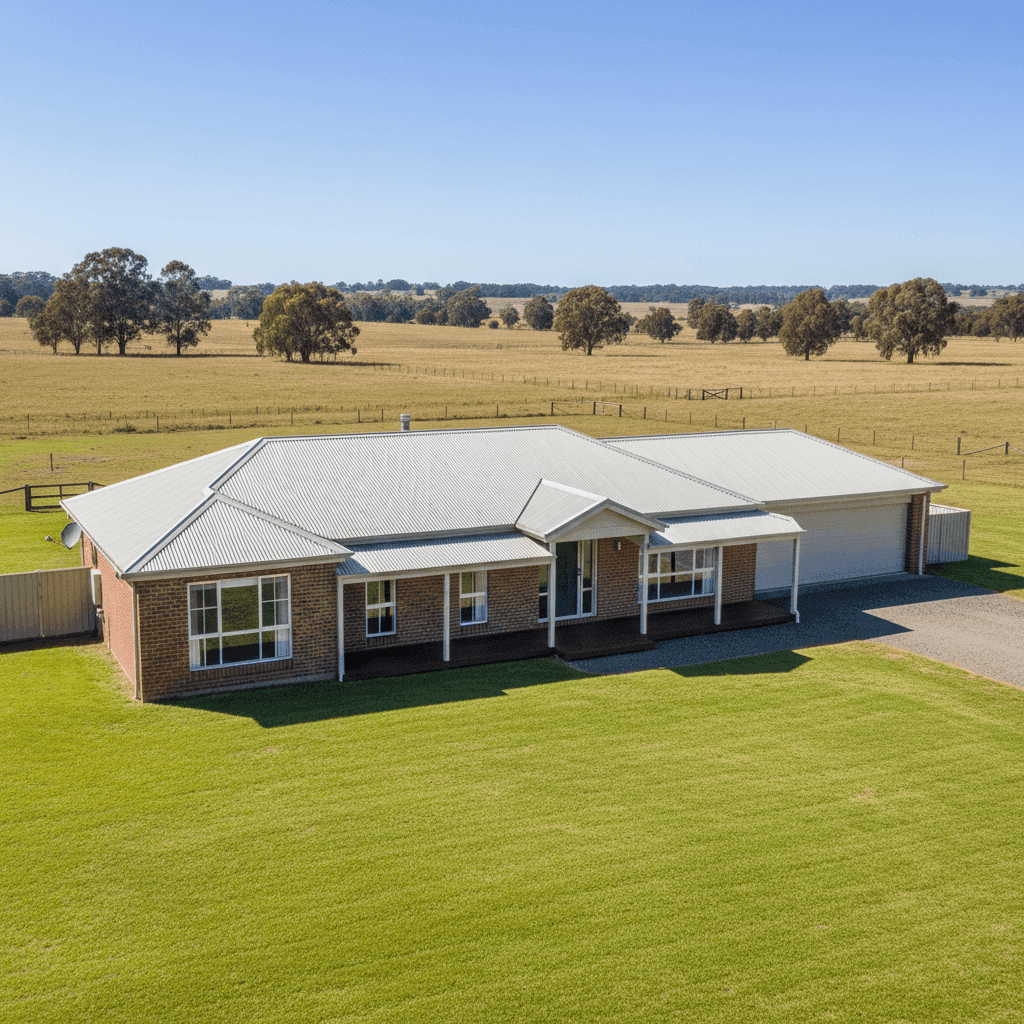
Nestled in the Pyrenees region of central Victoria, Joel Joel (VIC 3384) is a quiet rural locality where properties tend to be spacious and well-built. This article takes a close look at a real home and contents insurance quote for a four-bedroom, two-bathroom free-standing home in the area — breaking down whether the premium is competitive, what's driving the cost, and what local homeowners can do to keep their cover affordable.
---
Is This Quote Fair?
The annual premium for this property came in at $3,607 per year (or $346/month), covering both building ($753,000 sum insured) and contents ($148,000). Our price rating for this quote is EXPENSIVE — above average.
To put that in perspective:
- The VIC state average premium is $3,000/yr, with a median of $2,718/yr
- The national average sits at $5,347/yr, with a national median of $2,764/yr
- The Pyrenees LGA average is $3,161/yr
So while this quote sits above the Victorian state average by around $607, it's still well below the national average. The "expensive" rating reflects its position relative to the state benchmark rather than an outright alarming figure. That said, there's still room to shop around — a difference of $600+ per year is meaningful money over the life of a policy.
It's also worth noting the building sum insured of $753,000 is substantial. For a brand-new 214 sqm home built in 2024 with quality fittings, that's a reasonable rebuild cost estimate, but it does directly influence the premium. Higher insured values mean higher premiums, so it's worth periodically reviewing your sum insured to ensure it reflects current construction costs without over-insuring.
---
How Joel Joel Compares
Suburb-level data for Joel Joel isn't yet available due to limited sample size in this postcode, which makes direct peer comparisons tricky. However, we can still draw meaningful conclusions from broader benchmarks.
| Benchmark | Annual Premium |
|---|---|
| This Quote | $3,607 |
| Pyrenees LGA Average | $3,161 |
| VIC State Average | $3,000 |
| VIC State Median | $2,718 |
| National Average | $5,347 |
| National Median | $2,764 |
Compared to Victoria's state-wide data, this quote is roughly 20% above the state average. Against the national picture, however, it looks quite reasonable — homeowners in coastal Queensland, northern WA, and cyclone-prone regions of the Northern Territory routinely pay far more.
The Pyrenees LGA average of $3,161/yr is the most locally relevant comparison point available, and this quote exceeds it by around $446. That gap suggests there may be scope to find a more competitive rate by comparing multiple insurers — particularly given the relatively low-risk profile of this property.
---
Property Features That Affect Your Premium
Several characteristics of this home work in the homeowner's favour from an insurance perspective, while a few others contribute to a higher base premium.
Factors Likely Keeping the Premium Down
- Brick veneer construction is generally viewed favourably by insurers. It offers solid fire resistance and structural durability compared to timber-framed weatherboard homes, which can attract higher premiums.
- Colorbond steel roof is one of the most insurer-friendly roofing materials available. It's lightweight, resistant to ember attack, and performs well in high-wind events — all of which reduce risk in regional Victoria.
- Slab foundation eliminates the underfloor moisture and pest risks associated with raised stumped foundations, reducing the likelihood of certain structural claims.
- No pool and no solar panels mean two common sources of additional liability and equipment breakdown risk simply aren't present.
- Not in a cyclone risk zone is a significant premium saver. Properties in northern Australia can pay two to three times more purely due to cyclone exposure.
- New construction (2024) means modern building standards, better fire-resistant materials, and up-to-date electrical and plumbing systems — all of which reduce the likelihood of claims.
Factors Contributing to a Higher Premium
- Ducted climate control adds to the contents and building value, and HVAC systems are a common source of claims. Insurers factor this in.
- Building sum insured of $753,000 is the single biggest driver of the premium. A larger insured value means a larger potential payout for the insurer, which flows directly into your annual cost.
- Rural/regional location can mean longer response times for emergency services, which some insurers price into their risk models for properties outside metropolitan areas.
- Tile flooring, while durable, adds to the overall replacement cost of the home's interior fitout.
---
Tips for Homeowners in Joel Joel
1. Compare Quotes Annually
Insurance premiums can shift significantly from year to year, and loyalty doesn't always pay. Even if you're happy with your current insurer, running a comparison at renewal time takes minutes and could save you hundreds. Get a quote through CoverClub to see what competing insurers would charge for the same level of cover.
2. Review Your Sum Insured Carefully
At $753,000, the building sum insured is a significant figure. Make sure it reflects the actual cost to rebuild your home from the ground up — including demolition, site preparation, and professional fees — rather than its market value. Over-insuring means you're paying premiums on cover you'll never claim; under-insuring can leave you seriously out of pocket after a total loss. Tools like the Cordell Sum Sure Calculator can help you arrive at an accurate figure.
3. Consider a Higher Excess
Both the building and contents excess on this policy are set at $1,000. Opting for a higher voluntary excess — say $2,000 or $2,500 — can noticeably reduce your annual premium. This strategy works best for homeowners who have a financial buffer and are unlikely to make small or frequent claims.
4. Bundle and Ask About Discounts
Many insurers offer discounts when you hold both building and contents cover under the same policy (which this quote already does) or when you combine home insurance with car or landlord policies. It's always worth asking your insurer directly about any available discounts — including loyalty bonuses, claims-free discounts, or security feature rebates.
---
Ready to Find a Better Rate?
Whether you're a new homeowner in Joel Joel or simply coming up for renewal, comparing your options is the smartest thing you can do before signing on for another year. CoverClub makes it easy to benchmark your current quote against the market and find cover that suits your property and your budget.