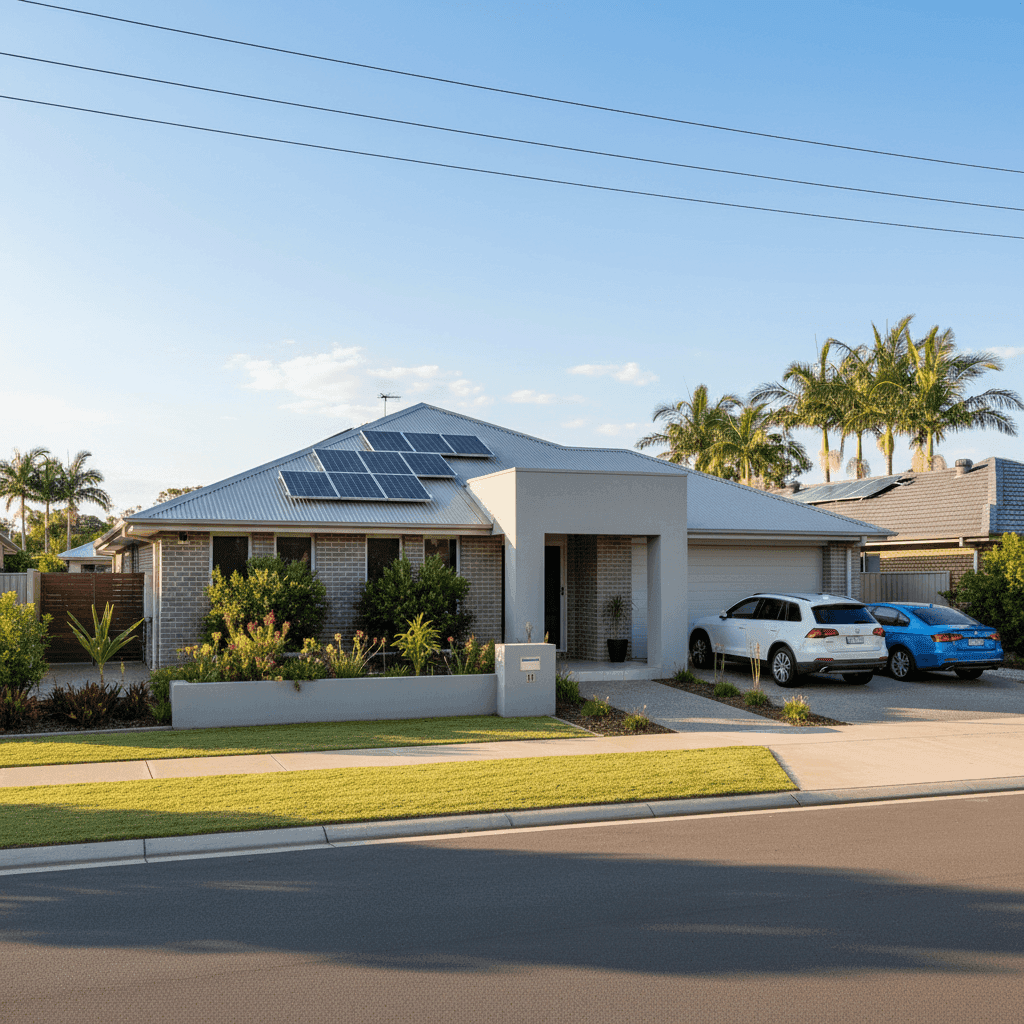
If you own a free standing home in Jones Hill, QLD 4570, you're probably wondering whether you're paying a fair price for home and contents insurance — or quietly overpaying. This article breaks down a real insurance quote for a 3-bedroom, 2-bathroom brick veneer home in the suburb, compares it against local, state, and national benchmarks, and offers practical tips to help you get the best value cover.
---
Is This Quote Fair?
The annual premium for this property came in at $1,185 per year (or around $120 per month), covering both building (sum insured: $622,000) and contents ($50,000). Our pricing analysis rates this quote as CHEAP — below average for the area.
To put that in perspective: the QLD state average premium sits at a hefty $9,129 per year, with a state median of $3,903. Nationally, the average premium is $5,347, with a median of $2,764. This quote comes in well beneath every one of those benchmarks — a strong result for the homeowner.
It's worth noting that this quote carries a building excess of $3,000 and a contents excess of $1,000. Higher excesses are one of the most common ways insurers reduce your upfront premium, so it's important to weigh the lower annual cost against what you'd need to pay out of pocket at claim time. That said, for a well-built modern home in a relatively low-risk suburb, the trade-off looks reasonable here.
---
How Jones Hill Compares
While suburb-level comparison data isn't available for Jones Hill specifically, we can draw meaningful context from the broader region and state. You can explore available local data on the Jones Hill suburb stats page.
| Benchmark | Annual Premium |
|---|---|
| This Quote | $1,185 |
| Fraser Coast LGA Average | $4,810 |
| QLD State Average | $9,129 |
| QLD State Median | $3,903 |
| National Average | $5,347 |
| National Median | $2,764 |
The Fraser Coast LGA average of $4,810 is particularly telling. Jones Hill sits within the Fraser Coast region, and even against this local benchmark, this quote is less than a quarter of the area average. Queensland as a whole tends to attract higher premiums than most other states due to its elevated exposure to cyclones, storms, and flooding — which makes a sub-$1,200 annual premium all the more noteworthy.
---
Property Features That Affect Your Premium
Several characteristics of this property likely contribute to its competitive premium. Here's how the key features stack up from an underwriting perspective:
Construction year (2017) A relatively modern build is a significant advantage. Homes constructed after 2000 — and especially after 2010 — are generally built to more stringent standards under the National Construction Code. This means better structural integrity, improved waterproofing, and compliance with updated wind and load ratings, all of which reduce risk in the eyes of insurers.
Brick veneer external walls Brick veneer is one of the most popular and well-regarded wall materials in Australian residential construction. It offers solid fire resistance and durability, and insurers typically view it favourably compared to timber or fibre cement cladding.
Steel/Colorbond roof Colorbond roofing is widely used across Queensland and is generally considered a low-maintenance, resilient option. It performs well in high-heat environments and is resistant to corrosion — both factors that can keep insurance costs down relative to older tile or fibrous cement roofing.
Slab foundation A concrete slab foundation is standard for modern Queensland builds and presents minimal risk of subsidence or underfloor moisture issues, unlike older homes on stumps or timber bearers.
No pool, no cyclone risk zone The absence of a swimming pool removes a significant liability risk factor. Pools can add meaningfully to premiums due to the associated injury and damage risks. Similarly, Jones Hill falls outside designated cyclone risk areas, which is a major premium driver across much of coastal and far north Queensland.
Solar panels The property does have solar panels installed. While these add value to the home, they can slightly increase the insured replacement cost and may warrant a review of your sum insured to ensure the panels are adequately covered under your building policy.
139 sqm building size At 139 square metres, this is a modest but functional footprint for a 3-bedroom home. A smaller floor area generally means a lower rebuild cost, which helps keep the sum insured — and therefore the premium — more manageable.
---
Tips for Homeowners in Jones Hill
1. Review your sum insured regularly Your building is insured for $622,000. With construction costs rising across Queensland, it's worth checking that this figure accurately reflects current rebuild costs — not just the market value of the property. Underinsurance is one of the most common and costly mistakes homeowners make. Tools like the Cordell Sum Sure Calculator can help you estimate rebuild costs.
2. Consider your excess carefully This policy carries a $3,000 building excess. While the lower premium is attractive, make sure you have that amount readily accessible in the event of a claim. If a $3,000 out-of-pocket cost would be a significant burden, it may be worth requesting a lower excess option — even if it nudges the annual premium up slightly.
3. Check your solar panels are covered Solar panel systems can represent $8,000–$15,000 or more in replacement value. Confirm with your insurer whether your panels are included in the building sum insured, and whether damage from storm, hail, or electrical faults is explicitly covered under your policy terms.
4. Don't set and forget Even a great quote today can drift out of competitiveness at renewal time. Insurers frequently adjust their pricing, and loyalty doesn't always pay. Make a habit of comparing your renewal quote against the market each year — it only takes a few minutes and can save hundreds of dollars.
---
Ready to See What You Could Pay?
Whether you're buying, refinancing, or simply due for a renewal check, it pays to compare. CoverClub makes it easy to see real quotes for your specific property and location — no jargon, no pressure. Get a home insurance quote today and find out if you're getting the value you deserve.