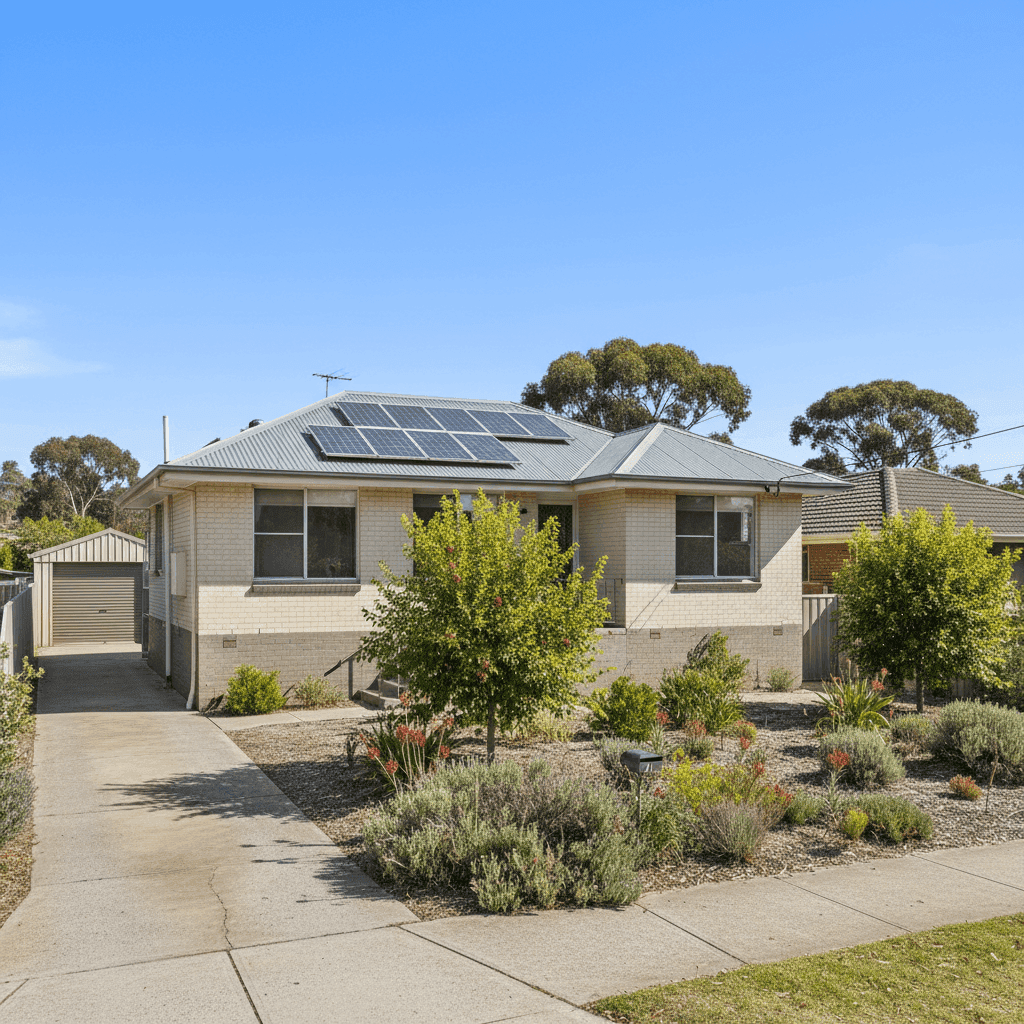
If you own a four-bedroom free standing home in Joondanna, WA 6060, you're sitting in one of Perth's well-established inner-northern suburbs — a leafy, predominantly residential area that sits within the City of Stirling. Understanding what you should be paying for home and contents insurance here isn't always straightforward, so we've broken down a real quote to help you benchmark your own cover.
The quote analysed in this article is for a double brick, Colorbond-roofed home built in 1999, with four bedrooms, two bathrooms, and a building size of 153 sqm. The annual premium comes in at $1,727 per year (or $169/month), covering both building (sum insured: $1,200,000) and contents ($50,000). The building excess is $2,000 and the contents excess is $600.
---
Is This Quote Fair?
In short — yes, and then some. CoverClub rates this quote as CHEAP (Below Average), meaning it sits below the typical range for comparable properties in Western Australia.
To put that in perspective: the WA state average for home and contents insurance is $2,144 per year, and the state median sits at $1,944. This quote comes in at $217 below the state median and $417 below the state average. When you zoom out to a national level, the contrast is even more striking — the national average is $2,965/yr and the national median is $2,716/yr, meaning this Joondanna homeowner is paying roughly $1,238 less per year than the average Australian homeowner with equivalent cover.
That's a meaningful saving — the kind that adds up to thousands of dollars over a typical mortgage term.
Of course, "cheap" doesn't mean under-insured. A $1.2 million building sum insured is a robust figure for a 153 sqm home in this area, and $50,000 in contents cover is a reasonable baseline for a four-bedroom household. The pricing here appears to reflect genuine market competitiveness rather than a gap in coverage.
---
How Joondanna Compares
While suburb-level data for Joondanna isn't yet available in our database, we can draw useful comparisons at the LGA and state level. Check out the Joondanna suburb stats page as more local data becomes available.
Here's how this quote stacks up across the key benchmarks:
| Benchmark | Annual Premium |
|---|---|
| This Quote | $1,727 |
| LGA (Stirling) Average | $1,769 |
| WA State Average | $2,144 |
| WA State Median | $1,944 |
| National Average | $2,965 |
| National Median | $2,716 |
Notably, this quote is even slightly below the City of Stirling LGA average of $1,769 — suggesting the specific property characteristics are working in the homeowner's favour. You can explore broader WA insurance pricing trends or compare against national benchmarks to get a fuller picture.
Western Australia as a whole tends to sit below the national average for home insurance costs, largely because it avoids the cyclone and severe flood risks that push premiums higher in Queensland, northern NSW, and parts of the NT. Joondanna, in particular, benefits from its urban, low-bushfire-risk positioning in Perth's inner north.
---
Property Features That Affect Your Premium
Several characteristics of this property likely contribute to its competitive premium. Let's unpack the key ones:
Double Brick Construction Double brick is widely regarded as one of the most insurer-friendly wall types in Australia. It's durable, fire-resistant, and less susceptible to wind damage than timber or lightweight cladding. For Perth homes — where double brick has long been the dominant construction method — this is a significant premium advantage.
Steel / Colorbond Roof Colorbond roofing is another tick in the insurer's box. It's low-maintenance, highly durable, and performs well in both heat and moderate storm conditions. Compared to older tile roofs (which can crack, leak, or dislodge), a steel roof generally attracts lower risk ratings.
Slab Foundation A concrete slab foundation is considered stable and low-risk by most insurers. It eliminates the underfloor moisture and pest exposure that can affect homes on stumps or piers.
Elevated by at Least 1 Metre This is an interesting feature — an elevated home can sometimes introduce complexity around flooding or structural risk, but in a suburb like Joondanna (which is not in a designated flood zone), elevation is generally neutral to positive. It may reflect the natural topography of the block.
Solar Panels The presence of solar panels is noted on the policy. Homeowners should confirm whether their insurer covers solar panels under the building sum insured, as this isn't always automatic. At $1.2 million, the building sum insured here should comfortably accommodate the replacement cost of a standard rooftop solar system, but it's worth checking the policy wording.
No Pool, No Cyclone Risk Zone The absence of a swimming pool removes a common liability and structural risk factor. And while it almost goes without saying for Perth, the property falling outside a cyclone risk area keeps the premium firmly in the lower tier.
Ducted Climate Control Ducted systems are typically covered under building insurance as a fixed installation. At a $1.2 million sum insured, replacement of a ducted system is well within coverage scope, but again — always verify inclusions with your insurer.
---
Tips for Homeowners in Joondanna
1. Review your building sum insured annually Construction costs in Perth have risen sharply in recent years. A sum insured set even two or three years ago may no longer reflect the true rebuild cost of your home. Use a building cost calculator or speak with a quantity surveyor to ensure you're not underinsured.
2. Don't overlook contents sub-limits A $50,000 contents sum may seem adequate, but many policies apply sub-limits to specific categories — jewellery, electronics, portable items, and artwork are common examples. Run through your most valuable possessions and check whether any items need to be separately listed (scheduled) on your policy.
3. Consider your excess strategically This quote carries a $2,000 building excess and a $600 contents excess. A higher excess typically lowers your premium, but make sure the excess is an amount you could genuinely afford to pay at claim time. If $2,000 would be a stretch in an emergency, it may be worth paying a slightly higher premium for a lower excess.
4. Compare at renewal, not just at inception Insurance loyalty rarely pays off. Insurers frequently offer better rates to new customers than to existing ones. Use a comparison platform like CoverClub at each renewal to make sure you're still getting a competitive deal — especially given how much this quote already beats the state and national averages.
---
Ready to Compare Home Insurance in Joondanna?
Whether you're reviewing an existing policy or shopping for cover on a new purchase, it pays to see what the market is actually offering. Get a home insurance quote on CoverClub and find out how your premium stacks up against thousands of real quotes from across Western Australia and beyond. It only takes a few minutes, and the savings can be substantial.