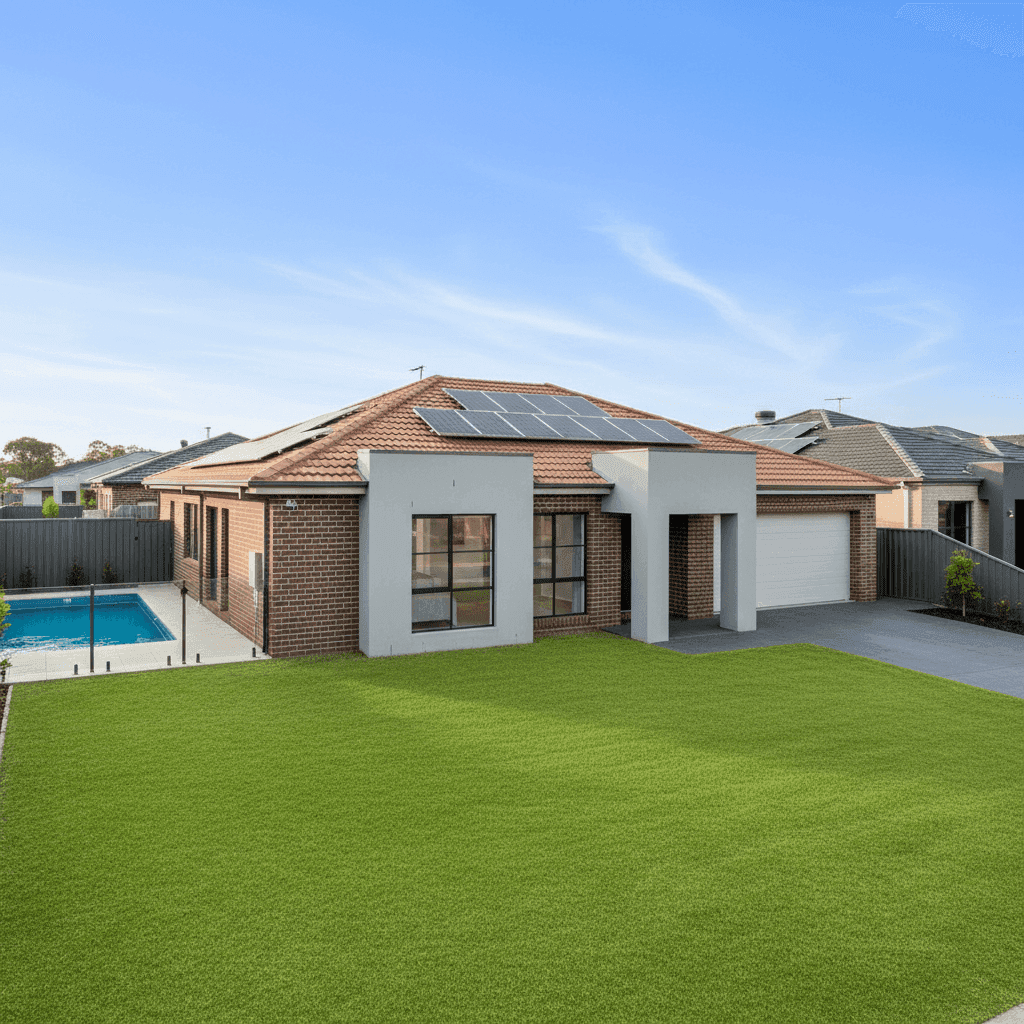
Jordan Springs is one of Western Sydney's newer master-planned communities, sitting within the City of Penrith and offering a mix of modern family homes, parklands, and convenient infrastructure. For owners of a free standing home in this suburb, understanding what you should be paying for home and contents insurance — and why — can make a real difference to your household budget. This article breaks down a recent insurance quote for a five-bedroom property in Jordan Springs, compares it against local, state, and national benchmarks, and offers practical tips for getting the best value on your cover.
---
Is This Quote Fair?
The quote in question is $2,817 per year (or $276/month) for combined home and contents insurance, covering a building sum insured of $1,042,000 and contents valued at $245,000, each with a $1,000 excess.
Our price rating for this quote is FAIR — Around Average, which is a reasonable outcome for a property of this size and specification. Here's what that means in context:
- The suburb average for Jordan Springs (postcode 2747) sits at $2,958/yr, with a median of $3,079/yr.
- This quote comes in below both the suburb average and median, landing just above the 25th percentile of $2,805/yr — meaning roughly three-quarters of comparable quotes in the area are more expensive.
- The 75th percentile for the suburb is $3,381/yr, so there is meaningful upside risk if you were to shop less carefully.
In short, while this isn't the cheapest quote available, it sits in a competitive position relative to what most Jordan Springs homeowners are paying. For a large, well-appointed home with a pool, solar panels, and ducted climate control, landing near the lower end of the suburb range is a solid result.
---
How Jordan Springs Compares
To put this quote in broader perspective, it helps to look beyond the suburb. You can explore full pricing data on the Jordan Springs insurance stats page, the NSW state overview, or the national insurance statistics.
| Benchmark | Annual Premium |
|---|---|
| This quote | $2,817 |
| Jordan Springs suburb average | $2,958 |
| Jordan Springs suburb median | $3,079 |
| LGA average (Blacktown) | $2,242 |
| NSW state average | $9,528 |
| NSW state median | $3,770 |
| National average | $5,347 |
| National median | $2,764 |
A few observations stand out here:
The NSW state average looks alarming at $9,528, but this figure is heavily skewed by high-value properties and high-risk areas across the state — think flood-prone rural regions, coastal properties exposed to storm surge, and prestige homes in Sydney's eastern suburbs. The NSW median of $3,770 is a more representative yardstick, and this quote sits comfortably below it.
The national average of $5,347 is similarly distorted by extreme premiums in cyclone-prone Queensland and Northern Territory. The national median of $2,764 is closer to the mark for a well-located suburban property, and this quote is only marginally above it.
The LGA (Blacktown) average of $2,242 is notably lower than this quote, which likely reflects the mix of smaller, older, and lower-sum-insured properties across the broader Blacktown local government area. Jordan Springs homes tend to be newer, larger, and higher in replacement value, which naturally pushes premiums up.
Overall, this quote is well-positioned — below the suburb and state medians, and only slightly above the national median for a significantly larger and better-appointed home than average.
---
Property Features That Affect Your Premium
Several characteristics of this property influence what insurers charge. Understanding these can help you have more informed conversations when shopping for cover.
Size and sum insured: At 286 sqm with five bedrooms and three bathrooms, this is a large home. A building sum insured of $1,042,000 reflects the genuine cost to rebuild a modern, above-average-quality home of this size in Western Sydney. Insurers price proportionally to this exposure, so larger sums insured naturally mean higher premiums.
Construction quality: Brick veneer external walls and a tiled roof are highly regarded by insurers. These materials are fire-resistant, durable, and well-suited to the Sydney climate. A concrete slab foundation is similarly low-risk. Together, these features typically attract more favourable pricing compared to timber-framed or Colorbond-roofed alternatives.
Above-average fittings: The fittings quality is rated above average, which influences the rebuild cost estimate. High-end kitchens, bathrooms, and fixtures cost more to replace, and the sum insured should reflect this — which it appears to do here.
Swimming pool: Pools add modest complexity to a home insurance policy, primarily around liability and the cost of associated structures (fencing, pumps, filtration equipment). They can contribute a small uplift to premiums.
Solar panels: A rooftop solar system is an additional insurable asset. Most home and contents policies cover solar panels as part of the building, but it's worth confirming this with your insurer. The system adds to the overall replacement value of the property.
Ducted climate control: Ducted air conditioning systems are expensive to replace and are typically covered under building insurance. Their presence contributes to the overall sum insured and can have a minor effect on premiums.
No cyclone risk: Jordan Springs is not in a cyclone-designated risk area, which is a meaningful pricing advantage compared to properties in Queensland or the Northern Territory where cyclone loadings can dramatically increase premiums.
---
Tips for Homeowners in Jordan Springs
1. Review your building sum insured annually Construction costs in Western Sydney have risen significantly over recent years. If your sum insured hasn't been updated to reflect current rebuild costs — including labour, materials, and compliance with modern building codes — you may be underinsured. Use a building cost calculator or ask your insurer to reassess before each renewal.
2. Confirm your solar panels and pool are correctly listed Make sure your policy explicitly covers your solar panel system and pool equipment. Some policies require these to be declared separately or have sub-limits that may not reflect their full replacement value. A quick call to your insurer to confirm coverage can save significant headaches at claim time.
3. Compare quotes at renewal, not just at inception The insurance market in Jordan Springs is competitive, with premiums varying meaningfully across providers. The difference between the 25th and 75th percentile in this suburb is over $575 per year — simply by comparing quotes, you could save a substantial amount without sacrificing cover quality.
4. Consider your excess strategically Both the building and contents excess on this policy are set at $1,000. Opting for a higher excess — say $2,000 or $2,500 — can reduce your annual premium noticeably. If you have the financial buffer to cover a larger out-of-pocket cost in the event of a claim, this can be a smart way to lower your ongoing costs.
---
Compare Your Home Insurance with CoverClub
Whether you're reviewing an existing policy or shopping for the first time, comparing quotes is the single most effective way to ensure you're getting fair value. CoverClub makes it easy to benchmark your premium against real data from your suburb, state, and across Australia. Get a home insurance quote today and see how your current cover stacks up.