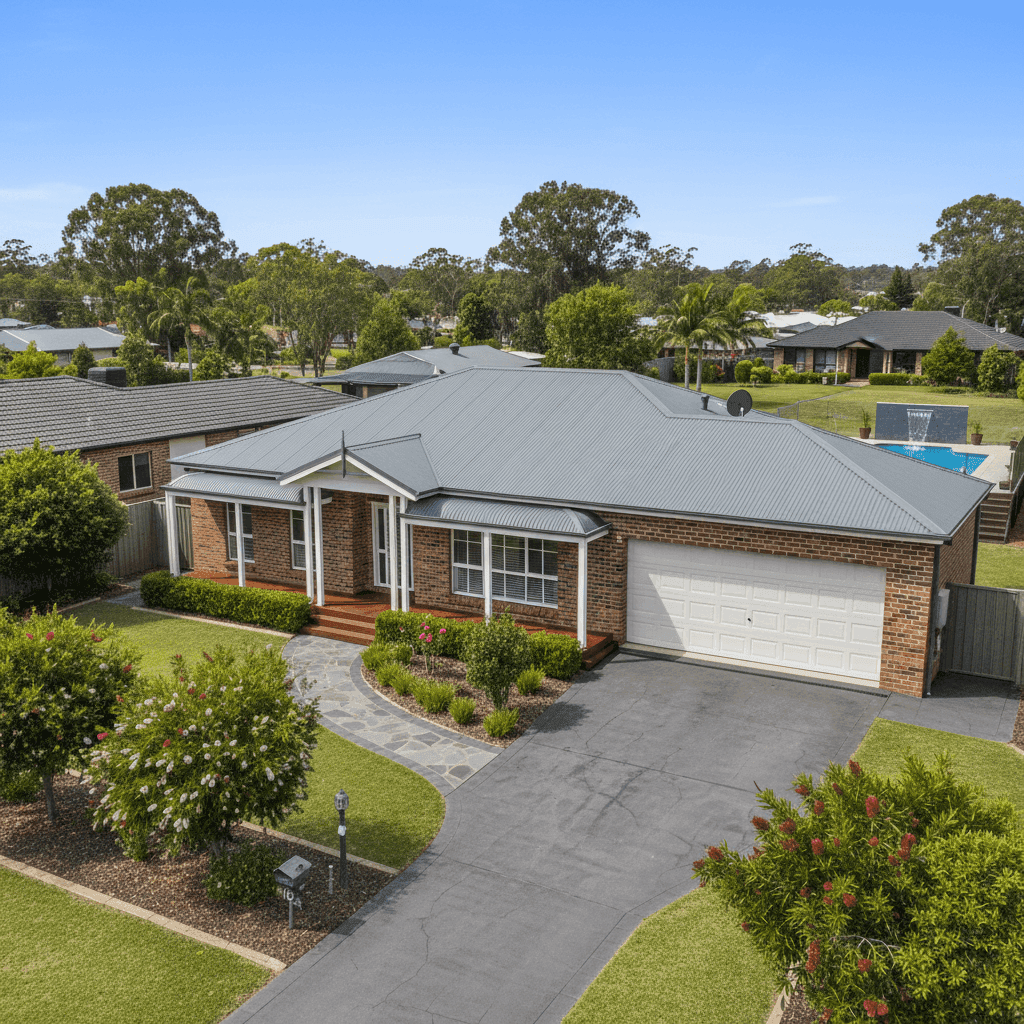
If you own a free standing home in Josephville, QLD 4285, you're likely wondering whether you're paying a fair price for your home and contents insurance — or leaving money on the table. This article breaks down a real insurance quote for a three-bedroom, two-bathroom brick veneer home in Josephville, compares it against local, state, and national benchmarks, and offers practical tips to help you get the best value cover.
---
Is This Quote Fair?
The annual premium for this property came in at $3,496 per year (or approximately $347 per month), covering both building (sum insured: $825,000) and contents ($50,000). Our pricing analysis rates this quote as CHEAP — below average for the area.
That's a meaningful result. In Queensland, home insurance costs are notoriously high compared to the national average, driven by a combination of severe weather events, flooding risk, and the sheer geographic spread of the state. Against that backdrop, landing a below-average premium is genuinely good news for Josephville homeowners.
The policy carries a $4,000 building excess and a $1,000 contents excess. The higher building excess is worth noting — while it brings the annual premium down, it does mean you'll be out of pocket more significantly in the event of a major structural claim. Whether that trade-off suits you depends on your financial buffer and your appetite for risk.
---
How Josephville Compares
To put this quote in proper context, here's how it stacks up against broader benchmarks:
| Benchmark | Annual Premium |
|---|---|
| This quote | $3,496 |
| LGA (Logan) average | $3,411 |
| QLD state average | $4,547 |
| QLD state median | $3,931 |
| National average | $2,965 |
| National median | $2,716 |
A few things stand out here. First, this quote sits $1,051 below the Queensland state average — a saving of roughly 23%. That's significant, especially in a state where premiums have been climbing steadily in recent years.
Second, the quote is slightly above the Logan LGA average of $3,411 and above the national average of $2,965. This is not unusual — Queensland as a whole carries higher insurance costs than most other states, and the Logan region, while not a high-cyclone-risk zone, still contends with storm and flood exposure that pushes premiums above the national norm.
For suburb-specific data and trends, you can explore the Josephville insurance stats page to see how premiums in the area have moved over time.
---
Property Features That Affect Your Premium
Every property is different, and insurers weigh up a range of characteristics when calculating your premium. Here's how the features of this particular home likely influence its pricing:
Brick Veneer Walls Brick veneer is one of the more insurer-friendly external wall materials. It offers solid fire resistance and durability compared to weatherboard or fibre cement, which can translate to a lower rebuild risk — and often a more competitive premium.
Steel/Colorbond Roof A Colorbond steel roof is well-regarded by insurers for its resilience against wind, hail, and fire. It's low-maintenance and long-lasting, which reduces the likelihood of weather-related claims. This is a genuine positive when it comes to premium pricing.
Concrete Slab Foundation Slab foundations are standard in Queensland and generally viewed favourably by insurers. They're less susceptible to subsidence and pest damage than older pier-and-beam foundations, reducing structural risk.
Tile Flooring Tiled floors throughout the home are practical in Queensland's climate and are less vulnerable to water damage than carpet or timber. From an insurance perspective, this can modestly reduce contents and building claim risk.
Swimming Pool The presence of a pool adds a layer of liability and maintenance risk that insurers factor into premiums. Pool-related claims — from equipment failure to accidental damage — are not uncommon, and this feature will typically nudge your premium upward slightly.
Construction Year: 2006 At roughly 18–19 years old, this home sits in a comfortable middle ground. It's modern enough to meet contemporary building codes (post-2000 construction standards are more stringent) but old enough that some wear and tear may be expected. Insurers generally view homes built after 1990 more favourably than older stock.
No Cyclone Risk Josephville falls outside Queensland's cyclone risk zone, which is a notable premium advantage. Properties in Far North Queensland can face cyclone levies that add hundreds of dollars to annual premiums. Being free of that exposure keeps this quote more competitive.
---
Tips for Homeowners in Josephville
1. Review your sum insured regularly Building costs have risen sharply across Australia in recent years. Your sum insured of $825,000 should reflect the full cost to rebuild your home from the ground up — not its market value. It's worth getting a building cost estimate every year or two to make sure you're not underinsured.
2. Consider whether your excess is right for you A $4,000 building excess is on the higher side. If you have the savings to cover that comfortably, it's a reasonable way to keep premiums down. But if a $4,000 outlay would be a stretch in an emergency, it may be worth comparing policies with a lower excess — even if the annual premium is slightly higher.
3. Bundle your building and contents cover This quote already combines building and contents, which typically attracts a discount compared to holding two separate policies. Make sure your contents sum insured of $50,000 genuinely reflects the replacement value of your belongings — many homeowners underestimate this figure.
4. Shop around at renewal time Even with a below-average premium, it pays to compare quotes annually. Insurers adjust their pricing models frequently, and loyalty doesn't always translate to the best deal. Use a comparison service like CoverClub to benchmark your renewal offer before you accept it.
---
Get a Quote for Your Josephville Home
Whether you're a first-time buyer or a long-time Josephville resident, it's always worth knowing where your premium stands. CoverClub makes it easy to compare home and contents insurance quotes from leading Australian insurers — so you can be confident you're getting genuine value, not just a good-sounding number.