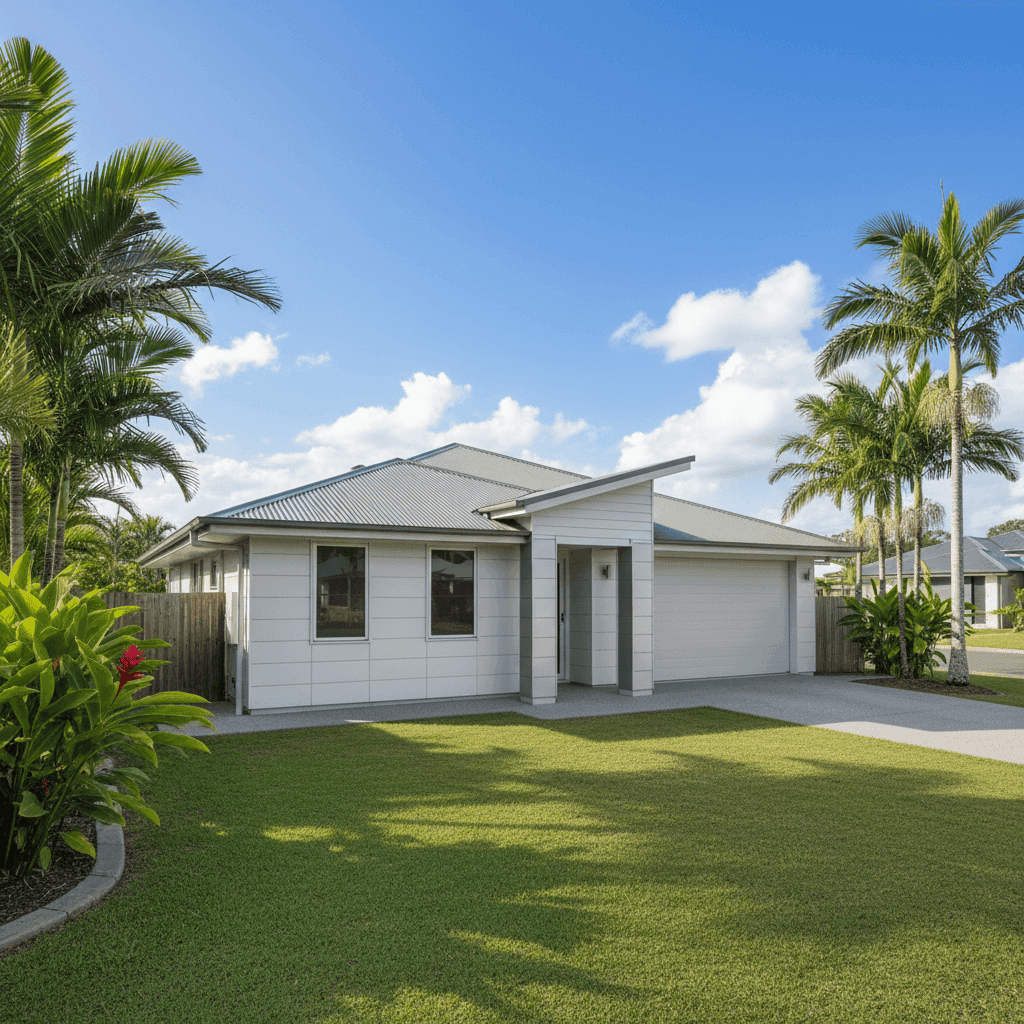
Home insurance in Far North Queensland is rarely straightforward — cyclone risk, tropical weather, and remote location all play a role in how insurers price your cover. This article takes a close look at a real building insurance quote for a two-bedroom, free-standing home in Jubilee Heights, QLD 4860, breaking down whether the price is fair, how it stacks up against state and national benchmarks, and what homeowners in this area can do to stay protected without overpaying.
---
Is This Quote Fair?
The short answer: yes — and then some. This quote came in at $3,776 per year (or around $370 per month) for building-only cover on a home insured for $550,000. CoverClub's pricing engine rates this as CHEAP, meaning it sits meaningfully below the average for Queensland.
To put that in perspective:
- The QLD state average for home building insurance is $4,547/year
- The QLD state median is $3,931/year
- This quote is $771 below the state average and $155 below the state median
That's a solid result for any Queensland homeowner, but it's particularly notable given the property sits in a designated cyclone risk area. Cyclone-prone regions across North Queensland routinely attract some of the highest premiums in the country, so landing below the state average here is genuinely impressive.
It's worth noting that no suburb-level comparison data is available for Jubilee Heights specifically, so we're working with state and LGA-level benchmarks. You can explore the latest figures for the area at the Jubilee Heights insurance stats page.
---
How Jubilee Heights Compares
Benchmarking this quote against broader data reveals just how wide the pricing spectrum can be — even within the same region.
| Benchmark | Annual Premium |
|---|---|
| This quote | $3,776 |
| QLD state median | $3,931 |
| QLD state average | $4,547 |
| Tablelands LGA average | $7,937 |
| National average | $2,965 |
| National median | $2,716 |
The standout figure here is the Tablelands Regional Council LGA average of $7,937/year — more than double this quote. That figure reflects the elevated risk profile of the broader region, which includes properties in flood plains, cyclone corridors, and areas with limited emergency services access. By comparison, this quote at $3,776 looks exceptional within its own LGA context.
Against national benchmarks, the quote does sit above average — the national average is $2,965 and the median is $2,716. But this is entirely expected. Queensland homeowners, particularly in the north, consistently pay more than the national average due to the frequency and severity of natural weather events. You can see how Queensland compares to other states in more detail.
The takeaway: while this premium is higher than what a homeowner in suburban Sydney or Melbourne might pay, it's very competitive for this part of Queensland.
---
Property Features That Affect Your Premium
Several characteristics of this particular property work in its favour from an insurance pricing perspective.
Newly built (2024): A brand-new home is one of the strongest signals of lower risk for an insurer. Modern construction must comply with current building codes, which in cyclone-prone areas like Far North Queensland means significantly stricter standards around wind resistance and structural integrity. New homes are also less likely to have pre-existing defects or ageing systems that could lead to claims.
Steel/Colorbond roof: This is a major positive in a cyclone risk zone. Colorbond steel roofing is widely regarded as one of the most resilient roofing materials for high-wind environments. It's less likely to lift or fail under cyclone conditions compared to older tile or corrugated iron alternatives, which can translate directly to lower premiums.
Aluminium external walls: Aluminium cladding is lightweight, corrosion-resistant, and performs well in tropical climates. It's not prone to the moisture-related damage that can affect timber-clad homes in high-humidity environments, reducing the likelihood of mould, rot, or structural deterioration claims.
Slab foundation: Concrete slab foundations are generally preferred by insurers over raised or stumped foundations in flood-adjacent areas, as they offer better resistance to water ingress and are less susceptible to movement or subsidence over time.
Vinyl flooring: A practical choice in tropical Queensland, vinyl is water-resistant and far less likely to be damaged by humidity or minor flooding events than carpet or hardwood. This can reduce the severity of any contents or building claims related to moisture.
No pool, solar panels, or ducted climate control: Each of these additions can increase a premium — pools introduce liability risk, solar panels add rebuild complexity, and ducted systems are expensive to repair or replace. The absence of all three keeps this quote lean.
---
Tips for Homeowners in Jubilee Heights
1. Review your sum insured annually Your home was built in 2024 and insured for $550,000 — a figure that should reflect the full cost to rebuild, not the market value. Construction costs in regional Queensland have risen sharply in recent years. Make it a habit to review your sum insured each year to ensure you're not underinsured, particularly as labour and materials costs continue to fluctuate.
2. Ask about cyclone mitigation discounts Some insurers offer reduced premiums for homes that meet or exceed cyclone construction standards — such as those built to the current Queensland Development Code. Given this property was completed in 2024, it almost certainly complies. Ask your insurer directly whether cyclone-resilience features are factored into your pricing.
3. Consider a contents policy alongside your building cover This quote covers the building only. If you have furniture, appliances, clothing, and personal belongings in the home, they won't be covered under a building-only policy. A combined building and contents policy can offer better value than two separate policies, and ensures you're not left out of pocket after a weather event or burglary.
4. Don't auto-renew without comparing Even a competitive quote like this one should be tested against the market each year. Insurers often apply renewal increases that aren't reflective of your actual risk profile. Spending 10 minutes comparing quotes at renewal time can save hundreds of dollars annually.
---
Compare Quotes for Your Home
Whether you're a first-time buyer or a long-term homeowner in Jubilee Heights, it pays to know where your premium stands. CoverClub makes it easy to compare building and contents insurance quotes from multiple insurers in one place — so you can be confident you're getting the right cover at a fair price.
Get a quote for your home today and see how your premium compares to your neighbours and the broader Queensland market.