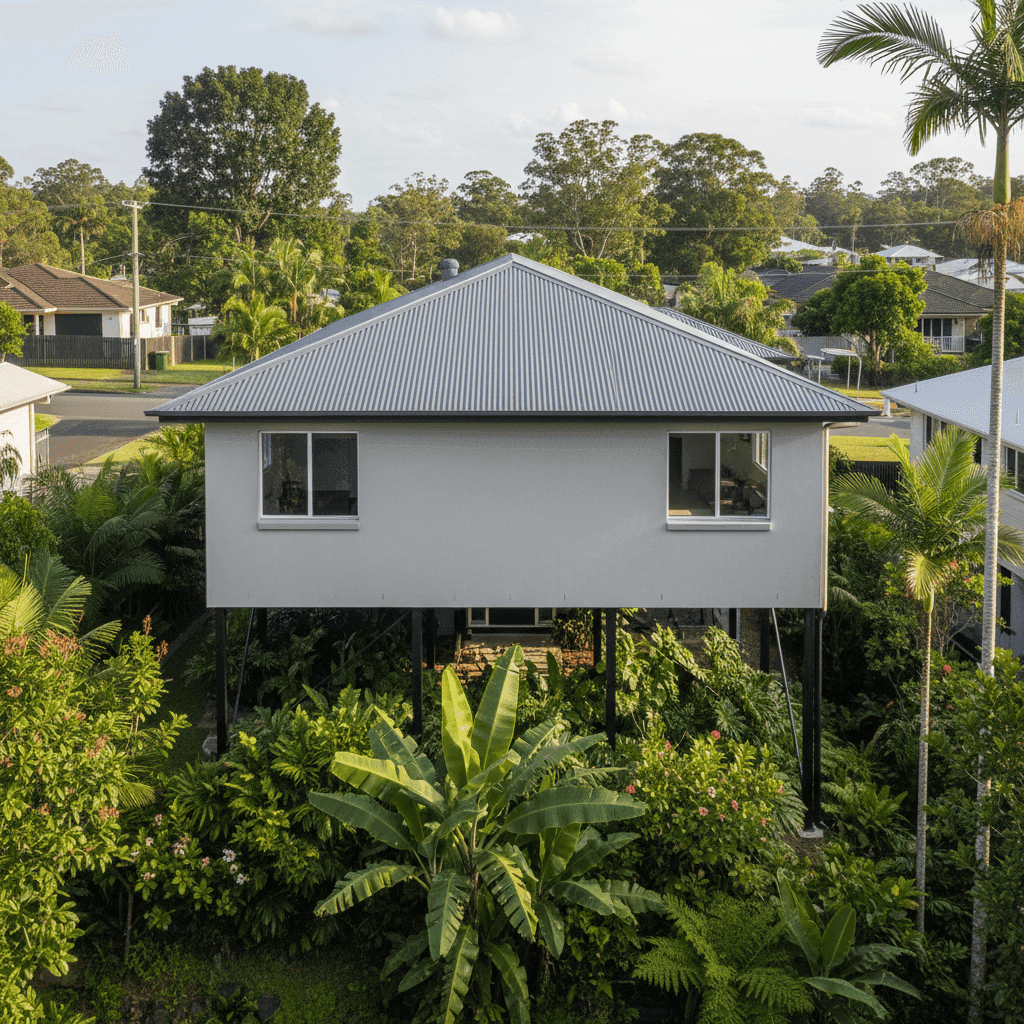
If you own a free standing home in Jubilee Heights, QLD 4860, you already know that insurance isn't cheap in Far North Queensland. Sitting in the Tablelands region, Jubilee Heights is a scenic but weather-exposed locality where cyclone risk, elevated terrain, and building characteristics all play a meaningful role in what you pay for cover. This article breaks down a real home and contents insurance quote for a four-bedroom, two-bathroom home in the suburb — and puts it in context against local, state, and national benchmarks.
---
Is This Quote Fair?
The quote in question comes in at $6,509 per year (or $617/month) for combined home and contents cover, with a building sum insured of $1,205,000 and contents valued at $10,000. Both the building and contents excess sit at $1,000.
Our price rating for this quote is FAIR — Around Average, and the data backs that up. While $6,509/yr might feel like a significant outlay, it actually sits below the suburb median of $8,766/yr and well below the suburb average of $16,821/yr. In the context of Jubilee Heights specifically, this quote is competitive.
That said, "fair" doesn't mean "the best available." Insurance markets are dynamic, and the same property can attract meaningfully different premiums depending on the insurer, the policy structure, and even how the risk is assessed. It's always worth shopping around — even when your current quote looks reasonable.
---
How Jubilee Heights Compares
Understanding where your premium sits relative to broader benchmarks is one of the most useful things you can do as a homeowner. Here's how the numbers stack up:
| Benchmark | Premium |
|---|---|
| This Quote | $6,509/yr |
| Jubilee Heights Suburb Median | $8,766/yr |
| Jubilee Heights Suburb Average | $16,821/yr |
| Tablelands LGA Average | $18,083/yr |
| QLD State Average | $9,129/yr |
| QLD State Median | $3,903/yr |
| National Average | $5,347/yr |
| National Median | $2,764/yr |
A few things stand out here. First, the enormous spread within Jubilee Heights itself — from a 25th percentile of $2,983/yr to a 75th percentile of $30,129/yr — reflects just how variable insurance pricing can be in cyclone-prone areas. Insurers price risk very differently, and a property's specific features (construction type, elevation, proximity to flood zones) can send premiums in wildly different directions.
Second, the Jubilee Heights suburb average of $16,821/yr is nearly double the QLD state average of $9,129/yr, and more than three times the national average of $5,347/yr. This is a clear signal that location-based risk — primarily cyclone exposure — is a dominant pricing factor in this postcode.
At $6,509/yr, this quote sits above the national median but below the state average, which is a reasonable outcome for a high-risk region.
---
Property Features That Affect Your Premium
Several characteristics of this property directly influence what insurers charge. Understanding them can help you have more informed conversations with your insurer or broker.
Cyclone Risk Area
This is arguably the single biggest driver of elevated premiums in Jubilee Heights. Properties in cyclone-declared zones attract significantly higher premiums due to the potential for catastrophic wind and storm damage. Insurers price this risk heavily, and it's reflected in the suburb's wide premium range and high averages.
Concrete External Walls
Concrete construction is generally viewed favourably by insurers — it's more resistant to fire, termites, and wind damage compared to timber weatherboard. This likely works in the homeowner's favour and may help moderate the premium relative to less resilient wall types.
Steel / Colorbond Roof
Colorbond roofing is a popular and durable choice in Queensland. It performs well in high-wind conditions and is resistant to corrosion, both of which are relevant in Far North Queensland's climate. This is another feature that insurers tend to view positively.
Stump Foundation (Elevated Less Than 1m)
The home sits on stumps and is elevated by less than one metre. In Queensland, elevated homes can offer some flood resilience, though the benefit diminishes at lower elevations. Stump foundations also introduce some additional considerations around underfloor access and potential vulnerability to wind uplift, which insurers factor in.
Timber / Laminate Flooring
Timber and laminate floors can be more susceptible to water damage than tiles, which may nudge the contents and internal fitout replacement cost slightly higher. This is worth keeping in mind when reviewing your sum insured.
Ducted Climate Control
A ducted air conditioning system adds meaningful value to the home's fitout and is factored into the building sum insured. These systems can be costly to repair or replace after storm or water damage, so ensuring the sum insured adequately covers this is important.
High Building Sum Insured ($1,205,000)
The building is insured for just over $1.2 million. For a four-bedroom concrete home with quality fitout and ducted climate control in a regional Queensland location, this figure may reflect genuine rebuild costs — particularly given elevated construction costs in Far North Queensland. It's worth reviewing this figure periodically with a quantity surveyor or using an online building calculator to ensure it remains accurate.
---
Tips for Homeowners in Jubilee Heights
1. Compare Quotes Across Multiple Insurers
The premium spread in Jubilee Heights is extraordinary — from under $3,000 to over $30,000 per year for similar properties. That range exists because insurers genuinely price cyclone risk differently. Getting at least three quotes before renewing is one of the highest-value actions you can take.
2. Review Your Building Sum Insured Annually
Construction costs in regional Queensland have risen significantly in recent years. An underinsured home can leave you seriously out of pocket after a major claim. Reassess your sum insured each year, and consider engaging a building estimator if your policy is approaching renewal.
3. Understand Your Cyclone Excess
Many policies in cyclone-declared areas include a separate cyclone excess that is higher than the standard excess. Make sure you know what your policy says — a $1,000 standard excess doesn't always apply to cyclone events. Read the Product Disclosure Statement (PDS) carefully.
4. Consider Mitigation Improvements
Some insurers offer premium discounts for homes with cyclone-rated shutters, reinforced roofing connections, or other wind-mitigation features. If you're planning any home improvements, it's worth asking your insurer whether they could translate into a lower premium.
---
Compare Your Quote with CoverClub
Whether you're renewing your policy or shopping for the first time, CoverClub makes it easy to see how your quote stacks up. Our data-driven platform lets you compare real premium benchmarks for your suburb and get quotes tailored to your property. Start comparing now at CoverClub — it only takes a few minutes and could save you thousands.