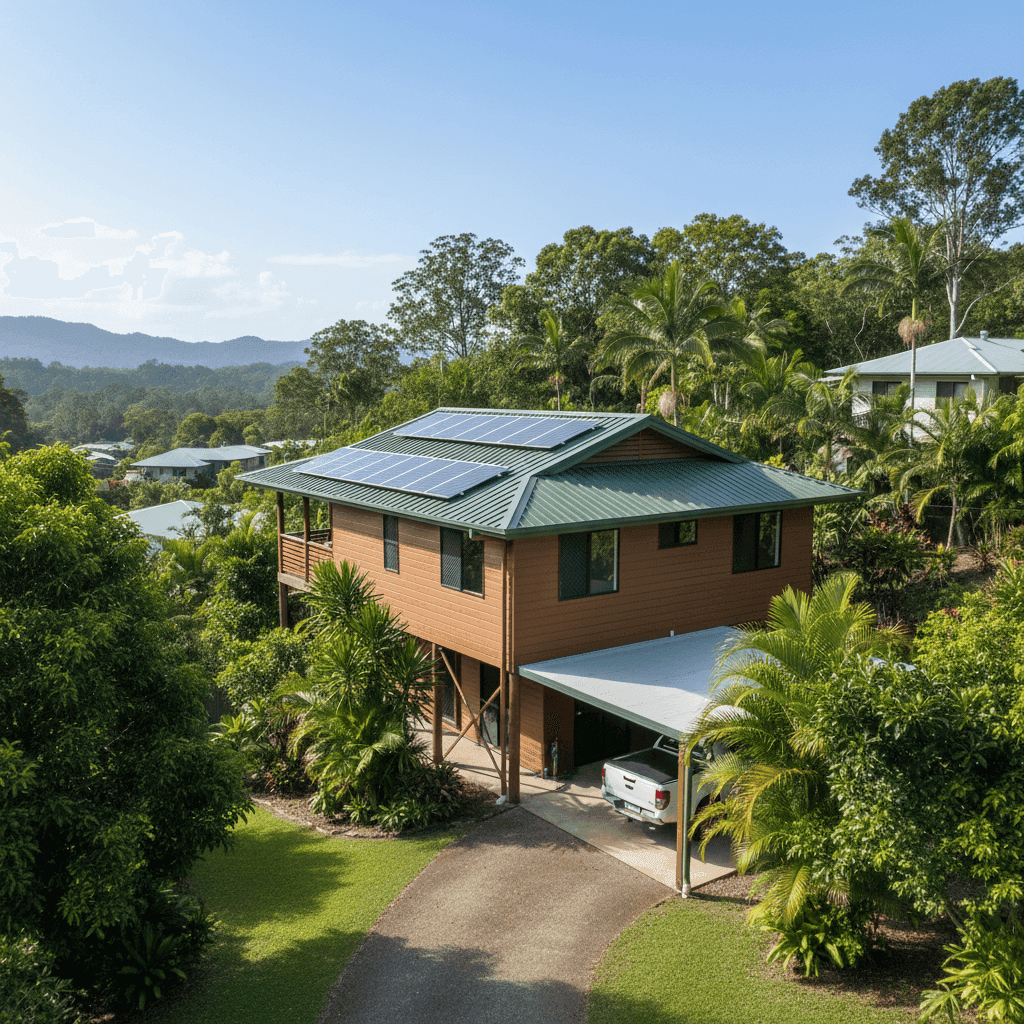
Julatten is a quiet rural locality nestled in the Tablelands region of Far North Queensland — a place known for its lush rainforest surrounds, birdlife, and relaxed lifestyle. But for homeowners in this postcode, insurance is anything but relaxed. This article breaks down a real home and contents insurance quote for a three-bedroom, free-standing home in Julatten (QLD 4871), examines whether the price stacks up, and offers practical guidance for locals looking to manage their cover costs.
---
Is This Quote Fair?
The quote in question comes in at $39,418 per year (or $3,778/month) for combined home and contents cover, with a building sum insured of $796,500 and $150,000 in contents cover. Both the building and contents excess are set at $1,000.
Our price rating for this quote is Expensive — Above Average, and the data backs that up clearly.
To put it in perspective:
- The suburb average for Julatten is $5,769/yr
- The QLD state average is $9,129/yr
- The national average across Australia is $5,347/yr
This quote is more than four times the suburb average and more than seven times the national median of $2,764/yr. Even against the upper end of the local market — the 75th percentile sits at $7,308/yr — this premium is dramatically higher.
That said, context matters enormously here. The building sum insured of $796,500 is substantial, and several property characteristics (discussed below) are significant risk factors that insurers price heavily in this part of Queensland.
---
How Julatten Compares
Understanding where Julatten sits relative to broader benchmarks helps homeowners gauge what's typical — and what's not.
| Benchmark | Premium |
|---|---|
| Julatten suburb average | $5,769/yr |
| Julatten suburb median | $3,966/yr |
| Julatten 25th percentile | $2,774/yr |
| Julatten 75th percentile | $7,308/yr |
| QLD state average | $9,129/yr |
| QLD state median | $3,903/yr |
| National average | $5,347/yr |
| National median | $2,764/yr |
| LGA (Carpentaria) average | $5,066/yr |
You can explore full suburb-level data on our Julatten insurance stats page, compare it to the broader Queensland insurance landscape, or view national home insurance benchmarks.
It's worth noting that the sample size for Julatten is relatively small — just 7 quotes — so the suburb averages should be interpreted with some caution. A few high-value or high-risk properties can skew the figures considerably in a small dataset like this.
Queensland as a state already carries some of the highest home insurance premiums in the country, largely due to extreme weather exposure. The QLD state average of $9,129/yr is well above the national average of $5,347/yr, reflecting the elevated risk profile of the region. Even so, this particular quote sits well above the state average — pointing to specific risk factors at play for this property.
---
Property Features That Affect Your Premium
Several characteristics of this property are likely driving the premium higher than typical benchmarks. Here's what insurers are likely factoring in:
🌀 Cyclone Risk Area
This is arguably the most significant factor. Julatten sits within a cyclone risk zone, and insurers apply substantial loadings to premiums in these areas. Cyclone damage can be catastrophic and widespread, and the cost of claims in Far North Queensland is reflected directly in the price of cover. This single factor alone can multiply a base premium several times over.
🏠 Stump Foundation
Homes built on stumps (also known as pier or pole foundations) are common in Queensland — particularly in older and rural builds — but they can be viewed by some insurers as more vulnerable to certain types of damage, including storm and flood events. The elevated position can help with flooding, but the foundation type still influences underwriting assessments.
🪵 Hardiplank / Hardiflex External Walls
Hardiplank and Hardiflex are fibre cement cladding products that are generally well-regarded for durability and fire resistance. However, they're not as robust as brick veneer or double brick in cyclone conditions, and some insurers price this accordingly. The good news is that fibre cement is far better than weatherboard in most risk scenarios.
🏗️ Construction Year: 2005
The home was built in 2005, which means it was constructed under relatively modern building codes — including Queensland's cyclone-resistant building standards that were significantly updated in the late 1990s. This is a positive factor and may help moderate the premium compared to older homes in the area.
☀️ Solar Panels
Solar panels add to the replacement value of the home and are typically included in the building sum insured. They can also introduce additional risk (e.g., storm damage, electrical faults), which some insurers factor into their pricing.
❄️ Ducted Climate Control
Ducted air conditioning systems are a significant fixture and contribute to the overall building replacement cost. At a building sum insured of $796,500 for a 139 sqm home, the high-quality fittings and inclusions like ducted climate control are clearly reflected in the insured value.
---
Tips for Homeowners in Julatten
Managing home insurance costs in a cyclone-prone, regional area isn't always straightforward — but there are steps you can take to ensure you're getting fair value.
1. Review Your Sum Insured Carefully
A building sum insured of $796,500 for a 139 sqm home is on the higher end. Make sure your sum insured reflects the actual cost to rebuild — not the market value of the land and property. Overinsuring can unnecessarily inflate your premium, while underinsuring leaves you exposed. Consider getting a professional building valuation to confirm the right figure.
2. Compare Quotes from Multiple Insurers
This is the single most impactful thing you can do. Insurers price cyclone-zone properties very differently, and the spread between the cheapest and most expensive quotes can be enormous. Get a quote through CoverClub to compare options side by side without the legwork.
3. Ask About Cyclone Mitigation Discounts
Some insurers offer discounts for homes that have been cyclone-proofed — for example, through roof tie-down upgrades, impact-resistant windows, or other structural improvements. If you've made any such improvements, make sure your insurer knows about them.
4. Consider Your Excess Strategy
Both the building and contents excess on this policy are set at $1,000. Increasing your excess (e.g., to $2,500 or $5,000) can meaningfully reduce your annual premium. Just make sure you're comfortable covering that amount out of pocket in the event of a claim.
---
Ready to Compare?
Whether you're reviewing an existing policy or shopping for cover for the first time, comparing quotes is the smartest way to make sure you're not overpaying. CoverClub makes it easy to see how your premium stacks up and find better value — start your comparison here.