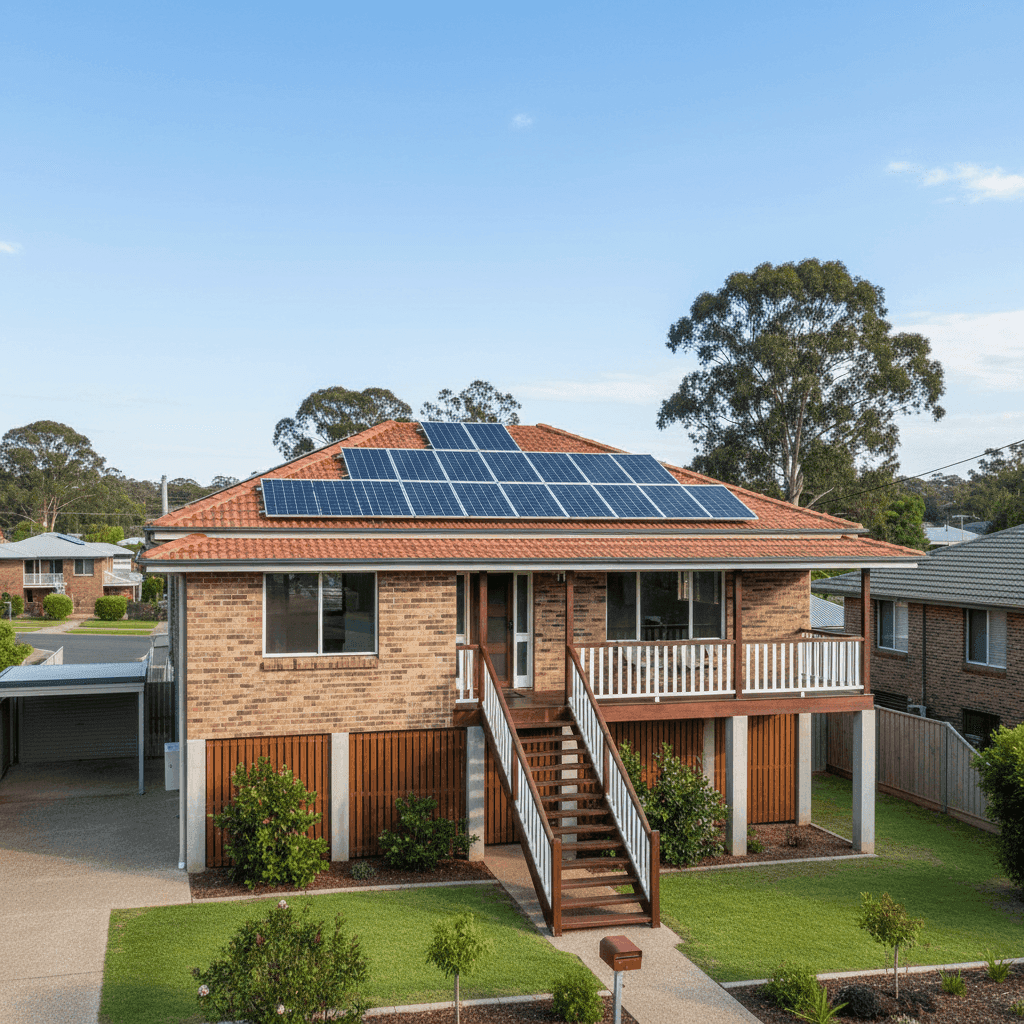
If you own a free standing home in Junction Hill, NSW 2460, you're probably curious about whether you're paying a fair price for home and contents insurance — or leaving money on the table. This article breaks down a real insurance quote for a three-bedroom, two-bathroom property in the area, comparing it against local, state, and national benchmarks so you can make a more informed decision at renewal time.
---
Is This Quote Fair?
The quote in question comes in at $1,426 per year (or around $145 per month) for combined home and contents cover, with a building sum insured of $200,000 and contents valued at $100,000. The building excess is $3,000 and the contents excess is $1,000.
Our price rating for this quote? Cheap — below average. That's a strong result for the homeowner.
To put it in perspective: the NSW state average premium sits at a hefty $9,528 per year, with a state median of $3,770. Nationally, the average premium across Australia is $5,347, with a median of $2,764. This quote lands well below every one of those benchmarks — including the national median — which suggests the homeowner is getting genuinely competitive pricing for their cover.
It's worth noting that averages can be skewed by high-risk properties (think flood zones, cyclone corridors, and coastal erosion areas), so the median figures are often a more reliable guide. Even so, at $1,426 annually, this quote comfortably undercuts both the NSW and national medians by a significant margin.
---
How Junction Hill Compares
Suburb-level comparison data isn't available for Junction Hill specifically, but we can still draw meaningful conclusions from the broader picture. You can explore available Junction Hill insurance stats here.
What we do know is that Junction Hill sits within the Richmond Valley LGA — and that context is striking. The Richmond Valley LGA average premium is a staggering $41,437 per year, which reflects the elevated flood and weather risk that affects many properties across the region. The Clarence River system and surrounding low-lying land make parts of this LGA among the most expensive to insure in New South Wales.
Against that backdrop, a $1,426 quote is exceptional. It suggests this particular property has characteristics that meaningfully reduce its risk profile in the eyes of insurers — and as we'll explore below, several features of the home likely contribute to that outcome.
| Benchmark | Annual Premium |
|---|---|
| This quote | $1,426 |
| NSW median | $3,770 |
| NSW average | $9,528 |
| National median | $2,764 |
| National average | $5,347 |
| Richmond Valley LGA average | $41,437 |
---
Property Features That Affect Your Premium
Insurance underwriters don't just look at your postcode — they assess the specific characteristics of your home. Here's how the features of this Junction Hill property likely influence the premium:
Elevated on Stumps
This is arguably the most significant factor. The home is elevated by at least one metre on stumps, which dramatically reduces the risk of flood and stormwater inundation. In a region like Richmond Valley — where flooding is a known and recurring hazard — being raised off the ground is one of the most effective natural risk mitigants a property can have. Insurers reward this with lower premiums.
Brick Veneer Walls and Tiled Roof
Brick veneer construction is considered a solid, low-maintenance building material that performs well in fire and storm scenarios. Combined with a tiled roof, the home presents a relatively robust exterior profile. Tiles are durable and fire-resistant, though they can be vulnerable to hail damage — something worth keeping in mind for storm-prone areas.
Built in 1990
Homes from this era were constructed under building codes that are reasonably modern without being subject to the quirks of older heritage properties. A 1990 build strikes a reasonable balance — not so old as to raise concerns about ageing infrastructure, and not so new that replacement costs are sky-high.
Timber and Laminate Flooring
Timber and laminate floors can be more susceptible to water damage than tiles, but in an elevated home, the risk of water reaching internal flooring is already reduced. Standard fittings quality also keeps the replacement cost estimate grounded, which is reflected in the $200,000 building sum insured.
Solar Panels
The property has solar panels, which are increasingly common across Australian homes. Most standard home insurance policies cover solar panels as part of the building structure, but it's worth confirming this with your insurer and ensuring the sum insured accounts for their replacement value.
No Pool, No Cyclone Risk
The absence of a swimming pool removes a liability exposure that can nudge premiums upward. And while parts of coastal NSW can be affected by severe weather, Junction Hill is not classified as a cyclone risk area, which keeps the wind and storm loading on the premium relatively modest.
---
Tips for Homeowners in Junction Hill
Whether you're reviewing your current policy or shopping around for the first time, here are some practical steps to make sure you're getting the best deal:
- Review your sum insured annually. Building costs have risen sharply in recent years due to labour and material shortages. Make sure your $200,000 building cover still reflects the true cost of rebuilding your home — not just its market value. Underinsurance is one of the most common and costly mistakes Australian homeowners make.
- Confirm flood cover is included. Given the Richmond Valley LGA's flood history, it's essential to check whether your policy explicitly includes flood cover (as distinct from storm or rainwater damage). Some policies treat these differently, and the distinction matters enormously when it comes to claim time.
- Check your solar panels are covered. With solar panels on the roof, verify that your policy covers them under the building section and that their value is factored into your sum insured. Some insurers require separate endorsement for solar systems.
- Consider your excess carefully. This policy carries a $3,000 building excess — which is on the higher side. A higher excess typically lowers your premium, but it means you'll need to cover more out of pocket for smaller claims. Make sure this trade-off suits your financial situation.
---
Compare Quotes and Find Better Value
Whether this quote represents your current policy or one you're considering, the best way to know you're getting value is to compare. At CoverClub, we make it easy to see how different insurers price your specific property — so you're not flying blind at renewal time.
Get a home insurance quote for your Junction Hill property and see how your premium stacks up in seconds. With premiums across the Richmond Valley LGA averaging over $41,000 a year, finding the right cover at the right price has never mattered more.