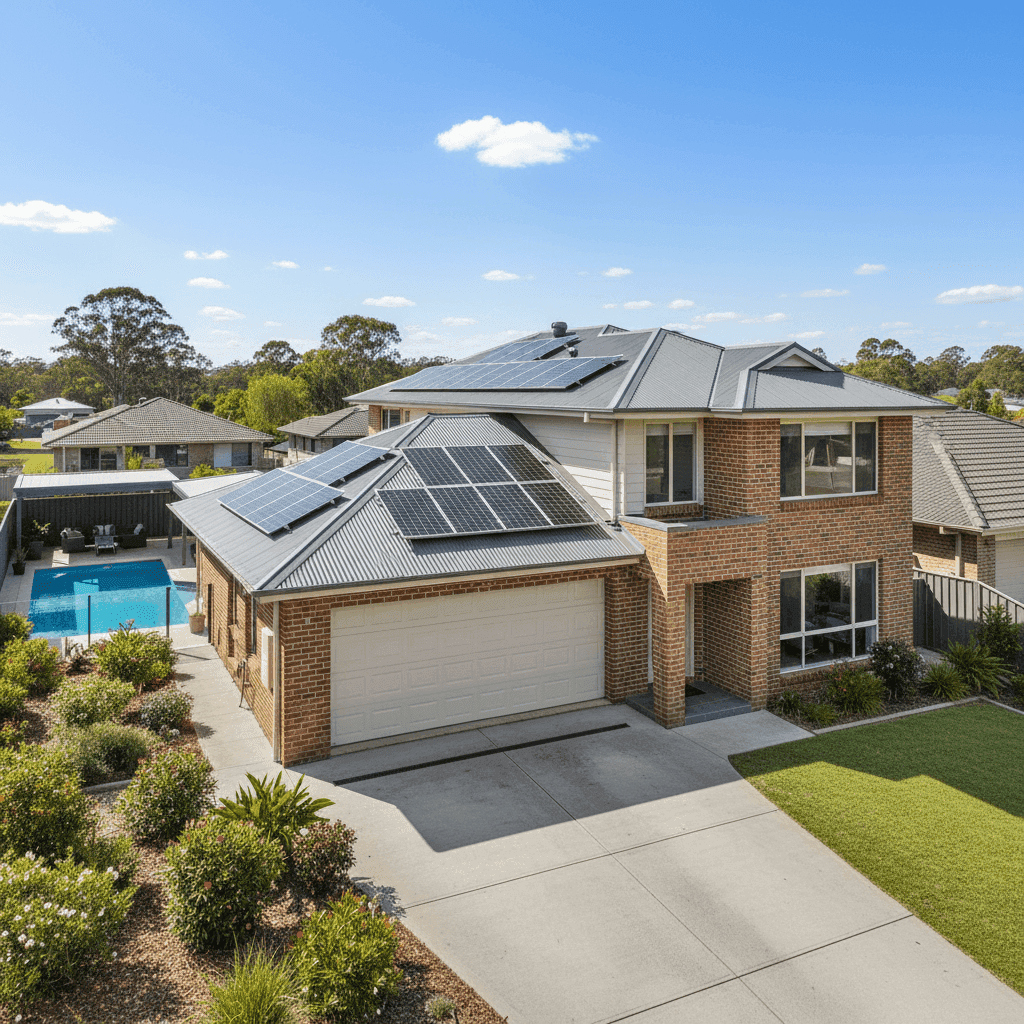
If you own a free standing home in Junction Hill, NSW 2460, you already know this part of the Clarence Valley offers a relaxed regional lifestyle — but that doesn't necessarily mean relaxed insurance premiums. We recently analysed a home and contents insurance quote for a four-bedroom, two-bathroom brick veneer home in the suburb, and the numbers are worth unpacking in detail.
Whether you're shopping for your first policy, renewing an existing one, or simply curious about whether your insurer is treating you fairly, this breakdown will help you make a more informed decision.
---
Is This Quote Fair?
The quote in question comes in at $17,689 per year (or $1,695/month) for combined home and contents cover, with a building sum insured of $545,000 and contents covered to $90,000. Both the building and contents excess are set at $1,000.
Our price rating for this quote is EXPENSIVE — above average by a significant margin.
To put that in perspective:
- The suburb average for Junction Hill is just $3,356/year
- The NSW state average sits at $9,528/year
- The national average across Australia is $5,347/year
At $17,689, this quote is more than five times the local suburb average and nearly double the NSW state average. Even accounting for the above-average sum insured ($545,000 for building alone is on the higher end for this area), the premium stands out as notably elevated.
That said, it's important to note that this quote includes a number of features — a swimming pool, solar panels, and ducted climate control — that each add complexity and replacement cost to the risk profile. We'll dig into those shortly.
---
How Junction Hill Compares
Understanding where a quote sits relative to the broader market is one of the most useful tools available to homeowners. Here's how Junction Hill stacks up:
| Benchmark | Annual Premium |
|---|---|
| This Quote | $17,689 |
| Junction Hill Suburb Average | $3,356 |
| Junction Hill Suburb Median | $3,104 |
| Junction Hill 25th Percentile | $2,781 |
| Junction Hill 75th Percentile | $3,821 |
| NSW State Average | $9,528 |
| NSW State Median | $3,770 |
| National Average | $5,347 |
| National Median | $2,764 |
| Richmond Valley LGA Average | $41,437 |
You can explore the full local data on the Junction Hill suburb insurance stats page, compare it against all NSW suburbs, or see where it sits on the national insurance landscape.
One figure that stands out is the Richmond Valley LGA average of $41,437/year — an extraordinarily high figure that likely reflects a small number of high-value or high-risk properties skewing the average. The suburb-level data (median: $3,104) is a far more reliable benchmark for typical homeowners in Junction Hill.
This quote, at $17,689, sits well above the suburb's 75th percentile ($3,821), meaning it's more expensive than at least 75% of comparable quotes in the area — a clear signal that shopping around is worthwhile.
---
Property Features That Affect Your Premium
Several characteristics of this property directly influence what insurers charge. Understanding them helps you have a more informed conversation with any insurer or broker.
Building Size & Sum Insured
At 214 square metres with a building sum insured of $545,000, this is a solidly sized home with a meaningful rebuild cost. Larger homes with higher replacement values naturally attract higher premiums — this is one of the biggest drivers in this quote.
Brick Veneer Walls & Colorbond Roof
Brick veneer construction is generally viewed favourably by insurers — it's durable, fire-resistant, and widely used across Australia. Combined with a steel/Colorbond roof, this home has a construction profile that typically attracts standard or even discounted rates. These features shouldn't be pushing the premium up.
Slab Foundation & Tile Flooring
A concrete slab foundation is considered low-risk by most insurers — there's no subfloor cavity to worry about, and it performs well in a range of conditions. Tile flooring is similarly regarded as durable and low-maintenance. Neither of these features should be adding significant cost.
Swimming Pool
A pool adds to the insured value of the property and introduces liability considerations. Insurers factor in the cost of pool fencing, filtration equipment, and the pool structure itself. This can meaningfully increase both the building sum insured and the overall premium.
Solar Panels
Solar panels are an increasingly common feature in regional NSW, but they do add to your rebuild cost. A quality solar system can add tens of thousands of dollars to the replacement value of a home, and insurers price accordingly.
Ducted Climate Control
Ducted air conditioning is a significant fixed installation — it runs through the roof cavity and walls, and replacing it after a major event (fire, storm, or flood) is expensive. Insurers include it in the building sum insured, and it contributes to the overall premium.
Construction Year: 1994
Homes built in 1994 are generally considered mid-age — not so old as to attract heritage concerns, but old enough that some components (roofing, plumbing, electrical) may be approaching the end of their serviceable life. This can be a mild risk factor for some insurers.
---
Tips for Homeowners in Junction Hill
If you're looking at a quote like this and wondering what you can do, here are four practical steps worth considering.
1. Compare Multiple Quotes
This is the single most impactful thing you can do. With suburb averages sitting around $3,356/year, there's clearly a wide spread of pricing in this market. Get a new quote at CoverClub and see what competing insurers are offering for the same cover.
2. Review Your Sum Insured
Make sure your building sum insured reflects the actual rebuild cost of your home — not its market value. Over-insuring is a common and costly mistake. Use a building cost calculator or speak to a quantity surveyor to get an accurate figure. Even a modest reduction in the sum insured can have a noticeable effect on your annual premium.
3. Consider a Higher Excess
Both the building and contents excess on this policy are set at $1,000. Opting for a higher voluntary excess — say $2,000 or $2,500 — can reduce your annual premium noticeably. Just make sure you can comfortably cover the excess if you need to make a claim.
4. Bundle and Loyalty-Check
If your home and contents are insured separately, bundling them under one policy (as this quote does) often attracts a discount. Equally, if you've been with the same insurer for several years without a claim, ask explicitly about loyalty discounts — many insurers offer them but don't advertise them prominently.
---
Ready to Find a Better Deal?
A premium of $17,689 per year is significant — and the data suggests there may be room to find more competitive cover for this Junction Hill property. At CoverClub, we make it easy to compare home and contents insurance quotes side by side, so you can see exactly what you're getting and what you're paying for.
Start comparing quotes today at CoverClub and find out whether you could be paying less for the same level of protection.