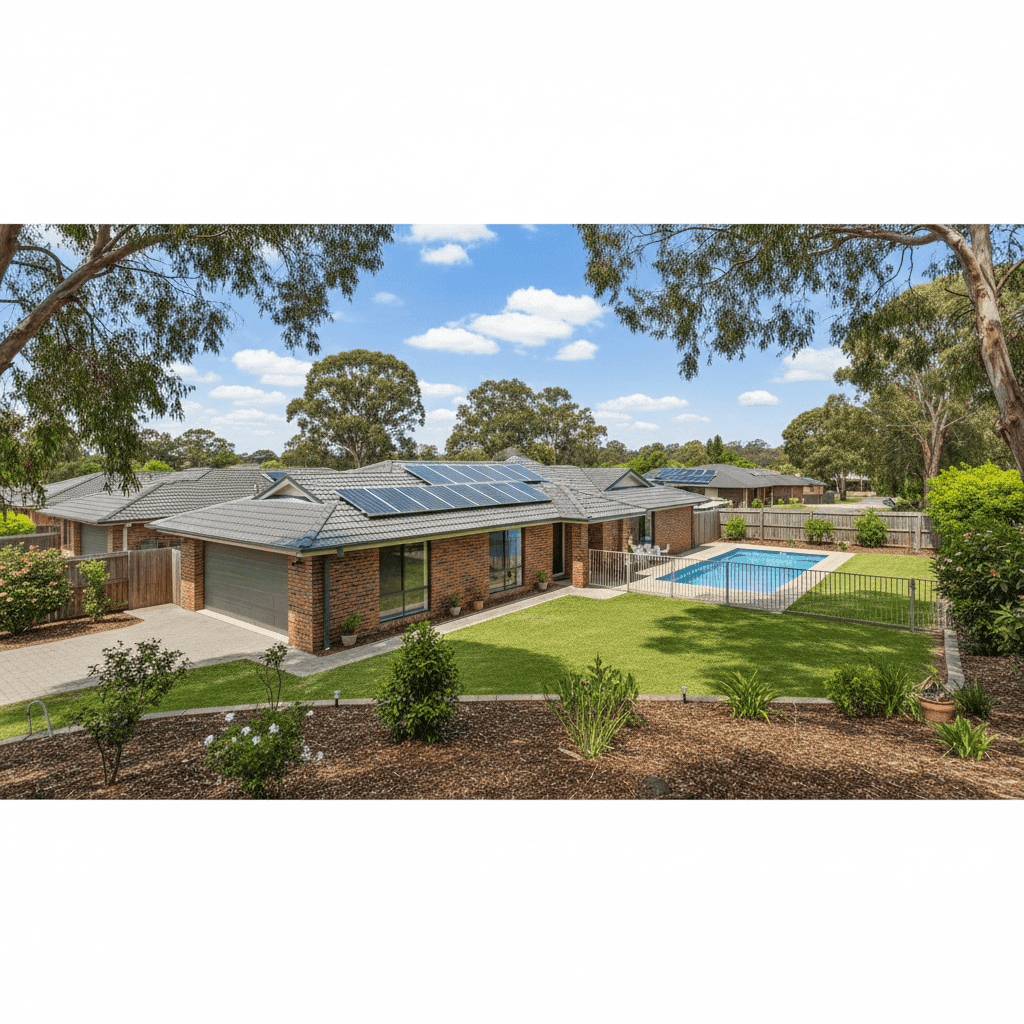
If you own a home in Junction Hill, NSW 2460, you've probably wondered whether you're paying too much — or too little — for home insurance. Using a real quote for a four-bedroom, two-bathroom free standing home in the area, we break down exactly what drives the premium, how it stacks up against local and national benchmarks, and what you can do to make sure you're getting the best value cover.
---
Is This Quote Fair?
The short answer: yes — and then some. This quote came in at $2,641 per year (or $246/month) for combined Home and Contents cover, with a building sum insured of $489,000 and contents valued at $50,000. CoverClub's pricing engine rates this as CHEAP — below average for the area.
To put that in perspective, the suburb average for Junction Hill sits at $3,356/year, meaning this quote is roughly $715 cheaper than what most local homeowners are paying. It also comes in well under the suburb median of $3,104/year and even below the 25th percentile of $2,781/year — meaning fewer than one in four quotes in the area are this affordable.
For a property of this size and specification, a premium in this range represents genuinely strong value. That said, it's worth understanding why the quote landed where it did, and whether the level of cover is appropriate for the property.
---
How Junction Hill Compares
Junction Hill sits within the Richmond Valley LGA, and the broader pricing data tells an interesting story. Check out the full suburb stats for Junction Hill (2460) for a deeper dive.
Here's how this quote compares across different benchmarks:
| Benchmark | Premium |
|---|---|
| This quote | $2,641/yr |
| Suburb average (Junction Hill) | $3,356/yr |
| Suburb median | $3,104/yr |
| Suburb 25th percentile | $2,781/yr |
| NSW average | $9,528/yr |
| NSW median | $3,770/yr |
| National average | $5,347/yr |
| National median | $2,764/yr |
| Richmond Valley LGA average | $41,437/yr |
A few things stand out here. First, the NSW state average of $9,528/year is dramatically higher than what most Junction Hill residents pay — this is largely because coastal and flood-prone areas of NSW push that figure up significantly. You can explore the full NSW insurance data to see how different postcodes compare.
Second, the Richmond Valley LGA average of $41,437/year looks alarming at first glance. This extreme figure is almost certainly driven by a small number of high-risk properties — likely flood-affected or high-value rural holdings — which skew the LGA mean considerably. The median is a far more reliable indicator for typical homeowners.
Finally, compared to the national picture, this quote sits just below the national median of $2,764/year, confirming it's a competitive result by any measure.
---
Property Features That Affect Your Premium
Several characteristics of this particular property work in the homeowner's favour from an insurance pricing perspective.
Brick Veneer Construction Brick veneer walls are well-regarded by insurers for their durability and fire resistance. Compared to weatherboard or fibre cement cladding, brick veneer tends to attract lower premiums because it's less susceptible to fire spread and storm damage.
Tiled Roof A tiled roof is another positive signal for insurers. Tiles are long-lasting, handle hail reasonably well, and are a standard, well-understood material — all of which contribute to more favourable pricing compared to older materials like fibro or corrugated iron.
Stump Foundation The home sits on stumps, which is common for properties built in the 1980s across regional NSW. While stumped homes can be more vulnerable to movement and subfloor moisture, they're also easier to inspect and repair — and in a non-flood-prone area, this foundation type doesn't typically add significant premium loading.
Pool and Solar Panels The presence of a swimming pool adds some liability exposure, which insurers factor in. Similarly, solar panels represent an additional asset that needs to be covered — both for the panels themselves and any damage they might cause or sustain. These features can nudge premiums slightly upward, but clearly haven't pushed this quote outside competitive territory.
Ducted Climate Control Ducted air conditioning is a meaningful inclusion in the building sum insured. At $489,000, the building coverage appears well-calibrated for a 139 sqm home built in 1981 with standard fittings — ensuring the full cost of rebuilding (not just the market value) is accounted for.
No Cyclone Risk Junction Hill is not classified as a cyclone risk area, which removes one of the more significant premium loading factors that affect properties in northern Queensland and parts of Western Australia. This is a meaningful advantage for local homeowners.
---
Tips for Homeowners in Junction Hill
1. Don't underinsure your building With a rebuild cost of $489,000 on a 139 sqm home, this quote appears appropriately insured. But many homeowners set their sum insured based on market value rather than rebuild cost — which can leave a significant gap at claim time. Use a building calculator or speak to a quantity surveyor if you're unsure.
2. Review your contents cover annually $50,000 in contents cover is a common starting point, but it's easy to accumulate more than you realise — especially with solar equipment, home theatre setups, or quality appliances. Do a quick room-by-room inventory each year to make sure you're not underinsured.
3. Consider your excess carefully Both the building and contents excess on this policy are set at $2,000. A higher excess typically lowers your premium, but make sure you'd genuinely be able to cover that amount out of pocket in the event of a claim. If cash flow is a concern, a lower excess may be worth the slightly higher annual cost.
4. Compare at renewal, not just at inception Insurance pricing shifts regularly, and loyalty doesn't always pay. Even if this quote is already below average, running a fresh comparison at renewal can reveal whether better value is available — particularly as your property ages or your circumstances change.
---
Ready to Compare Home Insurance in Junction Hill?
Whether you're reviewing your current policy or insuring a home for the first time, CoverClub makes it easy to see what you should be paying. Get a home insurance quote today and find out how your premium stacks up against your neighbours — in seconds, for free.
---