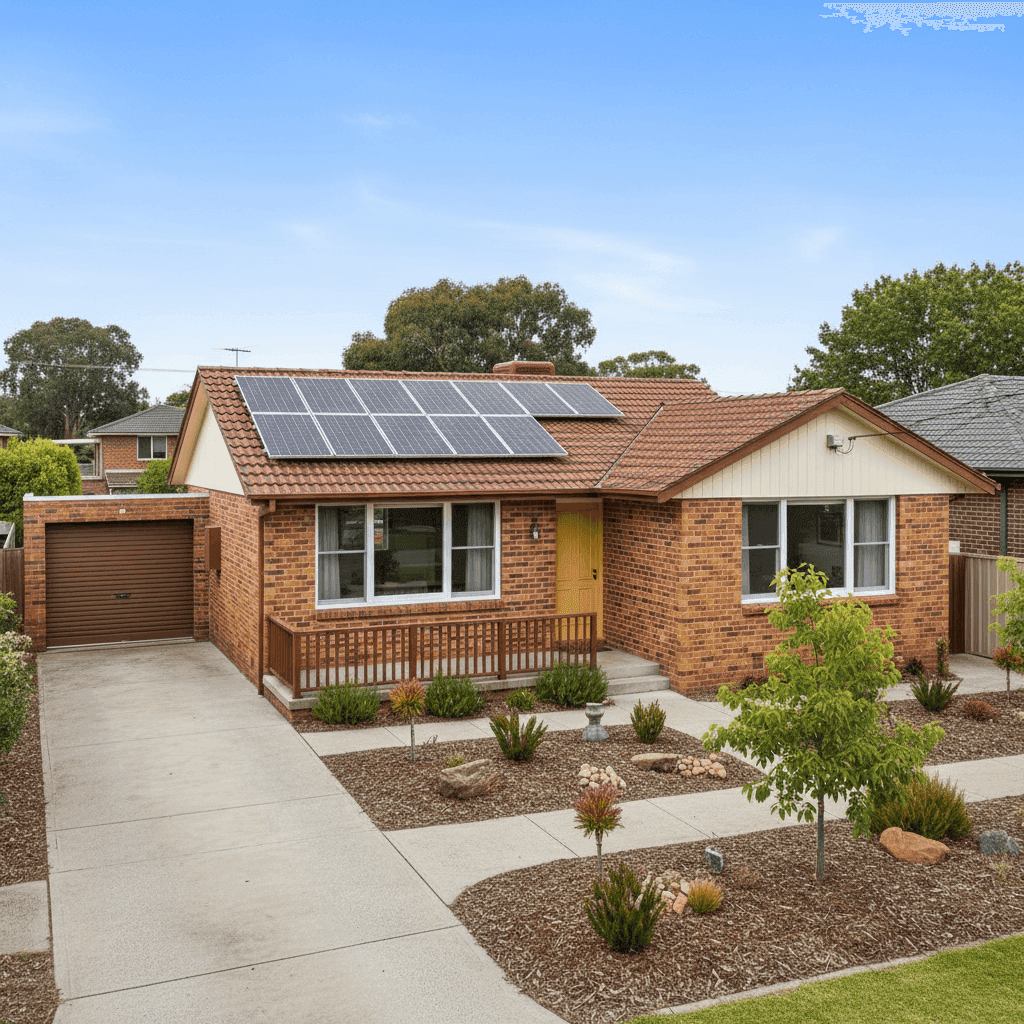
If you own a free standing home in Kaleen, ACT 2617, you're probably wondering whether the home insurance premium you've been quoted is fair — or whether you're leaving money on the table. Kaleen is a well-established suburb in Belconnen, popular with families thanks to its leafy streets, proximity to local schools, and easy access to the Canberra CBD. It's also a suburb where insurance costs can vary significantly depending on who you ask.
In this article, we break down a real home and contents insurance quote for a four-bedroom, two-bathroom free standing home in Kaleen, and compare it against suburb, ACT, and national benchmarks to help you understand what "good value" actually looks like.
---
Is This Quote Fair?
The annual premium for this property came in at $1,063 per year (or roughly $104 per month), covering a building sum insured of $653,000 and $100,000 in contents. Our price rating for this quote is CHEAP — below average for the area.
To put that in perspective: the suburb average for Kaleen sits at $2,133 per year, and the median is $2,104 per year based on 70 quotes collected in the area. This premium is less than half the local average — a substantial saving of over $1,000 annually compared to what many Kaleen homeowners are paying.
It's worth noting the excess structure on this policy: a $2,000 building excess and a $1,000 contents excess. Higher excesses are one of the most common ways insurers reduce upfront premiums, so it's important to weigh the lower annual cost against the out-of-pocket amount you'd need to cover before a claim kicks in. For homeowners with an emergency fund in place, this trade-off can make excellent financial sense.
---
How Kaleen Compares
Zooming out beyond the suburb level paints an even clearer picture of just how competitive this quote is.
| Benchmark | Average Premium |
|---|---|
| Kaleen (suburb) | $2,133 / yr |
| ACT (state) | $2,203 / yr |
| Unincorporated ACT (LGA) | $2,352 / yr |
| National average | $2,965 / yr |
| This quote | $1,063 / yr |
Kaleen's suburb average of $2,133 sits slightly below the ACT state average of $2,203, suggesting the suburb is generally considered a moderate-risk area by insurers. Compared to the national average of $2,965, Kaleen homeowners are already in a relatively favourable position — but this particular quote takes things a step further.
You can explore the full breakdown of home insurance statistics for Kaleen (2617) to see how premiums are distributed across the suburb and what factors are driving costs up or down for your neighbours.
---
Property Features That Affect Your Premium
Several characteristics of this property likely contribute to its below-average premium. Understanding these factors can help you make smarter decisions when reviewing your own cover.
Brick Veneer Construction
Brick veneer is one of the most common wall types in Canberra's suburban housing stock, and insurers generally view it favourably. It offers solid fire resistance and structural durability compared to lightweight cladding materials, which can translate to lower risk assessments and more competitive premiums.
Tiled Roof
A tiled roof is considered a low-to-moderate risk roofing material by most Australian insurers. While tiles can be susceptible to hail damage, they perform well in fire scenarios and have a long lifespan when maintained properly. Given that Canberra is not a cyclone risk area, the hail consideration is the primary concern — and the ACT's climate, while prone to occasional storms, doesn't attract the same surcharges seen in northern Australia.
Construction Year: 1977
Homes built in the 1970s occupy an interesting middle ground for insurers. They're old enough that some components — plumbing, electrical wiring, roofing materials — may be approaching the end of their serviceable life, which can push premiums up. However, brick veneer homes from this era were built to solid standards and often outperform newer lightweight constructions in terms of structural resilience. Regular maintenance and updated systems can keep your risk profile (and your premium) in check.
Stump Foundation & Timber/Laminate Flooring
A stump foundation is relatively common in older Canberra homes and can be a double-edged sword from an insurance perspective. On one hand, it allows for ventilation and easier access to underfloor plumbing. On the other, it may introduce subsidence or pest-related risks if not properly maintained. Timber and laminate flooring adds to contents replacement costs in the event of water damage, so it's worth ensuring your contents sum insured reflects the true cost of replacing these finishes.
Solar Panels
This property has solar panels installed, which is increasingly common across the ACT. Most standard home and contents policies will cover rooftop solar panels as part of the building, but it's worth confirming this with your insurer — particularly for higher-value systems. Solar panels can also occasionally attract a small premium loading due to the added complexity of installation and potential electrical risk.
Ducted Climate Control
Ducted heating and cooling systems are a significant asset in Canberra homes given the city's cold winters and hot summers. These systems can be expensive to repair or replace, so ensuring your building sum insured accounts for the full cost of reinstallation is important.
---
Tips for Homeowners in Kaleen
1. Review your building sum insured regularly At $653,000, the building sum insured on this policy needs to reflect the full cost of rebuilding the home from scratch — not its market value. With construction costs rising across Australia, it's worth reassessing your sum insured annually to avoid being underinsured. Use a building cost calculator or speak to a local builder for a current estimate.
2. Understand your excess before you claim The $2,000 building excess on this policy is on the higher side. Make sure you have accessible funds set aside to cover this amount in the event of a claim. If cash flow is a concern, consider whether a lower-excess policy (at a higher premium) might suit your circumstances better.
3. Maintain your home's key systems For a 1977-built home, staying on top of maintenance is both a practical and financial priority. Ageing electrical systems, roof tiles, and underfloor plumbing are common sources of claims — and some insurers may decline cover or apply exclusions if damage is attributed to lack of maintenance. An annual inspection of your roof, gutters, and subfloor can go a long way.
4. Don't overlook contents cover A $100,000 contents sum insured is a reasonable starting point, but it's easy to underestimate the true replacement value of everything inside your home. Take a room-by-room inventory — including appliances, furniture, clothing, and electronics — to make sure you're not left short after a major event like a fire or break-in.
---
Compare Your Own Quote
Whether you're renewing your policy or shopping around for the first time, it pays to know where your premium stands relative to the market. The quote analysed here came in well below the Kaleen average — proof that significant savings are available to homeowners who take the time to compare.
Get a home insurance quote at CoverClub and see how your property stacks up against real data from across Kaleen, the ACT, and Australia. It takes just a few minutes and could save you hundreds of dollars a year.