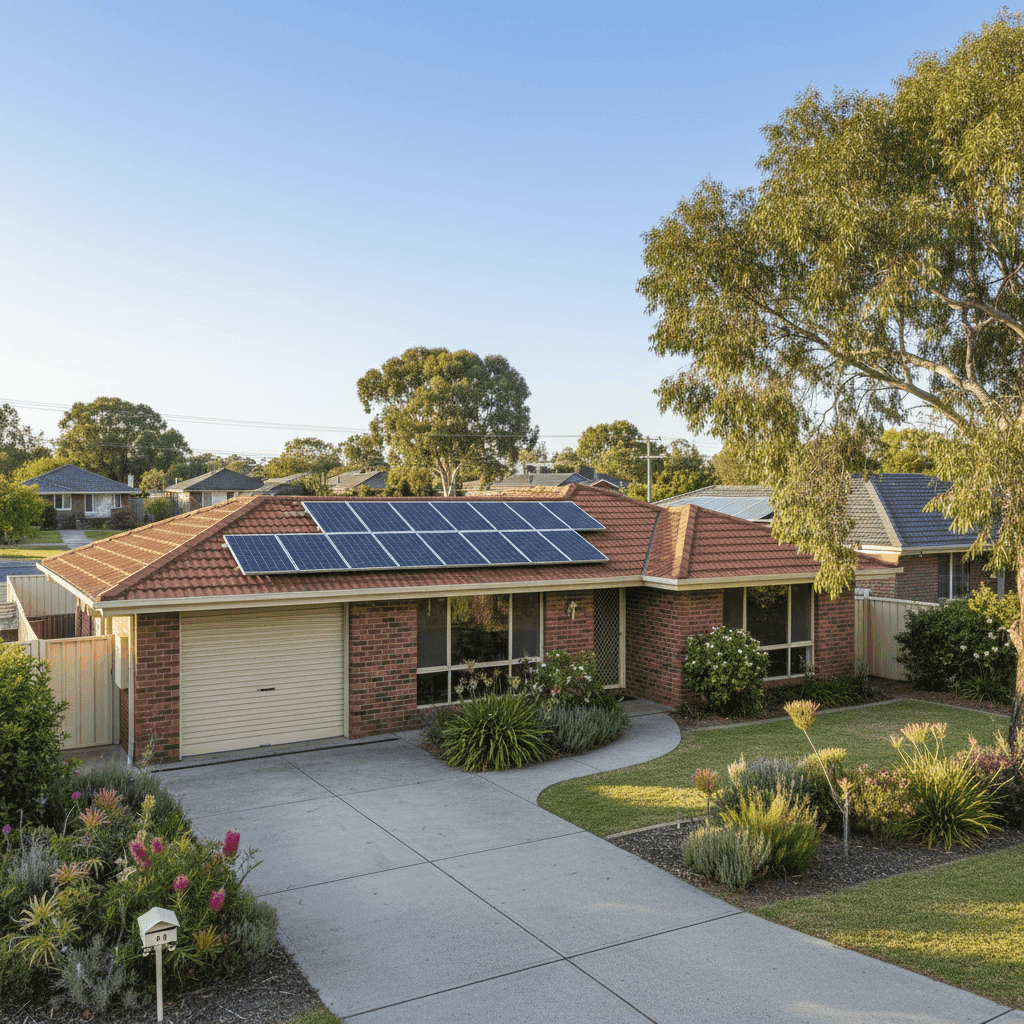
If you own a free standing home in Kaleen, ACT 2617, you're probably curious about whether you're paying a fair price for home and contents insurance. Kaleen is a well-established suburb in Belconnen, popular with families for its leafy streets, proximity to parks, and solid housing stock — much of which was built in the 1970s and 1980s. In this article, we analyse a real insurance quote for a six-bedroom brick veneer home in the area, and place it in context against suburb, state, and national benchmarks.
---
Is This Quote Fair?
The quote in question comes to $2,023 per year (or roughly $198 per month) for combined home and contents cover, with a building sum insured of $1,025,000 and contents valued at $200,000. The building excess is set at $2,000, and the contents excess at $600.
Our price rating for this quote is FAIR — Around Average.
That assessment holds up well when you look at the numbers. Based on data from 70 quotes collected in the Kaleen area, the suburb average sits at $2,133 per year and the median at $2,104. This quote comes in roughly $110 below the suburb average and about $80 below the median — a modest but meaningful saving.
To put it another way, this premium falls between the 25th percentile ($1,947/yr) and the 75th percentile ($2,326/yr) for Kaleen. That middle-of-the-road positioning is exactly what you'd expect from a "fair" rating — it's not a standout bargain, but it's certainly not overpriced either.
---
How Kaleen Compares
One of the most useful ways to evaluate any insurance quote is to zoom out and compare it across different geographic levels. Here's how Kaleen stacks up:
| Benchmark | Average Premium |
|---|---|
| Kaleen (suburb) | $2,133/yr |
| Unincorporated ACT (LGA) | $2,352/yr |
| ACT (state) | $2,203/yr |
| National | $2,965/yr |
A few things stand out here. First, Kaleen premiums are notably lower than the national average — about $830 cheaper per year than what Australian homeowners pay on average. This reflects the ACT's relatively low exposure to extreme weather events such as cyclones, flooding, and coastal storm surge, which drive up premiums significantly in other parts of the country.
Second, Kaleen sits slightly below the broader ACT state average of $2,203, suggesting it's considered a reasonably low-risk suburb even within the territory. The LGA average of $2,352 is pulled upward by other areas, so Kaleen residents are in a comparatively favourable position.
For this particular quote at $2,023, the homeowner is paying less than every benchmark listed above — a good outcome, particularly given the generous coverage limits in place.
---
Property Features That Affect Your Premium
Insurance premiums aren't calculated in a vacuum — they reflect the specific characteristics of your home. Let's look at what's likely influencing this quote.
Brick veneer construction is generally viewed favourably by insurers. It offers solid fire resistance and structural durability, which tends to translate into lower rebuild risk compared to weatherboard or lightweight cladding. Combined with a tiled roof, this home presents a fairly standard risk profile for the ACT.
The slab foundation is common in Canberra homes of this era and is generally considered stable, though it can be more costly to repair if subsidence or cracking occurs — something worth keeping in mind when setting your building sum insured.
At 139 square metres, the building size is modest for a six-bedroom home, which may suggest some rooms are on the smaller side or the layout is efficient. The $1,025,000 building sum insured reflects full replacement cost including demolition and rebuild — not market value — which is the correct way to approach this figure.
Solar panels are noted on this property. While they add value to the home, they can also add a small amount of complexity to insurance claims (particularly for roof damage), and some insurers treat them as a separate item. It's worth confirming with your insurer that your solar system is explicitly covered under your building policy.
Ducted climate control is another feature that can affect both the rebuild cost and the premium. Systems like these are expensive to replace and should be factored into your building sum insured — which, at $1,025,000, appears to account for this.
The timber and laminate flooring throughout the home is a contents and building consideration. Timber floors in particular can be costly to repair or replace after water damage, so adequate coverage here is important.
Finally, the 1975 construction year means this home is approaching 50 years old. Older homes can sometimes attract slightly higher premiums due to ageing infrastructure (plumbing, wiring, roofing materials), though well-maintained brick veneer homes of this era often hold up well.
---
Tips for Homeowners in Kaleen
Whether you're reviewing an existing policy or shopping around for the first time, here are a few practical steps worth taking.
1. Review your building sum insured regularly. Construction costs have risen significantly across Australia in recent years. A sum insured that was accurate two or three years ago may now fall short of what it would actually cost to rebuild your home. Use a building cost calculator or speak with a quantity surveyor to make sure you're not underinsured.
2. Confirm your solar panels are covered. Not all standard building policies automatically cover rooftop solar systems — or they may cover the panels but not the inverter or associated wiring. Check your Product Disclosure Statement (PDS) carefully and ask your insurer directly if you're unsure.
3. Consider your excess settings strategically. This quote carries a $2,000 building excess and a $600 contents excess. A higher excess generally lowers your premium, but make sure you could comfortably cover that amount out of pocket in the event of a claim. For many homeowners, a middle-ground excess strikes the right balance.
4. Shop around at renewal time. Insurers don't always reward loyalty with competitive pricing. The Kaleen market has a reasonable spread between the 25th and 75th percentile premiums — a gap of nearly $380 per year — which means there's genuine variation in what different providers will charge for similar cover. Comparing quotes annually is one of the simplest ways to keep costs in check.
---
Ready to Compare?
If you'd like to see how your own Kaleen property stacks up, get a home insurance quote through CoverClub and compare offers from multiple insurers in minutes. You can also explore suburb-level insurance data for Kaleen or browse ACT-wide premium statistics to get a broader picture of what homeowners in your area are paying.