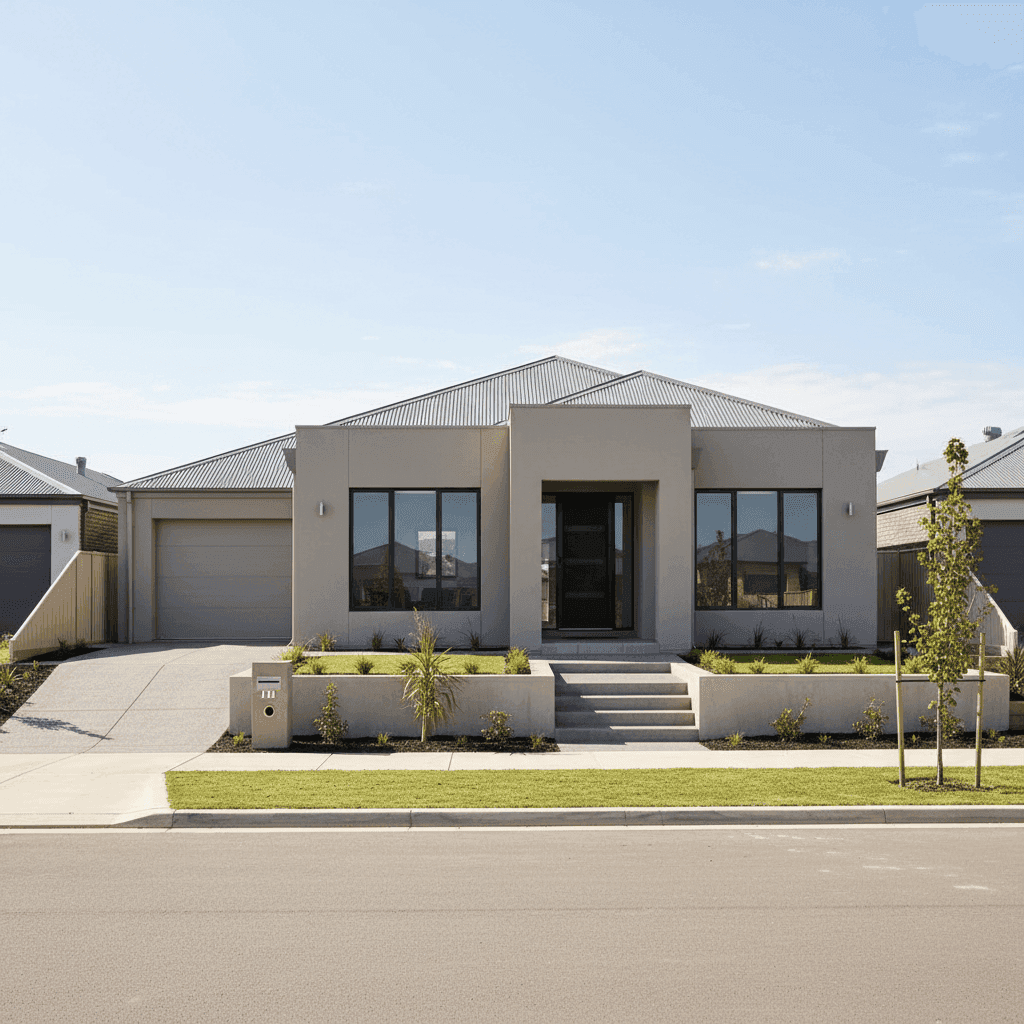
Kalkallo is one of Melbourne's fastest-growing outer northern suburbs, and with new housing estates continuing to take shape across postcode 3064, home insurance is very much front of mind for residents. This article breaks down a real home and contents insurance quote for a four-bedroom, two-bathroom free standing home in Kalkallo — and puts it in context against what other homeowners in the suburb, across Victoria, and nationally are paying.
---
Is This Quote Fair?
The short answer: yes — and then some. This quote came in at $772 per year (or roughly $72 per month), which our pricing model rates as Cheap (Below Average). That's a strong result for a home and contents policy covering a building sum insured of $474,000 and $45,000 in contents.
To put that figure into perspective, the suburb average for Kalkallo sits at $1,823 per year, meaning this quote is saving the homeowner over $1,050 annually compared to what many neighbours are paying. Even against the suburb's 25th percentile — the cheapest quarter of quotes in the area — this policy at $772 still comes in well below the $1,239 benchmark.
For a brand-new 2024-built home, this kind of pricing reflects a combination of favourable property characteristics and smart coverage structuring. It's not a fluke — there are genuine reasons why this property attracts a lower-than-average premium, and we'll unpack those below.
---
How Kalkallo Compares
When you zoom out and look at the broader picture, the savings become even more striking. Here's how the numbers stack up:
| Benchmark | Average Premium | Median Premium |
|---|---|---|
| Kalkallo (3064) | $1,823/yr | $1,794/yr |
| LGA (Whittlesea) | $1,850/yr | — |
| Victoria | $2,921/yr | $2,694/yr |
| National | $2,965/yr | $2,716/yr |
Even the suburb average for Kalkallo is meaningfully cheaper than the Victorian and national figures — suggesting that postcode 3064 is already a relatively affordable area to insure compared to many parts of Australia. You can explore the full data for this suburb at the Kalkallo insurance stats page, or browse Victoria-wide home insurance data and national benchmarks to see how your own situation compares.
This quote, at $772, sits dramatically below every benchmark — roughly 58% cheaper than the Kalkallo average and 74% cheaper than the Victorian average. That's a significant difference worth understanding.
---
Property Features That Affect Your Premium
Several characteristics of this particular property work in the homeowner's favour when it comes to pricing.
Brand-New Construction (2024)
A home built in 2024 is about as new as it gets. Modern builds must comply with current Australian building codes, which include stricter standards for structural integrity, fire resistance, and energy efficiency. Insurers generally view newer homes as lower risk — fewer ageing systems likely to fail, no legacy wiring or plumbing concerns, and materials that meet contemporary safety benchmarks.
Hebel External Walls
Hebel (autoclaved aerated concrete) panels are increasingly popular in new Victorian estates, and for good reason. They offer excellent fire resistance and thermal performance. From an insurance perspective, non-combustible wall materials are viewed favourably — particularly in areas where ember attack or grass fire risk may be a consideration.
Steel / Colorbond Roof
A Colorbond steel roof is one of the most insurer-friendly roofing options available in Australia. It's durable, low-maintenance, resistant to corrosion, and performs well in extreme weather. Compared to terracotta tiles or older roofing materials, steel roofing typically attracts lower premiums.
Concrete Slab Foundation
Slab-on-ground construction is the standard for modern estates in Melbourne's growth corridors, and it's generally considered structurally stable. There's no subfloor cavity to worry about, and the foundation type doesn't introduce the kind of risk that some older or more complex foundations might.
Elevated by at Least 1 Metre
This is an interesting characteristic for what is otherwise a slab-foundation home. Being elevated by at least one metre may contribute positively to flood and stormwater risk assessments, depending on how the insurer models local inundation risk.
Ducted Climate Control
Ducted heating and cooling is a notable inclusion — it's a higher-value system that contributes to the overall rebuild cost. This is already factored into the building sum insured of $474,000, which appears appropriately calibrated for a 139 sqm home with above-average fittings.
No Pool, No Solar Panels
The absence of a pool removes a common liability risk factor. No solar panels also means no additional complexity around inverter coverage or roof penetration risk. These omissions keep the risk profile clean and the premium lean.
---
Tips for Homeowners in Kalkallo
Whether you're reviewing your current policy or shopping around for the first time, here are a few practical steps worth considering.
1. Review your building sum insured regularly. Construction costs have risen sharply in recent years. A home built in 2024 should have a sum insured that reflects current rebuild costs — not the purchase price or land value. Use a building cost calculator and revisit this figure annually to avoid being underinsured.
2. Understand your excess structure. This policy carries a $3,000 building excess and a $600 contents excess. A higher excess typically reduces your premium, but make sure you can comfortably cover that amount out of pocket if you need to make a claim. If $3,000 feels steep, it's worth comparing quotes with a lower excess to see the premium difference.
3. Don't over-insure your contents. $45,000 in contents cover is relatively modest — which is appropriate if your belongings reflect that value. Over-insuring contents means paying for coverage you'll never use. Do a room-by-room audit of your possessions to arrive at an accurate figure.
4. Compare quotes at renewal, not just when you first move in. The insurance market shifts constantly. The fact that this quote came in well below the suburb average shows that shopping around pays off. Use a comparison tool like CoverClub to benchmark your renewal offer before you automatically accept it.
---
Get Your Own Quote
Every property is different, and your premium will reflect your home's specific characteristics, location, and coverage needs. Whether you're a first-time buyer in a new Kalkallo estate or an established homeowner reviewing your options, comparing quotes is one of the simplest ways to make sure you're not overpaying.
Run a free quote comparison at CoverClub and see how your home stacks up against suburb, state, and national benchmarks — in minutes.