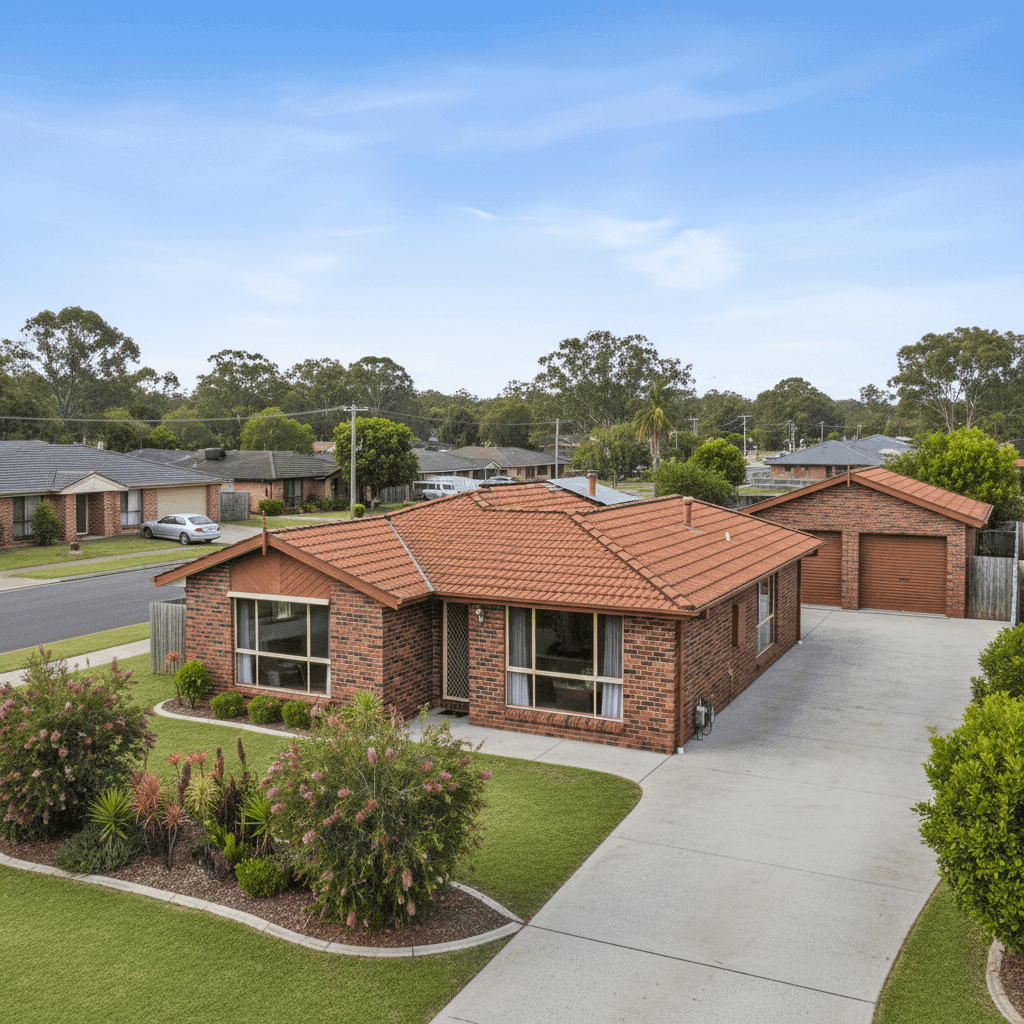
Kallangur is a well-established suburb in the Moreton Bay region of South East Queensland, sitting roughly 25 kilometres north of Brisbane's CBD. Known for its mix of older family homes and steady residential growth, it's a suburb where understanding the true cost of home insurance matters. This article breaks down a real building insurance quote for a three-bedroom, two-bathroom free-standing home in Kallangur — and helps you make sense of what you're actually paying for.
---
Is This Quote Fair?
The quoted annual premium for this property is $2,562 per year (or $240 per month), with a building sum insured of $384,000 and a $1,000 excess. Our analysis rates this quote as FAIR — around average for the area.
That "fair" rating doesn't mean you're getting the best deal on the market — it means the price sits within a reasonable range relative to what other Kallangur homeowners are paying. Specifically, it lands just below the suburb's 75th percentile of $2,579 per year, meaning roughly three-quarters of comparable quotes in the area come in at a similar price or less. It's noticeably higher than the suburb average of $1,910 and the median of $1,879, which suggests there's likely room to find a more competitive premium if you shop around.
That said, context is everything. Factors like the property's construction era, the presence of a granny flat, and the building sum insured all influence where a quote lands — and this one isn't unreasonable given those characteristics.
---
How Kallangur Compares
To put this quote in perspective, it helps to zoom out and look at the broader picture.
| Benchmark | Premium |
|---|---|
| This quote | $2,562/yr |
| Kallangur suburb average | $1,910/yr |
| Kallangur suburb median | $1,879/yr |
| QLD state average | $9,129/yr |
| QLD state median | $3,903/yr |
| Moreton Bay LGA average | $3,435/yr |
| National average | $5,347/yr |
| National median | $2,764/yr |
A few things stand out here. First, Kallangur's premiums are remarkably affordable compared to Queensland as a whole. The state average of $9,129 is heavily skewed by high-risk coastal and cyclone-prone areas in North Queensland, where premiums can be eye-watering. The state median of $3,903 is a better representation of what most Queenslanders pay — and this quote comes in well under that figure.
Compared to the Moreton Bay LGA average of $3,435, this quote is also below par, which is a positive sign. And measured against the national median of $2,764, the $2,562 quote sits slightly below, suggesting Kallangur remains a relatively affordable suburb for home insurance by Australian standards.
The suburb sample size of 88 quotes gives us reasonable confidence in these local benchmarks — it's not a tiny dataset. If you want to explore the full breakdown of premiums in the area, the Kallangur suburb stats page is worth a look.
---
Property Features That Affect Your Premium
Every home is different, and insurers price policies based on a range of property-specific factors. Here's how the key features of this particular home influence its premium:
Brick veneer construction and tiled roof Brick veneer walls paired with a tiled roof is a common and generally well-regarded combination in Queensland. Brick veneer offers good fire resistance and structural durability, while tiles are considered more resilient than Colorbond or corrugated iron in certain weather events. This combination typically attracts standard or slightly favourable pricing from insurers.
Built in 1980 Homes constructed in the 1980s are now over 40 years old, which can raise questions for insurers around ageing plumbing, electrical wiring, and roofing materials. While a well-maintained 1980s home is perfectly insurable, the age alone can nudge premiums slightly higher than a newer build. It's worth ensuring your building sum insured accounts for current replacement costs, not just the home's market value.
Slab foundation A concrete slab foundation is generally viewed positively by insurers — it's stable, less susceptible to subsidence, and doesn't carry the risks associated with older timber stumps or pier-and-beam systems. This is a neutral-to-positive factor for pricing.
Timber and laminate flooring While stylish and popular, timber and laminate floors can be more expensive to replace after a water or flood event compared to tiles. Insurers may factor this into their assessment of the home's overall replacement cost.
Granny flat on the property The presence of a granny flat is a meaningful factor. It adds to the total insurable value of the property and increases the complexity of a potential claim. This is likely contributing to the higher-than-median premium, as the building sum insured of $384,000 needs to cover both the main dwelling and the secondary structure. Ensure your policy explicitly covers the granny flat — not all building-only policies automatically extend to secondary dwellings without confirmation.
---
Tips for Homeowners in Kallangur
1. Check that your granny flat is explicitly covered This is the most important action item for this property. Contact your insurer and confirm in writing that the granny flat is included under the building sum insured. Some policies treat secondary dwellings as a separate endorsement. If it's not covered, you could face a significant gap in the event of a claim.
2. Review your sum insured annually With construction costs rising sharply across Queensland in recent years, a sum insured set even two or three years ago may no longer reflect the true cost of rebuilding. The $384,000 figure should be reviewed against current building costs per square metre in the Moreton Bay area — a licensed quantity surveyor or your insurer's rebuild calculator can help.
3. Shop around at renewal time A "fair" rating means you're not being overcharged, but it also means you're not necessarily getting the best available price. Given the suburb's 25th percentile sits at $1,033 per year, there are clearly more competitive options in the market. Use a comparison platform like CoverClub to see multiple quotes side by side before your policy renews.
4. Consider your excess strategically This policy carries a $1,000 building excess. Opting for a higher excess — say $2,000 — can meaningfully reduce your annual premium. If you have a financial buffer to cover a larger out-of-pocket cost in a claim, this trade-off can be worthwhile over the long run.
---
Ready to Compare?
Whether you're renewing your current policy or shopping for the first time, comparing quotes is the single most effective way to make sure you're not overpaying. At CoverClub, you can get a home insurance quote tailored to your property in minutes — and see how it stacks up against real data from your suburb, your LGA, and across Australia.