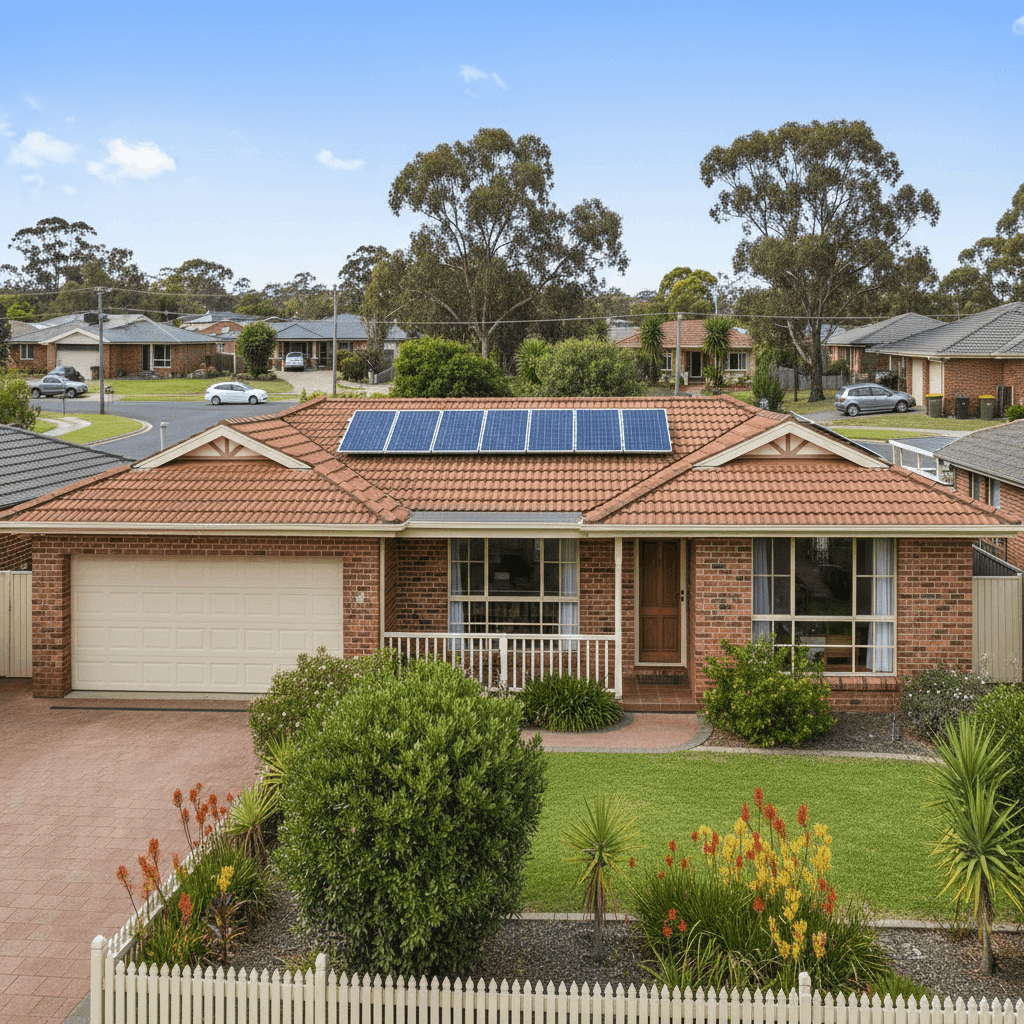
Kanahooka is a quiet residential suburb in the Wollongong local government area, sitting just south of Lake Illawarra in New South Wales. It's a popular choice for families, and the housing stock reflects that — predominantly free standing homes on generous blocks. If you own a property here, understanding what you should be paying for home and contents insurance is an important part of protecting one of your biggest assets.
This article breaks down a real insurance quote for a five-bedroom, three-bathroom free standing home in Kanahooka, and puts it in context against local, state, and national benchmarks.
---
Is This Quote Fair?
The quote in question comes in at $2,191 per year (or $225 per month) for combined home and contents cover. The building is insured for $1,445,000 with a $4,000 excess, and contents are covered for $50,000 with a $2,000 excess.
Our price rating for this quote is FAIR — Around Average, and the data backs that up. At $2,191 per year, this premium sits comfortably between the suburb's 25th percentile ($1,352/yr) and the 75th percentile ($3,170/yr), landing close to the suburb median of $1,979/yr. That means roughly half of comparable quotes in the area come in lower, and half come in higher — which is exactly what "around average" looks like in practice.
It's worth noting that the excess structure here is on the higher side. A $4,000 building excess is notably steep, and while higher excesses typically help bring premiums down, homeowners should feel comfortable with that out-of-pocket cost in the event of a claim before accepting this trade-off.
---
How Kanahooka Compares
Putting this quote into a broader geographic context reveals just how reasonable the Kanahooka market is compared to the rest of NSW and the country.
| Benchmark | Average Premium | Median Premium |
|---|---|---|
| Kanahooka (suburb) | $2,867/yr | $1,979/yr |
| Wollongong LGA | $2,530/yr | — |
| NSW (state) | $3,801/yr | $3,410/yr |
| National | $2,965/yr | $2,716/yr |
A few things stand out here. The NSW state average of $3,801/yr is significantly higher than what Kanahooka homeowners are typically paying — a gap of nearly $1,000 per year when compared to the suburb average. This reflects the premium pressures faced in higher-risk areas of the state, particularly flood-prone inland regions and parts of Sydney with elevated rebuilding costs.
Against the national average of $2,965/yr, Kanahooka again looks relatively affordable. The suburb median of $1,979/yr is more than $700 below the national median of $2,716/yr, suggesting that insurers view this part of the Illawarra as a manageable risk area.
Within the Wollongong LGA, the average sits at $2,530/yr — slightly below the suburb average for Kanahooka, which may reflect the diversity of property types and risk profiles across the broader council area.
You can explore the full data set for this postcode at the Kanahooka suburb stats page, which is based on a sample of 22 quotes.
---
Property Features That Affect Your Premium
Every insurer assesses risk differently, but certain property characteristics consistently influence what you'll pay. Here's how the features of this particular home come into play.
Brick Veneer Walls Brick veneer is one of the most common external wall materials in Australian suburbs, and insurers generally view it favourably. It offers solid fire resistance and durability compared to weatherboard or fibre cement, which can translate to more competitive premiums.
Tiled Roof Terracotta or concrete tiles are a staple of post-war Australian construction and are considered a low-to-moderate risk roofing material. They're durable and weather-resistant, though they can be heavier and more expensive to repair than Colorbond if damaged.
Slab Foundation A concrete slab foundation is a solid structural choice and is standard for homes built in the 1990s. It reduces the risk of subsidence and pest-related damage compared to raised timber stumps, which can work in your favour at claims time.
Timber and Laminate Flooring Timber and laminate floors are popular but can be more susceptible to water damage than tiles. This is worth keeping in mind when assessing your contents cover and understanding what your policy does and doesn't cover for escape of liquid events.
Solar Panels This property has solar panels installed. Insurers treat solar panels differently — some include them under building cover automatically, while others require you to specify them or take out additional cover. It's essential to confirm with your insurer that your panels are covered and that the sum insured accounts for their replacement value.
Built in 1995 At around 30 years old, this home is well past the high-risk new build phase but also old enough that some systems (electrical, plumbing) may be approaching the end of their useful life. Keeping these well-maintained can help avoid claims and keep your renewal premiums in check.
367 sqm Building Size At 367 square metres, this is a substantial home. Building sum insured calculations should reflect the full cost of rebuilding — not the market value of the property. At $1,445,000, the sum insured here is significant, and it's worth periodically reviewing whether it keeps pace with rising construction costs in the Illawarra region.
---
Tips for Homeowners in Kanahooka
1. Review your sum insured annually Construction costs across NSW have risen sharply in recent years. A sum insured that was accurate three years ago may now fall short of what it would actually cost to rebuild your home. Use a building cost calculator or speak to a local builder to sense-check your figure each year.
2. Confirm solar panel coverage Don't assume your panels are automatically covered under your building policy. Ask your insurer directly whether they're included, what the replacement value is, and whether any exclusions apply (such as storm damage to panels on a flat section of roof).
3. Consider whether your excess is right for you A $4,000 building excess is high. While it likely helped reduce the annual premium, you should only accept an excess you could comfortably pay in an emergency. If cash flow is a concern, it may be worth comparing quotes with a lower excess to find the right balance.
4. Don't overlook contents cover $50,000 in contents cover is a common starting point, but it can be easy to underestimate how much your belongings are actually worth. Do a room-by-room audit — electronics, furniture, clothing, appliances, and valuables add up quickly. Underinsuring your contents can leave you significantly out of pocket after a major event.
---
Compare Quotes and Find Better Value
Whether you're reviewing an existing policy or shopping for the first time, comparing multiple quotes is the single most effective way to make sure you're not overpaying. CoverClub makes it simple to see how different insurers price your specific property.