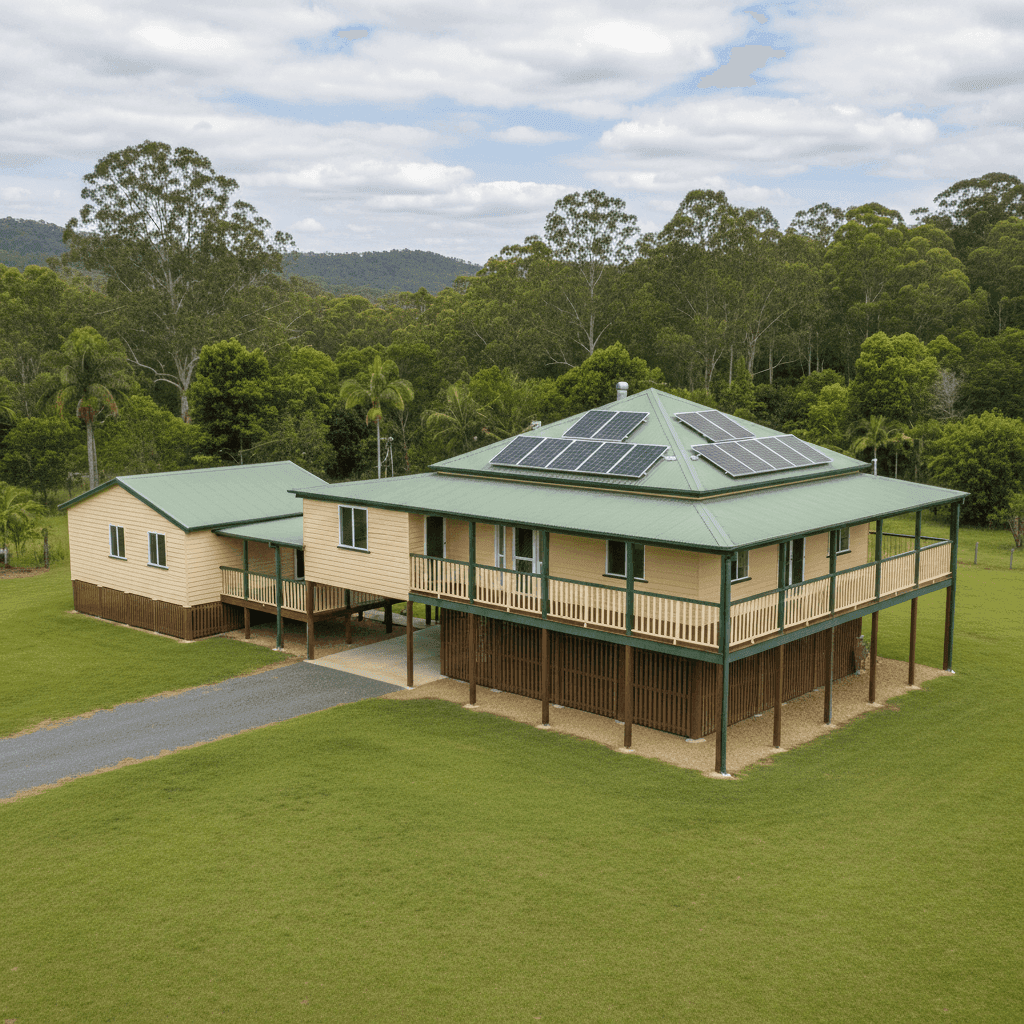
If you own a free standing home in Kandanga Creek, QLD 4570, you already know this part of the Sunshine Coast hinterland offers a lifestyle that's hard to beat — sprawling rural blocks, lush greenery, and a genuine sense of community. But with that lifestyle comes the responsibility of protecting your asset with the right home insurance cover. This article breaks down a real home and contents insurance quote for an 8-bedroom weatherboard property in the area, examines how it stacks up against local, state, and national benchmarks, and offers practical tips for homeowners looking to get the best value on their policy.
---
Is This Quote Fair?
The annual premium for this property came in at $4,808 per year (or $454/month), covering both building (sum insured: $1,000,000) and contents ($200,000), each with a $1,000 excess. Our pricing engine rates this quote as CHEAP — below the average for comparable properties.
That's a meaningful result. With a building sum insured of $1,000,000 on an 8-bedroom property — which is a substantial coverage amount — landing below average pricing suggests this quote is genuinely competitive. For homeowners who have been with the same insurer for years without shopping around, this kind of benchmark analysis can be eye-opening.
It's worth noting that "cheap" in insurance doesn't mean inferior cover. It simply means the premium is lower than what most comparable households are paying for similar protection. The key is ensuring the policy terms, inclusions, and exclusions actually meet your needs — price is only one part of the equation.
---
How Kandanga Creek Compares
Understanding where your premium sits relative to broader averages helps you make an informed decision. Here's how this quote lines up:
| Benchmark | Annual Premium |
|---|---|
| This Quote | $4,808 |
| LGA Average (Fraser Coast) | $4,810 |
| QLD State Average | $9,129 |
| QLD State Median | $3,903 |
| National Average | $5,347 |
| National Median | $2,764 |
A few things stand out here. First, this quote sits almost exactly on the Fraser Coast LGA average of $4,810 — a remarkably close match that suggests the pricing is well-calibrated to the local risk environment. Second, it comes in 47% below the Queensland state average of $9,129, which is heavily influenced by high-risk coastal and cyclone-prone postcodes across the state.
It's also worth contextualising the national figures. The national average of $5,347 is pulled upward by expensive markets in flood-prone, cyclone-affected, and high-density urban areas. At $4,808, this quote sits below the national average as well — another positive signal for the homeowner.
That said, the quote does sit above both the Queensland median ($3,903) and the national median ($2,764). This is expected given the size and value of the property — an 8-bedroom home with a $1,000,000 building sum insured and $200,000 in contents is not a typical household. Larger, higher-value properties naturally attract higher absolute premiums, even when the rate per dollar of coverage is competitive.
For a deeper look at how premiums trend across the postcode, visit the Kandanga Creek suburb stats page or explore broader Queensland insurance data.
---
Property Features That Affect Your Premium
Several characteristics of this property have a direct influence on how insurers price the risk. Understanding these factors can help you anticipate future premium movements and make smarter decisions about your cover.
Weatherboard Timber Construction
Weatherboard wood external walls are a classic feature of older Queensland homes, and while they're charming, they do carry a higher fire risk than brick or rendered masonry. Insurers factor this into their pricing, which can push premiums upward. Keeping the exterior well-maintained, painted, and free from rot is both a maintenance best practice and a way to demonstrate lower risk.
Elevated on Stumps
This home is elevated by at least one metre on stumps — a traditional Queenslander design feature that offers real insurance benefits. Elevation reduces flood inundation risk, which is a significant pricing factor in many parts of Queensland. The stump foundation also allows for airflow underneath, reducing moisture-related damage over time. This feature likely contributes positively to the competitive premium.
Age of Construction (1964)
At over 60 years old, this home falls into an age bracket that insurers scrutinise carefully. Older homes can have ageing plumbing, electrical wiring, and roofing materials that increase the likelihood of a claim. The steel/Colorbond roof is a plus here — it's a durable, modern roofing material that may have been upgraded since original construction, which insurers tend to view favourably.
Solar Panels
Solar panels add value to a property but also add complexity to an insurance claim. Panels can be damaged by hail, storms, or falling debris, and replacement costs are significant. Homeowners should confirm their policy explicitly covers solar panels — both the panels themselves and any damage they might cause to the roof structure.
Granny Flat
The presence of a granny flat on the property is an important consideration. Some policies cover a granny flat under the main building sum insured, while others treat it as a separate structure requiring additional cover. It's essential to clarify this with your insurer to avoid being underinsured in the event of a claim.
Ducted Climate Control
Ducted air conditioning is a significant fixed asset that should be reflected in your building sum insured. Replacement costs for ducted systems can run into the tens of thousands of dollars, so ensuring your sum insured accounts for this is critical.
---
Tips for Homeowners in Kandanga Creek
1. Review Your Sum Insured Regularly
With a $1,000,000 building sum insured, this policy is set at a level that should cover full rebuilding costs — but construction costs in regional Queensland have risen sharply in recent years. Review your sum insured annually and consider using an independent building cost calculator to make sure you're not underinsured.
2. Clarify Granny Flat Coverage
Before renewing or switching policies, ask your insurer explicitly whether the granny flat is included in the building sum insured or whether it needs to be listed as a separate structure. Gaps in coverage here can be costly.
3. Document Your Contents Thoroughly
With $200,000 in contents cover, maintaining an up-to-date home inventory — including photos, receipts, and serial numbers for high-value items — makes the claims process significantly smoother. Store this documentation securely offsite or in the cloud.
4. Don't Set and Forget
Even a competitive premium can be beaten. Insurance markets shift, and loyalty doesn't always pay. Set a reminder to compare quotes at renewal time each year. A few hours of research could save you hundreds of dollars annually.
---
Compare Your Own Quote at CoverClub
Whether you're a first-time buyer or a long-term homeowner in Kandanga Creek, comparing home insurance quotes is one of the smartest financial moves you can make. At CoverClub, we make it easy to see how your current premium stacks up and find cover that suits your property and budget. Get a quote today and find out if you're paying a fair price — or if there's a better deal waiting for you.