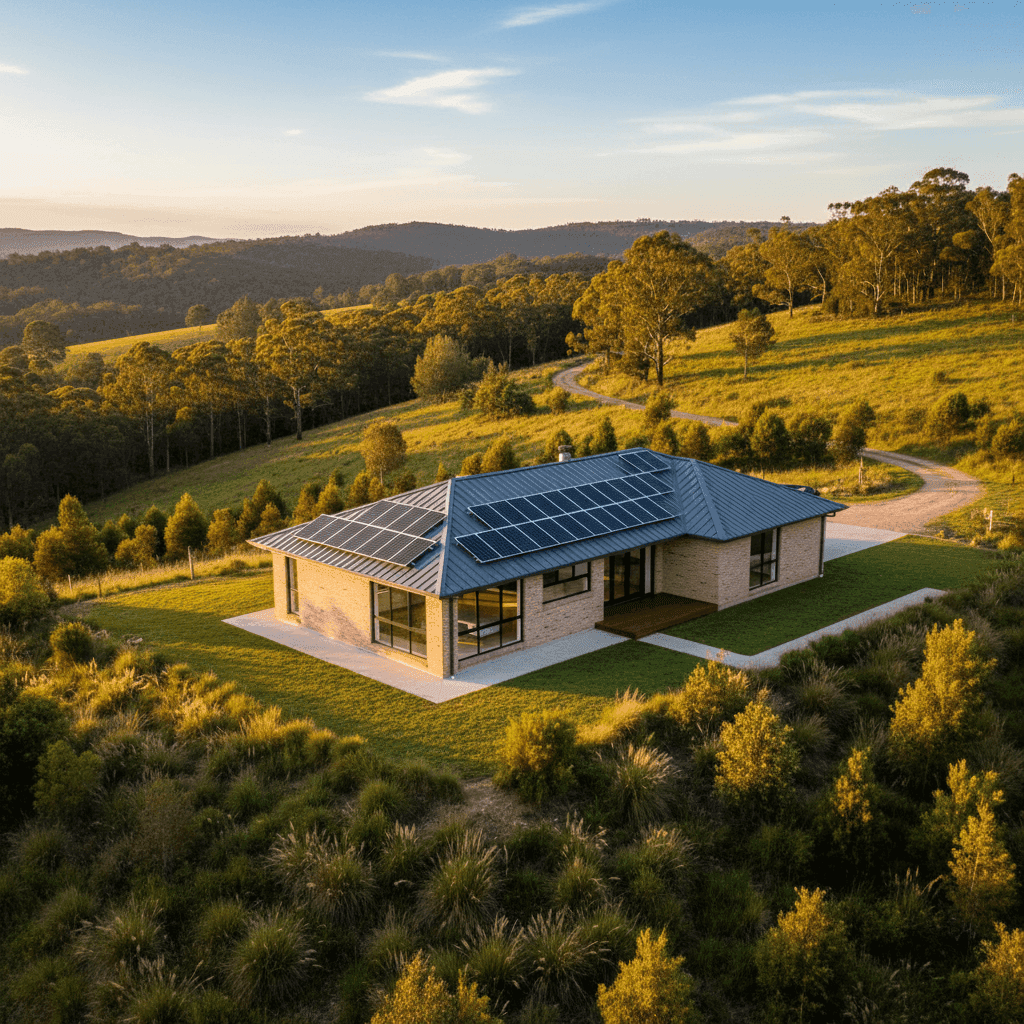
Nestled in the Southern Highlands of New South Wales, Kangaroo Valley is a picturesque rural township known for its lush green valleys, historic sandstone bridges, and tightly held real estate. It's also an area where home insurance premiums reflect the unique mix of environmental risks and property characteristics that come with rural living. This article breaks down a recent home and contents insurance quote for a three-bedroom, free-standing home in Kangaroo Valley (NSW 2577) — and helps you understand whether it represents good value.
---
Is This Quote Fair?
The quote in question comes in at $4,322 per year (or $423/month) for combined home and contents cover, with a building sum insured of $650,000 and contents valued at $25,000. Both the building and contents excess are set at $1,000.
Our pricing analysis rates this quote as Fair — Around Average, and the numbers back that up. The suburb median premium for Kangaroo Valley sits at $4,225/yr, meaning this quote lands just $97 above the midpoint of what locals are typically paying. It also falls comfortably within the suburb's interquartile range of $3,476 to $5,217 per year — the band where most comparable quotes cluster.
In short, this isn't a bargain, but it's not overpriced either. For a property of this size, age, and specification in a semi-rural NSW location, the premium is broadly in line with market expectations.
---
How Kangaroo Valley Compares
Understanding where your premium sits relative to broader benchmarks adds important context. Here's how this quote stacks up:
| Benchmark | Premium |
|---|---|
| This Quote | $4,322/yr |
| Kangaroo Valley Suburb Median | $4,225/yr |
| Kangaroo Valley Suburb Average | $4,848/yr |
| NSW State Median | $3,770/yr |
| NSW State Average | $9,528/yr |
| National Median | $2,764/yr |
| National Average | $5,347/yr |
A few things stand out here. The NSW state average of $9,528/yr is dramatically higher than the median of $3,770/yr — a sign that a relatively small number of high-risk or high-value properties (think flood-prone areas, coastal zones, or large rural holdings) are pulling the average upward significantly. This makes the median a more reliable benchmark for typical homeowners.
Compared to the NSW state median, this Kangaroo Valley quote is about 15% higher — which is broadly consistent with the additional risk profile of a rural valley property. Against the national median of $2,764/yr, the premium looks steep, but that comparison reflects the wide diversity of Australian property markets, from low-risk metropolitan suburbs to high-exposure regional areas.
You can explore more local data on the Kangaroo Valley insurance stats page, or zoom out to the NSW state overview and national statistics for broader context.
> Note: The suburb sample size for this analysis is 20 quotes, which provides a reasonable but not exhaustive local benchmark. Premiums can vary meaningfully based on individual insurer appetite, specific property features, and the level of cover selected.
---
Property Features That Affect Your Premium
Several characteristics of this particular property will be influencing the quoted premium — some favourably, others less so.
Brick veneer construction with a Colorbond roof is generally well-regarded by insurers. Brick veneer offers solid fire resistance and structural durability, while steel/Colorbond roofing is lightweight, long-lasting, and performs well in high-wind conditions. This combination typically attracts more competitive premiums compared to timber-framed homes with tile roofs.
Slab foundation is another positive signal for insurers. Concrete slab construction is resilient and less susceptible to subsidence or pest-related damage compared to raised timber stumps — a common feature in older regional homes.
Timber and laminate flooring can be a moderate cost consideration at claim time, as these materials are more expensive to replace than standard carpet. This may contribute marginally to the premium.
Solar panels are an increasingly common feature in Australian homes, but they do add to the replacement cost of a property. Insurers factor in the cost of reinstating rooftop systems, which can add several thousand dollars to a claim. Ensuring your building sum insured accounts for the solar installation is important.
Ducted climate control similarly adds to the replacement cost calculation. Ducted systems are expensive to install and reinstate, and their presence in the home should be reflected in your sum insured figure.
The property was built in 1996, placing it in an era of reasonably modern construction standards — post the significant building code reforms of the late 1980s and early 1990s. This is generally viewed positively by underwriters compared to homes built in the 1960s or 1970s.
Finally, Kangaroo Valley's geography plays a role. The area is known for its bushfire exposure, and the valley's topography can also make it susceptible to localised flooding events. These environmental factors are baked into regional premium calculations and help explain why premiums here run above the national median.
---
Tips for Homeowners in Kangaroo Valley
1. Review your building sum insured carefully At $650,000, the building sum insured needs to cover full rebuilding costs — not just the market value of the property. With solar panels, ducted climate control, and timber flooring, reinstatement costs can add up quickly. Use a building cost calculator or speak to a quantity surveyor to make sure you're not underinsured.
2. Consider bushfire preparedness discounts Some insurers offer premium reductions for homes that have taken active steps to reduce bushfire risk — such as maintaining ember guards, clearing gutters, and creating defensible space around the property. Check with your insurer whether any of these measures qualify for a discount.
3. Shop around at renewal time Insurer pricing varies considerably, even for identical properties. Loyalty doesn't always pay — it's worth comparing quotes annually rather than simply auto-renewing. The gap between the 25th percentile ($3,476/yr) and 75th percentile ($5,217/yr) in Kangaroo Valley shows there's meaningful variation in what different insurers will charge for similar homes.
4. Bundle thoughtfully, but check the maths Combined home and contents policies (like this one) can offer convenience and sometimes a multi-policy discount. However, it's worth checking whether purchasing building and contents cover separately — potentially from different insurers — results in a lower total premium without sacrificing cover quality.
---
Ready to Compare?
Whether you're renewing an existing policy or insuring a new purchase in Kangaroo Valley, comparing multiple quotes is the single most effective way to make sure you're getting fair value. CoverClub makes it easy to see what different insurers would charge for your specific property — in minutes, not hours.
Get a home insurance quote for your Kangaroo Valley property →