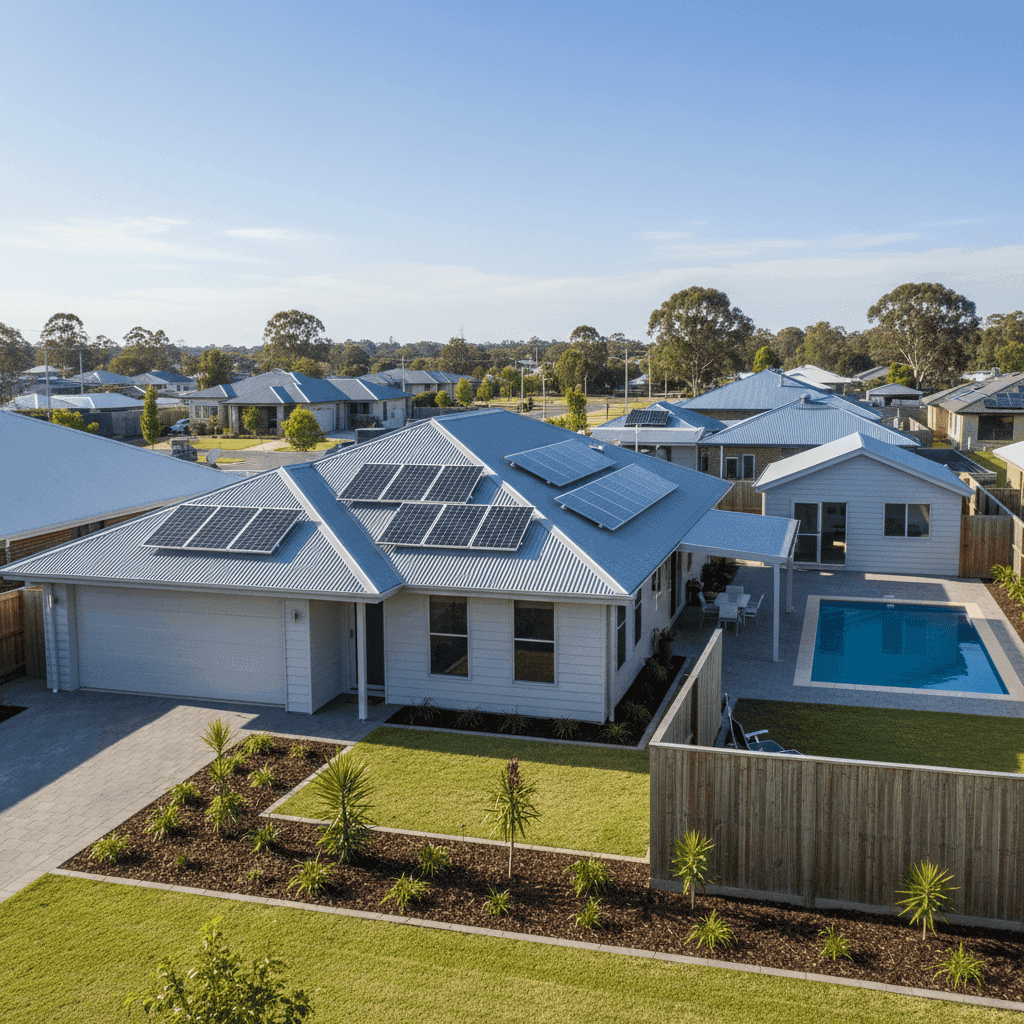
If you own a free standing home in Kangy Angy, NSW 2258, you're likely no stranger to the question of whether you're getting a fair deal on home insurance. Nestled on the Central Coast of New South Wales, Kangy Angy is a quiet residential suburb with a growing community — but like many older Australian suburbs, the characteristics of its housing stock can have a significant impact on what you pay to protect your home. In this article, we analyse a real home and contents insurance quote for a 3-bedroom, 1-bathroom free standing home in the area, and unpack what's driving the cost.
---
Is This Quote Fair?
The quote in question comes in at $5,573 per year (or $546/month) for combined home and contents cover, with a building sum insured of $640,000 and contents valued at $100,000. The building excess is $2,000 and the contents excess is $1,000.
Our rating for this quote is Expensive (Above Average) — and the numbers back that up. When you stack this premium against benchmarks at the state and national level, it sits noticeably higher than what most Australians are paying. That said, "expensive" doesn't necessarily mean unjustified. Several features of this particular property help explain why the insurer has priced the risk where they have.
The high building sum insured of $640,000 is a significant contributor. This figure needs to reflect the full cost of rebuilding the home from the ground up — not its market value — and for a 130 sqm home with a granny flat on stumped foundations, that figure is plausible. Still, it's worth reviewing whether your sum insured is calibrated correctly, as over-insuring can unnecessarily inflate your premium.
---
How Kangy Angy Compares
Unfortunately, there isn't enough suburb-level data to produce a precise local average for Kangy Angy specifically — but we can draw meaningful comparisons at the LGA and state level. You can explore available Kangy Angy insurance statistics as more data becomes available.
Here's how this quote stacks up:
| Benchmark | Average Premium |
|---|---|
| This Quote | $5,573/yr |
| LGA Average (Central Coast, NSW) | $4,203/yr |
| NSW Average | $3,801/yr |
| NSW Median | $3,410/yr |
| National Average | $2,965/yr |
| National Median | $2,716/yr |
This quote is $1,370 above the Central Coast LGA average, $1,772 above the NSW state average, and a substantial $2,608 above the national average. Even accounting for the property's unique features, that's a meaningful gap worth investigating.
You can explore broader NSW home insurance statistics and national home insurance benchmarks to see how premiums vary across Australia.
---
Property Features That Affect Your Premium
Several characteristics of this property are likely pushing the premium above typical benchmarks. Understanding these factors can help you have a more informed conversation with insurers.
Older Construction (1956)
Homes built in the 1950s often carry a higher risk profile in the eyes of insurers. Ageing plumbing, wiring, and structural components can increase the likelihood of claims — particularly for water damage and electrical faults. Insurers may price this risk into the premium, especially when the home hasn't been substantially renovated.
Vinyl Cladding External Walls
Vinyl cladding is generally considered a moderate-risk external wall material. While it's lightweight and low-maintenance, it can be more vulnerable to impact damage and, depending on the product, may raise questions around fire resistance. Some insurers apply loadings for non-brick or non-masonry construction.
Stumped Foundation
Homes on stumps (also known as pier foundations) are common in older Australian housing, but they introduce specific risks — including subsidence, pest damage (particularly termites), and structural movement. This foundation type can attract higher premiums compared to slab-on-ground homes.
Swimming Pool
The presence of a pool adds both replacement value and liability considerations to your policy. Pools require specific coverage for equipment like pumps and filters, and insurers factor in the liability risk associated with pool ownership.
Solar Panels
Solar panels are a positive addition to a home's energy profile, but they do add to the insured value of the property. Panels, inverters, and associated infrastructure need to be covered under the building policy, which can nudge the premium upward.
Granny Flat
A secondary dwelling on the property — even a modest one — adds to the total replacement cost and complexity of the insurance arrangement. Insurers will factor in the additional structures when calculating the building sum insured.
---
Tips for Homeowners in Kangy Angy
If your premium feels steep, here are some practical steps you can take to manage costs without compromising your cover.
1. Review Your Sum Insured
A building sum insured of $640,000 is substantial. Use an independent building cost calculator to verify whether this figure accurately reflects your home's rebuild cost — including the granny flat. If you're over-insured, you may be able to reduce your premium by adjusting the sum insured to a more accurate figure.
2. Increase Your Excess Strategically
The current building excess of $2,000 is already moderately high, but if you have the financial buffer to absorb a larger out-of-pocket cost in the event of a claim, increasing your excess further can meaningfully reduce your annual premium. Even a modest increase can yield savings.
3. Maintain and Document Your Property
For older homes on stumps, regular pest inspections and structural maintenance are not just good practice — they can support your claim if something does go wrong, and may help you negotiate better terms with your insurer. Keep records of any renovations or upgrades you've made, particularly to the electrical system or plumbing.
4. Compare Multiple Quotes
This is the single most impactful thing you can do. Insurance pricing varies significantly between providers for the same property. A quote that's $1,300 above your LGA average is a strong signal that shopping around could yield meaningful savings — potentially hundreds of dollars per year.
---
Ready to Compare?
Whether you're renewing your existing policy or buying cover for the first time, comparing quotes is the fastest way to find out if you're overpaying. CoverClub makes it easy to see what multiple insurers would charge for your specific property — in minutes, not hours. Get a home insurance quote today and find out if you can do better than $5,573 a year.