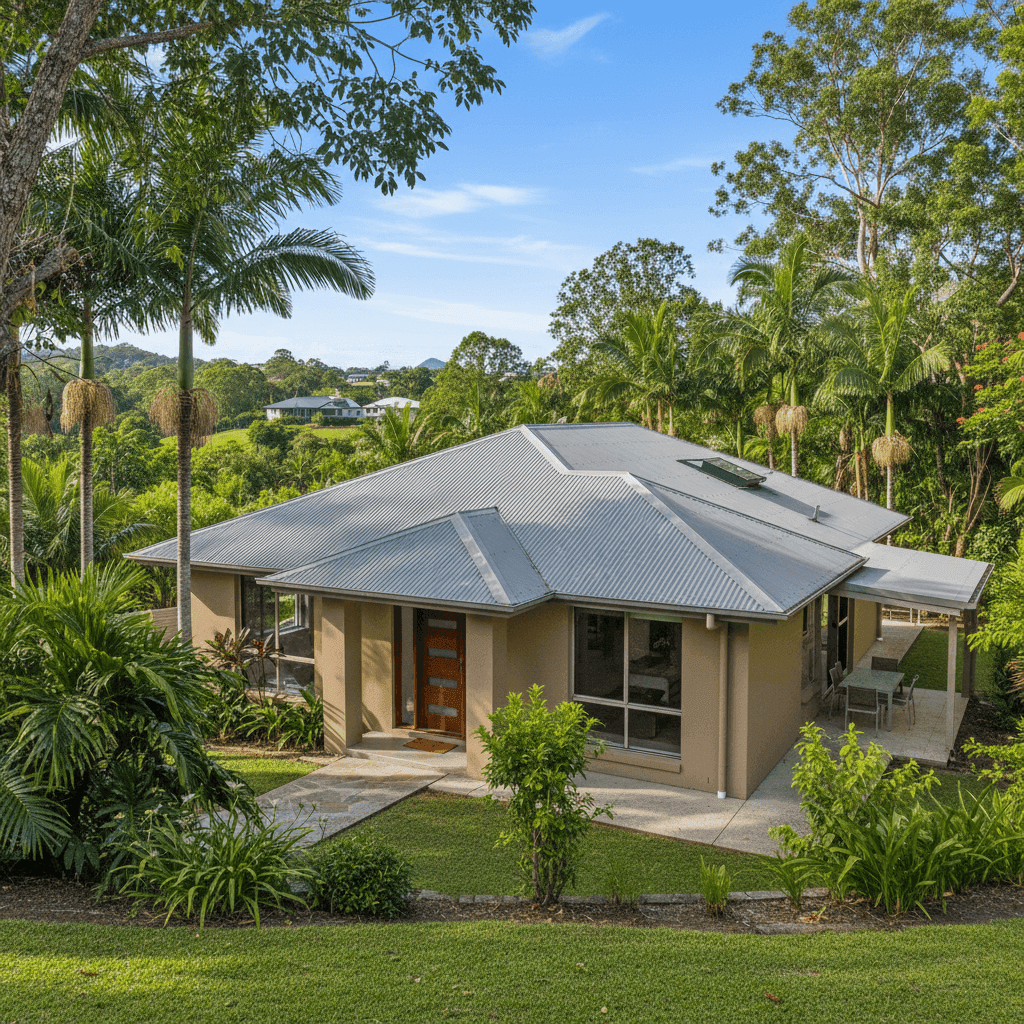
Kanimbla is a quiet residential suburb nestled in the hills of Cairns, Queensland — known for its leafy streets, elevated blocks, and a mix of modern and established homes. If you own a free-standing home here, understanding what you should be paying for building insurance is essential. This article breaks down a recent building-only insurance quote for a four-bedroom, two-bathroom home in Kanimbla (postcode 4870), and puts the numbers into context so you can make a more informed decision.
---
Is This Quote Fair?
The quote in question comes in at $6,702 per year (or $642 per month) for building-only cover on a home with a sum insured of $660,000. Our analysis rates this quote as Expensive — Above Average.
To understand why, it helps to look at what other homeowners in the same suburb are paying. Based on 32 quotes collected for Kanimbla, the suburb average sits at $4,353 per year, with a median of $4,143. That means this quote is approximately 54% above the suburb average and well above the 75th percentile of $5,321 — placing it firmly in the more expensive tier for the area.
That said, "expensive" is relative. Insurance pricing is influenced by a wide range of property-specific factors, and a higher sum insured naturally pushes premiums up. A $660,000 building cover is on the higher end for a suburban Cairns property, which will account for some — but not necessarily all — of the premium gap.
---
How Kanimbla Compares
Putting this quote into a broader geographic context reveals some interesting contrasts.
| Benchmark | Average Premium | Median Premium |
|---|---|---|
| Kanimbla (suburb) | $4,353/yr | $4,143/yr |
| Queensland (state) | $9,129/yr | $3,903/yr |
| National | $5,347/yr | $2,764/yr |
| Cairns LGA | $12,404/yr | — |
A few things stand out here. Queensland's average premium of $9,129 is extraordinarily high — but the median of $3,903 tells a very different story. This wide gap between average and median is a hallmark of Queensland's insurance landscape, where a relatively small number of high-risk properties (particularly those exposed to cyclone, flood, or storm surge) dramatically skew the average upward. You can explore the full Queensland insurance data here.
Kanimbla's suburb average of $4,353 is notably lower than the broader Cairns LGA average of $12,404 — a significant difference that likely reflects the suburb's elevated position and comparatively lower flood and inundation risk relative to coastal or low-lying parts of the Cairns region.
At the national level, the average premium across Australia is $5,347, with a median of $2,764. The quote of $6,702 exceeds both national figures, reinforcing the "expensive" rating — though it remains well below the broader Cairns LGA average.
---
Property Features That Affect Your Premium
Several characteristics of this property will be influencing the premium, both positively and negatively.
Concrete External Walls
Concrete construction is generally viewed favourably by insurers. It offers strong resistance to impact, fire, and extreme weather — all of which are relevant in Far North Queensland. Homes with brick or concrete walls typically attract lower premiums than those with timber or weatherboard cladding.
Steel / Colorbond Roof
A Colorbond steel roof is a solid choice for the region. It's durable, lightweight, and performs well in high-wind conditions. Insurers generally rate metal roofing more favourably than older materials like terracotta tiles or asbestos sheeting, particularly in areas prone to severe storms.
Concrete Slab Foundation
A slab-on-ground foundation is standard for homes built in Queensland's tropical north. It provides good structural stability and is less susceptible to subfloor moisture issues compared to raised timber stumps. This is a neutral-to-positive factor for insurers.
Tile Flooring
Tiles are a practical and popular choice in Queensland homes. From an insurance perspective, they're considered a standard, low-risk flooring material — durable and easy to replace if water damage occurs.
Built in 2008
A construction year of 2008 means the home was built under relatively modern building codes, which incorporated improved cyclone-resistance standards following the lessons of past weather events in Queensland. This is generally a positive signal for insurers.
Ducted Climate Control
The presence of ducted air conditioning adds to the overall replacement value of the home, which is reflected in the higher sum insured. This system would need to be rebuilt or replaced in the event of a total loss, so it's appropriate that it's factored into the $660,000 building cover.
No Pool or Solar Panels
The absence of a pool and solar panels simplifies the risk profile slightly. Both features can add to replacement costs and, in the case of pools, introduce additional liability considerations.
---
Tips for Homeowners in Kanimbla
If you're looking to ensure you're getting value from your building insurance, here are a few practical steps worth taking.
1. Review your sum insured carefully. A sum insured of $660,000 is substantial. Make sure it reflects the actual cost to rebuild your home — not its market value. Overinsuring can push your premium higher than necessary, while underinsuring leaves you exposed. Use a quantity surveyor or your insurer's rebuild calculator to validate the figure.
2. Shop around — seriously. The gap between the 25th percentile ($2,987) and 75th percentile ($5,321) for Kanimbla quotes is wide. That means the market is competitive and pricing varies considerably between insurers for similar properties. Comparing multiple quotes could save you hundreds of dollars annually.
3. Ask about discounts for your construction type. Concrete walls and a Colorbond roof are risk-reducing features. Some insurers offer explicit discounts for superior construction materials — it's worth asking directly or ensuring these details are accurately captured in your quote.
4. Consider your excess strategically. This quote carries a $2,000 building excess. Opting for a higher excess is one of the most straightforward ways to reduce your annual premium. If you're confident you'd only claim for significant losses, increasing the excess to $3,000 or more could meaningfully lower your costs.
---
Compare Your Options at CoverClub
Whether you think your current premium is too high or you're shopping for cover for the first time, comparing quotes is the single most effective way to find a fair price. CoverClub makes it easy to see how your property stacks up and get quotes tailored to your home's specific features. Start your comparison today — it takes just a few minutes and could save you a significant amount each year.