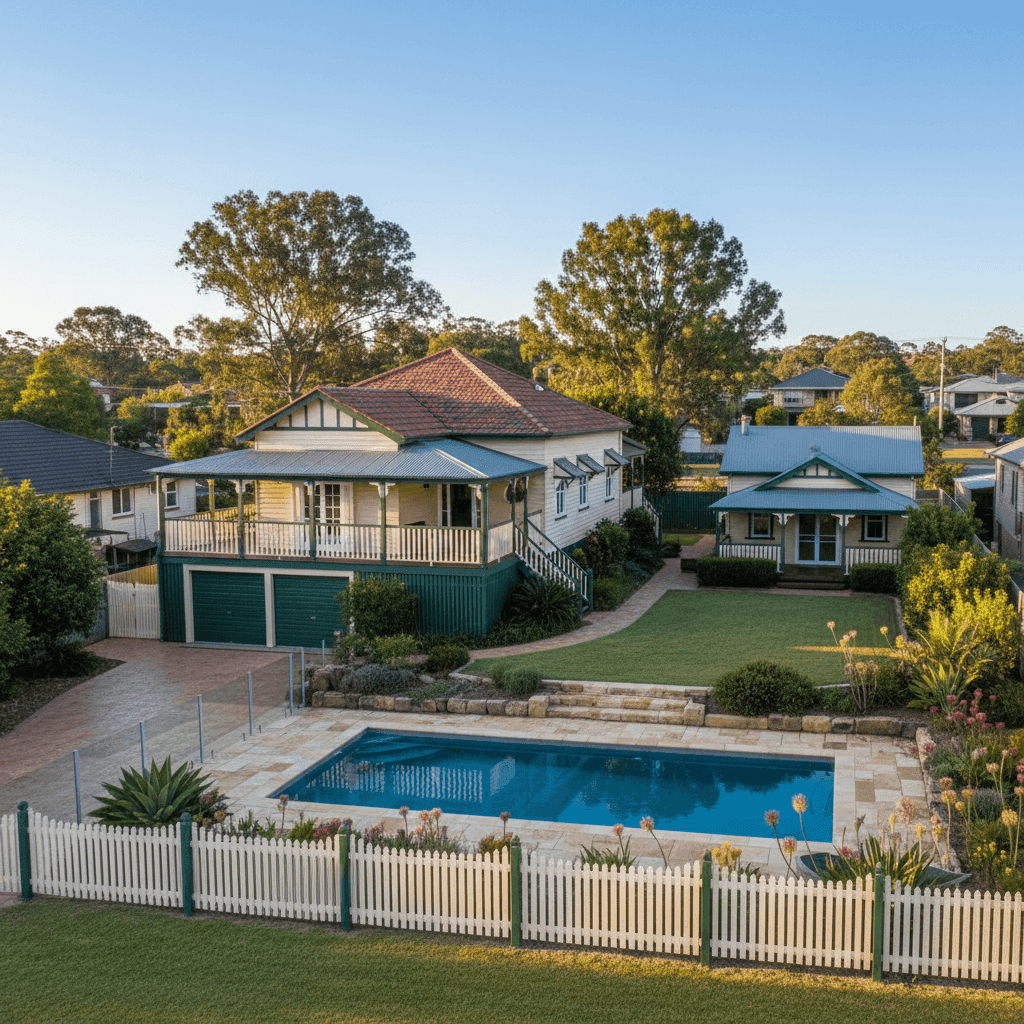
Karana Downs is a quiet, semi-rural suburb nestled in Brisbane's western corridor, known for its spacious blocks, leafy streetscapes, and relaxed lifestyle. For owners of a larger free standing home in this area — particularly one with generous living space, a pool, and a granny flat — understanding what you should be paying for home and contents insurance is genuinely useful. This article breaks down a recent quote for a six-bedroom, three-bathroom weatherboard home in Karana Downs (postcode 4306) and puts it in context against local, state, and national benchmarks.
---
Is This Quote Fair?
The annual premium on this quote comes in at $4,361 per year (or $411 per month), covering both building and contents. The building is insured for $1,342,000 and contents for $100,000, with a $2,000 excess applying to both.
Our pricing analysis rates this quote as Fair — Around Average, and the data backs that up. The suburb average for Karana Downs sits at $4,336 per year, meaning this quote is almost exactly in line with what most comparable properties in the area are paying. It falls comfortably within the middle range of the local market — above the 25th percentile of $2,411 but well below the 75th percentile of $5,372.
In short: this isn't a bargain, but it's not overpriced either. For a property of this size and complexity — 420 sqm, weatherboard construction, a pool, and a granny flat — landing near the suburb average is a reasonable outcome. That said, "average" doesn't mean you can't do better, and it's always worth comparing options before committing.
---
How Karana Downs Compares
One of the more striking findings when you zoom out is just how differently Queensland's insurance market behaves depending on where you look. Here's a snapshot:
| Benchmark | Average Premium | Median Premium |
|---|---|---|
| Karana Downs (suburb) | $4,336/yr | $3,694/yr |
| Queensland (state) | $9,129/yr | $3,903/yr |
| Australia (national) | $5,347/yr | $2,764/yr |
The QLD state average of $9,129 looks alarming at first glance, but it's heavily skewed by high-risk coastal and cyclone-prone regions — Far North Queensland in particular. The state median of $3,903 tells a more balanced story, and Karana Downs sits reasonably close to that figure. You can explore the full breakdown on the Queensland insurance stats page or dive into Karana Downs-specific data.
Nationally, the average of $5,347 is pulled upward by expensive markets in flood-prone, coastal, and cyclone-risk zones. The national median of $2,764 reflects the more typical Australian homeowner paying considerably less — often for smaller properties in lower-risk areas. For full national context, visit the national home insurance stats page.
It's also worth noting that the LGA average for Scenic Rim is $8,744 per year — significantly higher than the Karana Downs suburb average. This suggests that while Karana Downs benefits from relatively moderate risk factors compared to other parts of the Scenic Rim region, the broader local government area includes properties with considerably higher exposure. Location within a postcode and LGA can matter enormously.
---
Property Features That Affect Your Premium
Several characteristics of this property have a direct bearing on what insurers charge. Understanding them helps you anticipate costs — and potentially reduce them.
Weatherboard timber construction is one of the most significant factors here. Timber-framed, weatherboard homes are considered higher risk by most insurers due to their susceptibility to fire and the higher cost of repair or replacement compared to brick veneer. This is a well-known premium driver in older Australian homes.
Construction year (1975) adds another layer of consideration. Homes built in the 1970s may have older electrical wiring, plumbing, and roofing systems that haven't been updated. Insurers factor in the age and condition of a property when assessing risk, and older homes often attract slightly higher premiums as a result.
The tiled roof is generally viewed favourably by insurers — tiles are durable, fire-resistant, and widely used across Queensland. This likely works in the homeowner's favour compared to, say, a corrugated iron or older asbestos roof.
The swimming pool adds both value and liability. Pools increase the replacement cost of the property and may introduce public liability considerations, both of which can nudge premiums upward.
The granny flat is another notable factor. Secondary dwellings add to the total insured value of the property and may require specific coverage considerations. It's important to confirm with your insurer that the granny flat is explicitly covered under the policy — not all standard home insurance policies automatically include secondary structures.
The slab foundation and tiled flooring are generally neutral-to-positive risk factors. Slab foundations are common in Queensland and are considered stable, while tiled flooring is durable and easy to replace compared to timber or carpet.
At 420 sqm, this is a substantial home, and the $1,342,000 building sum insured reflects that. It's critical that this figure represents the true cost to rebuild — not the market value — including demolition, materials, and labour at current rates.
---
Tips for Homeowners in Karana Downs
1. Get the building sum insured right With a large weatherboard home, the cost to rebuild from scratch can be surprisingly high — especially with current construction costs. Underinsurance is one of the most common and costly mistakes homeowners make. Use a building replacement cost calculator or speak with a quantity surveyor to ensure your sum insured is accurate.
2. Confirm your granny flat is covered Don't assume your secondary dwelling is automatically included. Check your policy's Product Disclosure Statement (PDS) carefully and ask your insurer directly whether the granny flat is covered for both building damage and contents, and whether any additional premium applies.
3. Review your excess strategy This quote carries a $2,000 excess on both building and contents. A higher excess typically lowers your annual premium, while a lower excess means more out-of-pocket at claim time. Think about what you could comfortably afford in an emergency and adjust accordingly.
4. Compare quotes annually Insurance loyalty rarely pays. Premiums can shift significantly from year to year, and insurers often offer better rates to new customers than to long-standing ones. Given this quote is rated "around average," there's a reasonable chance a comparable or better policy exists at a lower price point. Shopping around takes less time than most people think.
---
Find a Better Deal with CoverClub
Whether you're renewing your current policy or insuring a new property, comparing quotes is the single most effective way to make sure you're not overpaying. CoverClub makes it easy to see what multiple insurers would charge for your specific home — in minutes, without the hassle. Get a home insurance quote today and see how your premium stacks up.