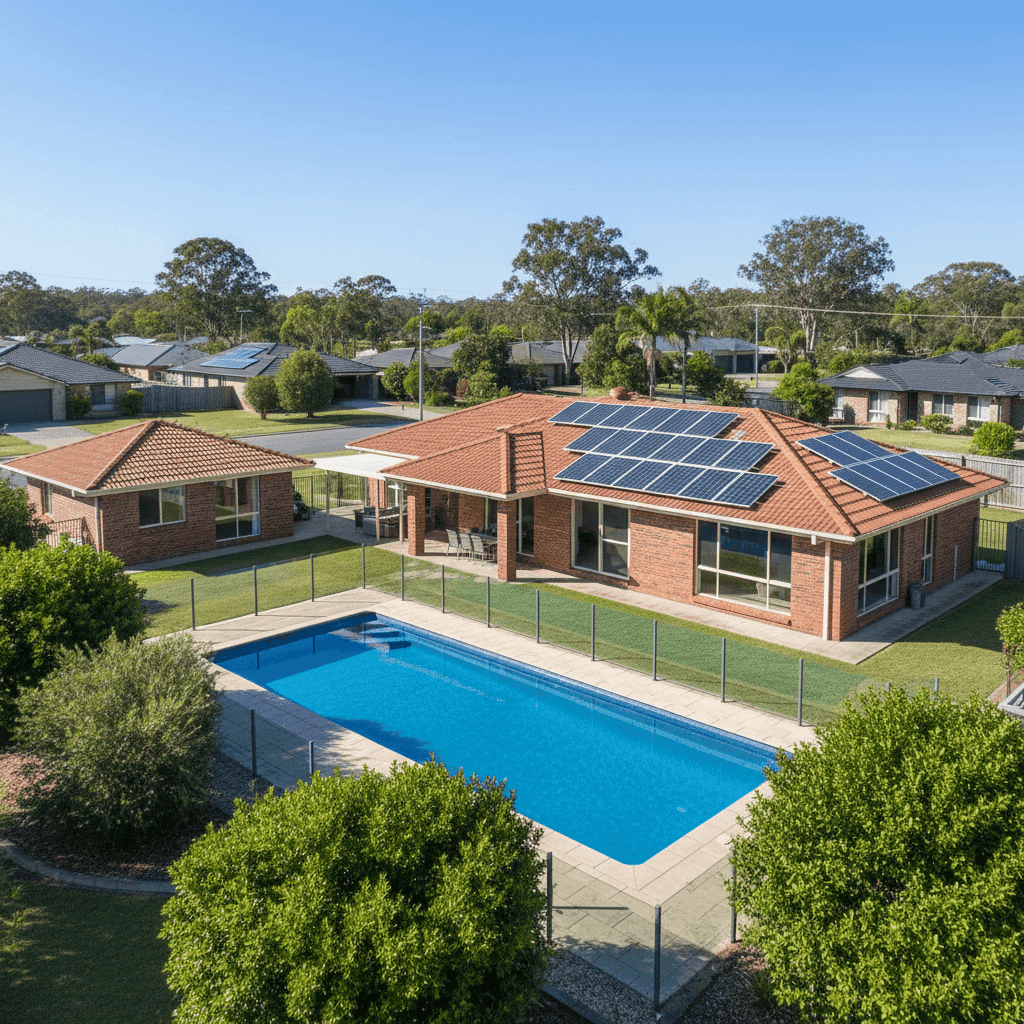
Nestled in the foothills of the D'Aguilar Range on Brisbane's western fringe, Karana Downs is a quiet, semi-rural suburb that appeals to families looking for space without straying too far from the city. If you own a free standing home here, you've likely noticed that insurance premiums can vary enormously depending on who you ask. This article breaks down a real home and contents insurance quote for a 3-bedroom, 2-bathroom property in Karana Downs (postcode 4306) and puts the numbers in context so you can make a more informed decision.
---
Is This Quote Fair?
The quote in question comes in at $2,617 per year (or $253 per month) for combined home and contents cover, with a $549,000 building sum insured and $50,000 in contents cover. Both the building and contents excess are set at $2,000.
Our price rating for this quote is FAIR — Around Average, which is a reasonable outcome for a property of this type and size. It sits comfortably above the suburb's 25th percentile ($2,411/yr), meaning roughly three-quarters of comparable quotes in the area are more expensive. At the same time, it falls well below both the suburb average ($4,336/yr) and the suburb median ($3,694/yr), suggesting this is a competitive result rather than a premium-heavy one.
In short, while you're not getting the cheapest possible deal, you're paying a reasonable price relative to what most Karana Downs homeowners are quoted. There's always room to shop around, but this quote is far from alarming.
---
How Karana Downs Compares
To understand whether $2,617 is genuinely competitive, it helps to zoom out and look at the broader picture. You can explore the full data on the Karana Downs insurance stats page.
| Benchmark | Annual Premium |
|---|---|
| This Quote | $2,617 |
| Suburb 25th Percentile | $2,411 |
| Suburb Median | $3,694 |
| Suburb Average | $4,336 |
| Suburb 75th Percentile | $5,372 |
| QLD State Median | $3,903 |
| QLD State Average | $9,129 |
| National Median | $2,764 |
| National Average | $5,347 |
A few things stand out here. First, the Queensland state average of $9,129 per year is strikingly high — a figure heavily influenced by cyclone-prone coastal and far-north Queensland properties, where premiums can run into the tens of thousands. Karana Downs benefits from being classified as a non-cyclone risk area, which is a significant factor in keeping premiums lower than much of the state.
Second, the national average of $5,347 and national median of $2,764 tell an interesting story. This quote sits just below the national median, which is a solid result. It's worth noting that the LGA average for the Scenic Rim region is $8,744 per year — considerably higher than what's been quoted here — suggesting that this particular property profile is attracting more favourable pricing than many of its regional neighbours.
---
Property Features That Affect Your Premium
Several characteristics of this property work together to shape the final premium. Understanding them can help you anticipate future changes and make smarter coverage decisions.
Brick Veneer Walls and Tiled Roof Brick veneer construction with a tiled roof is generally viewed favourably by insurers. Brick offers solid fire resistance and durability, while tiles are considered a lower-risk roofing material compared to corrugated iron or older materials like fibro. Together, these features typically attract more competitive premiums.
Slab Foundation A concrete slab foundation is standard for homes of this era and is generally straightforward for insurers to assess. It doesn't carry the elevated risk profile of some alternative foundations, which helps keep the premium in check.
Construction Year: 1980 At over 40 years old, this home falls into a category that insurers scrutinise more carefully. Older properties can carry higher risk due to ageing electrical wiring, plumbing, and building materials. That said, a well-maintained 1980s brick veneer home in a non-flood, non-cyclone area can still attract reasonable premiums.
Swimming Pool A pool adds to the replacement cost of the property and introduces some liability considerations, both of which can nudge premiums upward. Ensuring your building sum insured accounts for the pool's reinstatement value is important.
Solar Panels Solar panels are an increasingly common feature on Australian homes, but they do add to the insured value of the building. If damaged in a storm or hailstorm, they can be costly to replace. Make sure your sum insured reflects their value.
Ducted Climate Control and Granny Flat Ducted air conditioning is a meaningful addition to the building's replacement value, as is the presence of a granny flat. A secondary dwelling on the same property increases both the insured value and the overall complexity of the risk — both factors that can influence the premium. Always confirm with your insurer that the granny flat is explicitly covered under your policy.
Vinyl Flooring and Standard Fittings Vinyl flooring and standard-quality fittings are relatively economical to replace compared to premium alternatives, which is a modest positive influence on the contents and building sum insured.
---
Tips for Homeowners in Karana Downs
1. Review your building sum insured regularly With a granny flat, solar panels, a pool, and ducted climate control, there are several high-value items that need to be captured in your building sum insured. Construction costs have risen significantly in recent years, so a sum insured that was accurate two or three years ago may now leave you underinsured. Consider using a building cost calculator or speaking with a quantity surveyor.
2. Take advantage of the non-cyclone classification Karana Downs is not classified as a cyclone risk area, which is a genuine pricing advantage over many Queensland properties. When comparing quotes, make sure this is correctly recorded — an error here could inflate your premium unnecessarily.
3. Shop around at renewal time The wide spread between the 25th percentile ($2,411) and 75th percentile ($5,372) in this suburb shows that insurers price the same type of property very differently. Loyalty doesn't always pay in insurance — comparing quotes annually can yield meaningful savings.
4. Consider your excess carefully Both the building and contents excess on this quote are set at $2,000. A higher excess generally reduces your premium, but it means more out-of-pocket costs if you need to make a claim. Make sure the excess level suits your financial situation and that you could comfortably cover it in the event of a claim.
---
Ready to Compare?
Whether you're happy with your current premium or suspect you could be paying less, it always pays to see what else is out there. Get a home insurance quote at CoverClub and compare your options in minutes. With data drawn from thousands of real quotes across Australia, CoverClub helps you understand not just what you're paying — but whether it's actually worth it.