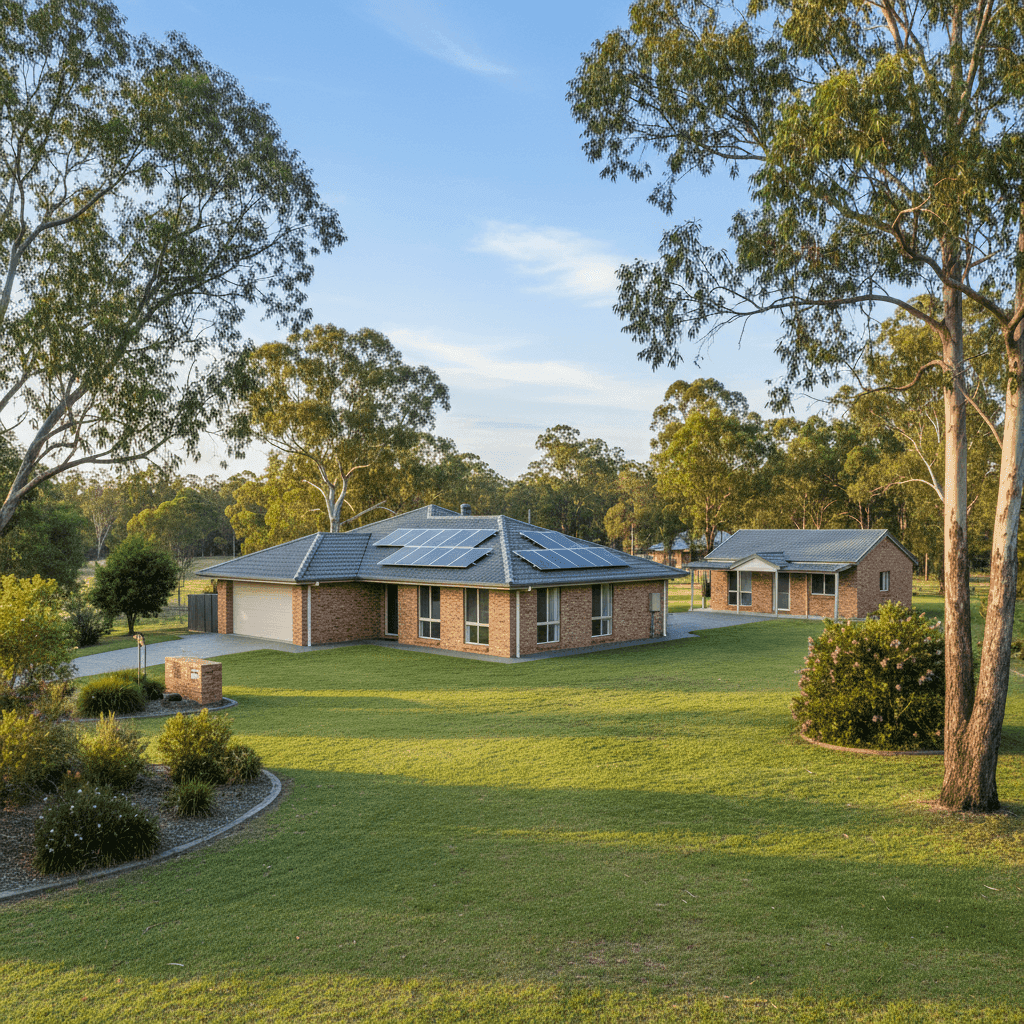
Nestled in the leafy semi-rural fringe west of Brisbane, Karana Downs is a sought-after pocket of Queensland that blends space, privacy, and a relaxed lifestyle. For owners of free standing homes in this area, understanding what drives your home insurance premium — and whether you're getting a fair deal — can mean the difference between being well protected and paying well over the odds.
This article breaks down a real building insurance quote for a four-bedroom, three-bathroom free standing home in Karana Downs (QLD 4306), and puts the numbers in context using suburb, state, and national benchmarks.
---
Is This Quote Fair?
The annual premium for this property came in at $2,052 per year (or around $201 per month), covering the building only with a sum insured of $500,000 and a building excess of $5,000.
Our price rating for this quote is CHEAP — below average for the area. That's a meaningful finding. When you consider that the suburb average sits at $4,336 per year and the median is $3,694 per year, this quote lands well beneath both benchmarks. In fact, it even comes in below the suburb's 25th percentile of $2,411 — meaning it's cheaper than at least 75% of comparable quotes in the area.
Put simply: this is a competitively priced policy for Karana Downs. Homeowners who haven't shopped around recently may be paying significantly more for equivalent cover.
---
How Karana Downs Compares
To appreciate just how favourable this quote is, it helps to zoom out and look at the broader picture.
| Benchmark | Premium |
|---|---|
| This Quote | $2,052/yr |
| Karana Downs suburb average | $4,336/yr |
| Karana Downs suburb median | $3,694/yr |
| Karana Downs 25th percentile | $2,411/yr |
| QLD state average | $9,129/yr |
| QLD state median | $3,903/yr |
| National average | $5,347/yr |
| National median | $2,764/yr |
| Scenic Rim LGA average | $8,744/yr |
(Based on [44 quotes collected for Karana Downs](https://coverclub.com.au/stats/QLD/4306/karana-downs).)
A few things stand out here. Queensland's state average of $9,129 is extraordinarily high compared to the national average of $5,347 — a reflection of the state's elevated exposure to extreme weather events, including flooding, storms, and cyclones in northern regions. You can explore QLD-wide insurance trends and national home insurance data to see how different regions stack up.
Karana Downs itself sits in the Scenic Rim LGA, where the local government area average of $8,744 per year is notably steep — likely influenced by properties in flood-prone or bushfire-risk zones elsewhere in the region. This property, however, appears to benefit from a more favourable risk profile, which helps explain the lower-than-average premium.
---
Property Features That Affect Your Premium
Several characteristics of this property work in its favour from an insurance pricing perspective — and a few add complexity worth noting.
Brick veneer construction with a tiled roof Brick veneer walls and a tiled roof are generally viewed positively by insurers. Brick is fire-resistant and durable, while tiles are less susceptible to wind damage than some metal alternatives. This combination tends to attract more competitive premiums compared to, say, weatherboard or fibrous cement cladding.
Slab foundation A concrete slab foundation is a standard and well-regarded construction method in Queensland. It offers good stability and is less prone to the subsidence or pest-related issues that can affect raised timber stumped homes.
Timber and laminate flooring While aesthetically popular, timber and laminate floors can be more costly to replace or repair after a water-related event than tiles. Insurers factor this into their pricing, though the impact on premiums is generally modest.
Solar panels This property has solar panels installed. Solar systems add replacement value to a home and can increase the sum insured required to fully cover the property. It's important to confirm with your insurer that your solar installation is explicitly included in your building cover, as some policies treat it as an optional extra.
Ducted climate control A ducted air conditioning system is another high-value fixed asset that should be captured in your building sum insured. These systems can cost tens of thousands of dollars to replace, and underinsuring could leave you out of pocket after a significant claim.
Granny flat The presence of a granny flat on the property adds both value and complexity. Insurers typically require the granny flat to be included in the building sum insured, and some may ask specific questions about its construction, usage, or whether it's rented out. Make sure your policy explicitly covers all structures on the land.
No pool, no cyclone risk zone The absence of a pool removes one common source of liability and additional premium loading. And while Karana Downs is in Queensland, it falls outside designated cyclone risk zones — a significant factor that keeps premiums lower than many other parts of the state.
Building size and land At 205 sqm of building on a generous 7,011 sqm block, this is a substantial property. Larger land parcels in semi-rural settings can sometimes attract higher premiums due to bushfire exposure or longer emergency response times, so it's worth reviewing this aspect of your risk profile periodically.
---
Tips for Homeowners in Karana Downs
1. Review your sum insured regularly With solar panels, ducted climate control, and a granny flat all on site, the true replacement cost of this property could be higher than you think. Underinsurance is one of the most common — and costly — mistakes homeowners make. Use a building cost calculator or speak with a quantity surveyor to validate your sum insured.
2. Confirm all structures are covered Granny flats, sheds, fences, and other outbuildings may or may not be automatically included in your policy. Read the Product Disclosure Statement (PDS) carefully and ask your insurer directly if you're unsure.
3. Understand your excess This quote carries a $5,000 building excess — higher than average. A higher excess typically lowers your premium, but it means you'll need to cover more out of pocket before your insurer steps in. Make sure you're comfortable with this trade-off, and that you have funds available if you need to make a claim.
4. Shop around at renewal time This quote is already competitively priced, but insurance markets shift constantly. Loyalty doesn't always pay — insurers frequently offer better rates to new customers. Make it a habit to compare quotes annually before your renewal date.
---
Compare Your Own Quote
Whether you own a similar home in Karana Downs or elsewhere in Queensland, it pays to know where your premium sits relative to the market. CoverClub makes it easy to benchmark your current policy and explore your options — no obligation, no jargon.