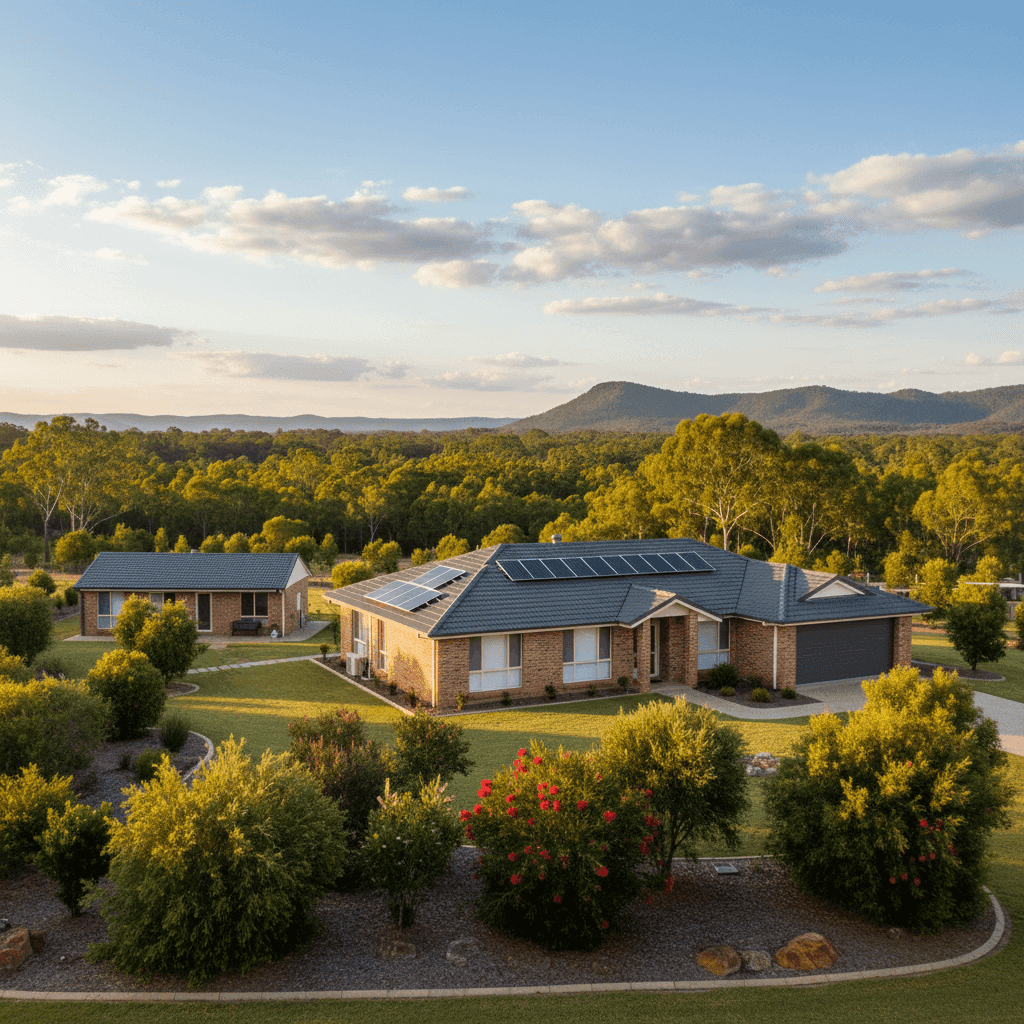
Nestled in the foothills of the D'Aguilar Range on Brisbane's outer western fringe, Karana Downs is a semi-rural suburb that offers generous land sizes and a relaxed lifestyle — but home insurance costs here can vary wildly. This article breaks down a recent building insurance quote for a four-bedroom free standing home in the area, examines how it stacks up against local, state, and national benchmarks, and offers practical advice for homeowners looking to get the best value on their cover.
---
Is This Quote Fair?
The quote in question came in at $1,545 per year (or roughly $151 per month) for building-only cover on a four-bedroom, three-bathroom brick veneer home, with a sum insured of $502,000 and a building excess of $5,000.
Our price rating for this quote is CHEAP — below average for the area. That's a meaningful finding. Based on 44 quotes collected for postcode 4306, the suburb average sits at $4,336 per year, which means this homeowner is paying roughly 64% less than the typical Karana Downs policyholder. Even against the suburb's 25th percentile — the point at which only a quarter of quotes come in cheaper — the benchmark is $2,411 per year, still well above this result.
It's worth noting that the higher building excess of $5,000 (compared to a more typical $1,000–$2,000) likely plays a role in reducing the annual premium. Choosing a higher excess is a legitimate strategy to lower upfront costs, but it does mean more out-of-pocket expense if you ever need to make a claim. Homeowners should weigh that trade-off carefully before locking in a policy.
---
How Karana Downs Compares
To put this quote in proper context, it helps to zoom out and look at the broader pricing landscape.
| Benchmark | Annual Premium |
|---|---|
| This Quote | $1,545 |
| Suburb 25th Percentile (QLD 4306) | $2,411 |
| Suburb Median (QLD 4306) | $3,694 |
| Suburb Average (QLD 4306) | $4,336 |
| Suburb 75th Percentile (QLD 4306) | $5,372 |
| LGA Average (Scenic Rim) | $8,744 |
| QLD State Average | $9,129 |
| QLD State Median | $3,903 |
| National Average | $5,347 |
| National Median | $2,764 |
A few things stand out here. First, the Karana Downs suburb average of $4,336 is actually below both the QLD state average ($9,129) and the national average ($5,347) — suggesting that postcode 4306 is relatively affordable compared to many parts of Queensland. The state average is heavily skewed by high-risk coastal and cyclone-prone regions in Far North Queensland, which pushes the mean significantly above the median of $3,903.
Second, the Scenic Rim LGA average of $8,744 is notably higher than the Karana Downs suburb average, which reflects the diverse risk profiles across that broader local government area — particularly for properties in flood-prone or bushfire-exposed pockets.
---
Property Features That Affect Your Premium
Several characteristics of this particular property work in the homeowner's favour from an insurance pricing perspective:
Brick Veneer Construction Brick veneer walls are generally well-regarded by insurers. While not as robust as full brick, they offer good fire resistance and durability compared to timber-framed cladding or weatherboard, which can attract higher premiums.
Tiled Roof Terracotta or concrete tile roofs tend to fare well in insurance assessments. They're durable, fire-resistant, and less susceptible to storm damage than corrugated iron in many scenarios — though they can be heavier and more expensive to repair if cracked.
Slab Foundation A concrete slab foundation is a neutral-to-positive factor. It eliminates the underfloor moisture and pest risk associated with raised stumped homes, which can be a source of claims in older Queensland properties.
Construction Year: 1984 Homes built in the early 1980s fall into an interesting middle ground. They're old enough to have some wear and tear, but generally predate many of the cost-cutting construction practices of the 1990s. Insurers may apply modest age-related loadings, though this is often offset by solid brick veneer construction.
Solar Panels Solar panels add replacement value to a property, and most building policies will cover them as a fixture. Their presence here is factored into the $502,000 sum insured, which is important — underinsuring a home with solar can leave you short after a major loss event.
Granny Flat The presence of a granny flat on the property is a meaningful factor. As a separate structure on the same land, it adds to the total replacement cost of the building. Homeowners should confirm with their insurer that the granny flat is explicitly covered under the policy, as some standard building policies have limitations around secondary dwellings.
Ducted Climate Control Ducted air conditioning is a significant fixed asset that forms part of the building sum insured. It's one of the more expensive items to replace after a total loss, so ensuring the sum insured adequately accounts for it is essential.
Large Land Size (7,011 sqm) The property sits on just over 7,000 square metres — a sizeable semi-rural block. Larger blocks in peri-urban areas like Karana Downs can carry elevated bushfire exposure risk, though this property is not classified as being in a cyclone risk zone.
---
Tips for Homeowners in Karana Downs
1. Review your sum insured annually With 205 sqm of living space, a granny flat, solar panels, and ducted climate control, the replacement cost of this home adds up quickly. Building costs in Queensland have risen significantly in recent years. Use a building cost calculator or speak to a quantity surveyor to ensure your $502,000 sum insured still reflects true replacement value — not just market value.
2. Understand your excess before you claim A $5,000 building excess is on the higher end of the spectrum. While it helps reduce the annual premium, it means you'll need to cover the first $5,000 of any building claim yourself. If your emergency fund isn't sized to absorb that, consider whether a lower excess (and slightly higher premium) might offer better peace of mind.
3. Check your granny flat is covered Not all standard building policies automatically extend full cover to secondary dwellings. Contact your insurer directly to confirm the granny flat is included in your policy schedule and that the sum insured accounts for its full replacement cost.
4. Assess your bushfire and storm exposure While Karana Downs is not in a designated cyclone risk zone, properties on large semi-rural blocks in South East Queensland can be exposed to bushfire and severe storm risk. Check your property's hazard ratings through the Queensland Government's mapping tools and ensure your policy includes adequate storm and fire cover.
---
Compare Home Insurance Quotes for Your Property
Whether you're a first-time buyer or a long-term Karana Downs resident reviewing your existing policy, it pays to shop around. Premiums for the same property can vary by thousands of dollars between insurers. Get a home insurance quote at CoverClub to see how your current cover stacks up — and whether you could be paying less for the same protection.