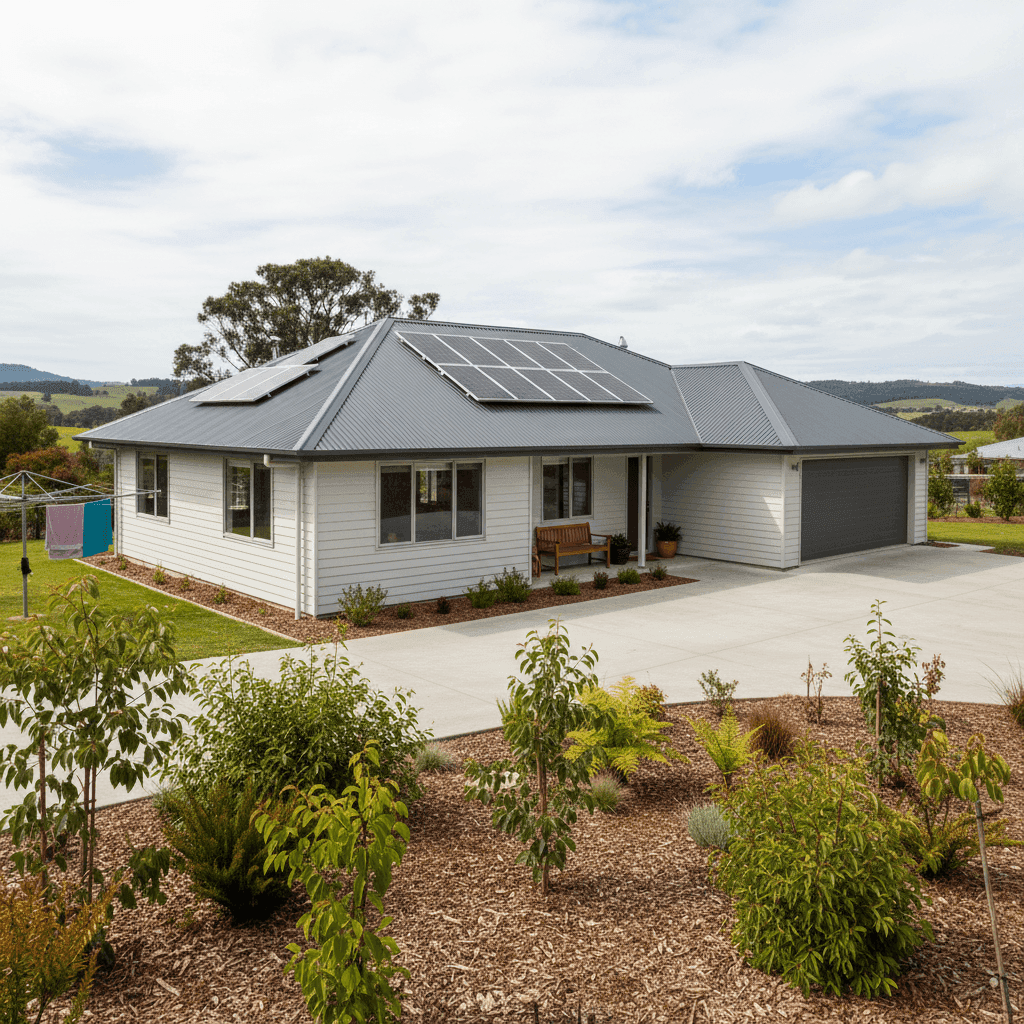
Karoola is a quiet semi-rural locality in northern Tasmania's George Town local government area, sitting just inland from the Tamar Valley wine region. It's the kind of place where a four-bedroom, free-standing home on a slab foundation offers genuine space and lifestyle — but like any property, it comes with its own insurance story. This article breaks down a real home and contents insurance quote for a property in Karoola (postcode 7267), so you can understand what's driving the price and whether it stacks up.
---
Is This Quote Fair?
The quote in question comes in at $3,982 per year (or $418/month) for combined home and contents cover, with a building sum insured of $852,000 and contents valued at $150,000. The building excess is set at $3,000 and the contents excess at $1,000.
Our price rating for this quote is FAIR — Around Average, and the data backs that up. Within Karoola itself, the suburb average sits at $3,958/year, meaning this quote is almost exactly in line with what other local homeowners are paying. It falls comfortably within the suburb's interquartile range of $3,078 to $4,177 — right in the middle of the pack.
That said, "fair" doesn't necessarily mean "the best available." It means you're not being overcharged relative to your neighbours, but there may still be room to optimise your cover or find a more competitive rate by shopping around.
---
How Karoola Compares
To put this quote in proper context, it helps to zoom out and look at the broader pricing landscape. Here's how Karoola sits relative to the rest of Tasmania and the country:
| Benchmark | Average Premium | Median Premium |
|---|---|---|
| Karoola (suburb) | $3,958/yr | $3,147/yr |
| Tasmania (state) | $2,814/yr | $2,326/yr |
| National | $5,347/yr | $2,764/yr |
| George Town LGA | $2,060/yr | — |
A few things stand out here. First, premiums in Karoola are notably higher than the Tasmanian state average — roughly 41% above the state mean and 71% above the state median. This suggests that properties in this particular pocket of northern Tasmania attract higher risk assessments than the broader Tassie average, likely driven by factors like property values, construction type, and localised risk profiles.
Second, compared to the national average of $5,347/year, this quote actually looks quite reasonable — sitting well below what the typical Australian homeowner pays. The national median of $2,764 is lower, but that figure is heavily influenced by cheaper urban and low-risk properties across the country.
Interestingly, the George Town LGA average of $2,060/year is significantly lower than Karoola's suburb average, which suggests there's meaningful variation within the local government area itself. Properties in Karoola may be larger, higher-value, or assessed differently to others in the George Town region.
You can explore more localised data on the Karoola suburb stats page, compare it against the full Tasmanian picture, or benchmark it against national home insurance trends.
---
Property Features That Affect Your Premium
Every home is different, and insurers price policies based on a combination of construction materials, size, location, and features. Here's how this particular property's characteristics are likely influencing its premium:
Weatherboard Timber Walls
Weatherboard wood is a classic Australian construction style — charming and well-suited to Tasmania's cooler climate, but typically considered higher risk by insurers than brick or rendered masonry. Timber is more susceptible to fire, rot, and storm damage, which can push premiums up compared to brick veneer equivalents.
Steel/Colorbond Roof
On the upside, a Colorbond steel roof is generally viewed favourably by insurers. It's durable, fire-resistant, and performs well in high-wind conditions. This is a positive factor that likely offsets some of the risk associated with the timber wall construction.
Slab Foundation
A concrete slab foundation is considered one of the more stable and insurer-friendly foundation types. It reduces the risk of subsidence and pest-related structural damage, which can be a meaningful cost factor in older homes.
Solar Panels
Solar panels are an increasingly common feature in Australian homes, and they do add to the replacement cost of a property. At $852,000 building sum insured, it's important that the solar system is factored into the insured value — most standard home insurance policies cover rooftop solar panels as part of the building, but it's worth confirming this with your insurer.
Ducted Climate Control
Ducted heating and cooling systems add value to a home but also represent a significant replacement cost if damaged. This is another factor that contributes to a higher building sum insured and, consequently, a higher premium.
Above-Average Fittings Quality
With above-average fittings — think quality kitchen appliances, premium fixtures, and upgraded finishes — the cost to rebuild or repair is higher than a standard home. This is appropriately reflected in the $852,000 building sum insured and will contribute to the overall premium.
1997 Construction
Built in 1997, this home is approaching 30 years old. While not old by Tasmanian standards, ageing properties can carry higher risk of wear-related claims, particularly around roofing, plumbing, and electrical systems.
---
Tips for Homeowners in Karoola
Whether you're reviewing an existing policy or shopping for the first time, here are four practical steps worth taking:
- Review your building sum insured regularly. With construction costs rising sharply across Australia, the cost to rebuild a 130 sqm weatherboard home in regional Tasmania may be higher than you think. Make sure your $852,000 sum insured reflects current building costs — not what it cost to build five years ago. Underinsurance is one of the most common and costly mistakes homeowners make.
- Confirm solar panels are covered. Ask your insurer explicitly whether your rooftop solar system is included in the building sum insured and whether it's covered for damage from storms, hail, or fire. Some policies have exclusions or sub-limits that catch homeowners off guard at claim time.
- Consider your excess settings carefully. This policy carries a $3,000 building excess — on the higher end. A higher excess typically reduces your premium, but make sure you'd genuinely be able to cover that out-of-pocket in the event of a claim. If cash flow is a concern, a lower excess (even at slightly higher premium) may offer better peace of mind.
- Shop around at renewal time. A "fair" rating means this quote is competitive, but the insurance market changes constantly. Even if you're happy with your current insurer, getting a comparison quote at renewal costs nothing and could save you hundreds. Compare quotes on CoverClub to see what other providers are offering for your property.
---
Ready to Compare?
If you're a homeowner in Karoola or anywhere in northern Tasmania, it pays to know what the market looks like before you commit to a policy. CoverClub makes it easy to compare home and contents insurance quotes side by side, so you can make a confident, informed decision. Get your personalised quote today and see how your current premium stacks up.