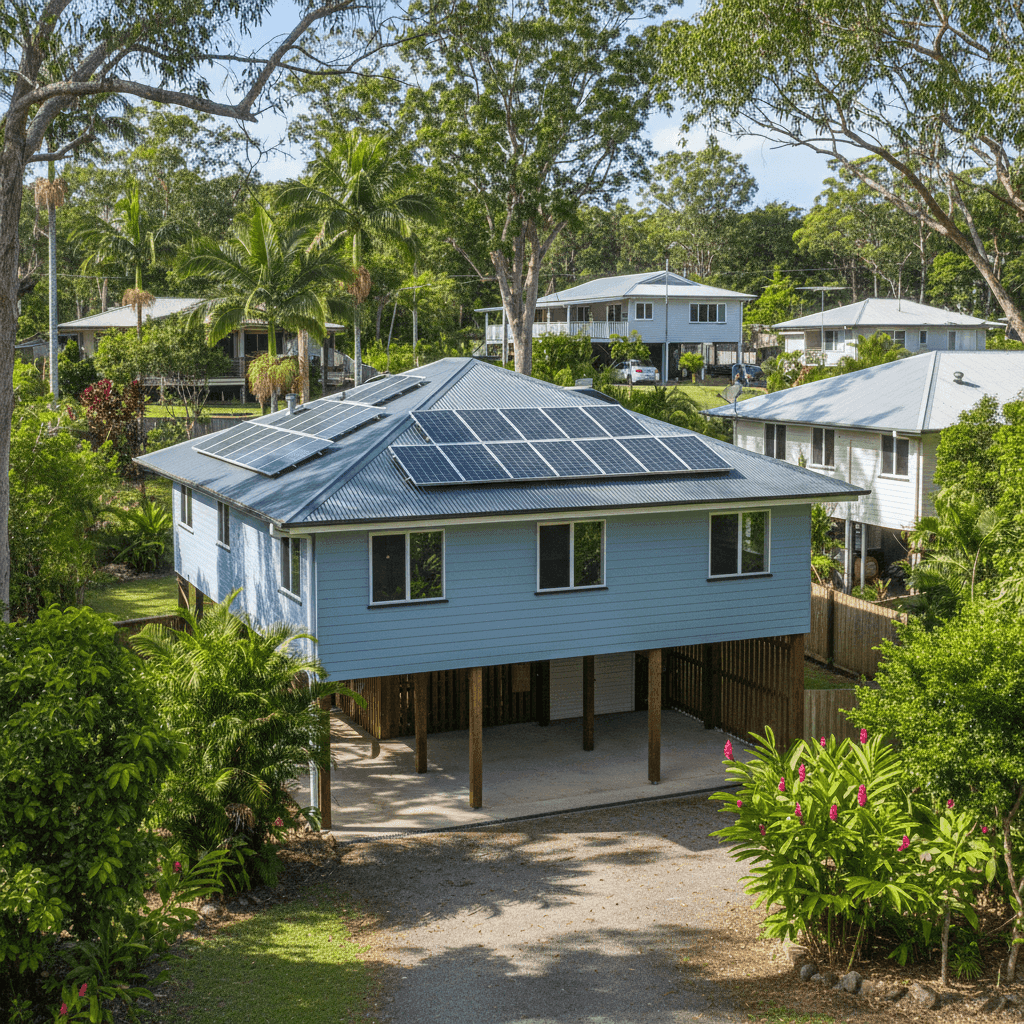
Karragarra Island is one of Queensland's quieter island communities, nestled in Moreton Bay within the Redland City local government area. Accessible only by ferry, it's a sought-after lifestyle location — but like many island and coastal properties in South East Queensland, insuring a home here comes with its own set of considerations. This article breaks down a real building insurance quote for a three-bedroom, two-bathroom free-standing home on Karragarra Island, and puts the numbers into context against local, state, and national benchmarks.
---
Is This Quote Fair?
The annual premium for this property came in at $2,258 per year (or roughly $216 per month), covering the building only with a sum insured of $324,000 and a standard $1,000 excess.
Our price rating for this quote is CHEAP — below average — which is genuinely good news for the homeowner. To put that in perspective:
- The Queensland state average for home building insurance sits at $4,547/yr, with a median of $3,931/yr
- The national average is $2,965/yr, with a median of $2,716/yr
- The Redland LGA average is $3,312/yr
At $2,258/yr, this quote comes in 50% below the Queensland state average and about 24% below the national average. Even compared to the broader Redland LGA — which includes a mix of mainland and island suburbs — this premium is notably competitive, sitting roughly $1,054 below the LGA average.
For Queensland homeowners accustomed to eye-watering insurance bills (particularly in flood-prone or cyclone-risk postcodes), a sub-$2,300 annual premium for building cover is well worth paying attention to.
---
How Karragarra Island Compares
Without suburb-level aggregate data available for postcode 4184, we're working from the broader regional and national picture — but the comparisons are still telling. You can explore available Karragarra Island insurance stats as more data becomes available.
Here's a quick snapshot of how this quote stacks up:
| Benchmark | Annual Premium |
|---|---|
| This Quote | $2,258 |
| Redland LGA Average | $3,312 |
| QLD State Average | $4,547 |
| QLD State Median | $3,931 |
| National Average | $2,965 |
| National Median | $2,716 |
Queensland as a whole tends to carry some of the highest home insurance premiums in the country, largely driven by cyclone exposure in the north, flooding risk across many catchments, and the general cost of rebuilding in regional and coastal areas. You can dig deeper into Queensland insurance cost trends or compare against national home insurance averages to see how your own situation measures up.
The fact that this Karragarra Island property sits well below both the state and national averages suggests the specific risk profile of this home — and this location — is being priced favourably by insurers.
---
Property Features That Affect Your Premium
Several characteristics of this property likely contribute to its competitive premium. Let's unpack the key ones:
Elevated Construction
The home is elevated by at least one metre on stumps — a classic Queenslander-style build. This is a meaningful risk factor in the eyes of insurers. Elevated homes on stumps are generally less susceptible to inundation from localised surface flooding and storm surge, which can significantly reduce flood-related risk assessments. On an island property surrounded by tidal waterways, this is particularly relevant.
Hardiplank/Hardiflex Cladding & Colorbond Roof
The external walls are clad in Hardiplank or Hardiflex — a fibre cement product that offers solid resistance to moisture, rot, and termites. Combined with a steel Colorbond roof, this is a durable and relatively low-maintenance construction combination that insurers tend to view favourably compared to older or more vulnerable materials like weatherboard or terracotta tiles.
Modest Building Size
At 105 sqm, this is a compact home, and the sum insured of $324,000 reflects that. Smaller floor areas generally mean lower rebuild costs, which directly influences the premium. Homeowners with larger or more elaborate properties will naturally face higher cover requirements — and higher premiums to match.
Solar Panels
The property has solar panels installed. While solar adds value to a home, it also adds a degree of replacement cost and potential liability (particularly during storm events). Most insurers include solar panels under building cover automatically, but it's worth confirming this with your provider to ensure the panels and their mounting hardware are explicitly covered.
No Cyclone Risk Zone
Karragarra Island falls outside the designated cyclone risk area — a significant factor given that cyclone-rated premiums in North Queensland can be multiples of what's seen in the south-east corner. This alone can make a substantial difference to the bottom line.
Standard Fittings
With standard-quality fittings throughout, there are no high-end fixtures or custom finishes inflating the replacement cost estimate. This keeps the sum insured — and therefore the premium — grounded.
---
Tips for Homeowners in Karragarra Island
1. Review your sum insured regularly Construction costs have risen sharply across Australia in recent years. A sum insured set even two or three years ago may no longer reflect what it would actually cost to rebuild your home today. Use a building cost calculator or speak with a quantity surveyor to make sure you're not underinsured — particularly given the logistical complexities of rebuilding on an island.
2. Confirm solar panel coverage Given the solar installation on this property, it's worth reading your Product Disclosure Statement (PDS) carefully to confirm how solar panels are treated. Some policies cover them automatically as part of the building; others require a specific endorsement. Storm damage to panels can be costly to repair.
3. Document your home's elevated construction When obtaining quotes, be specific about the fact that your home is elevated on stumps by at least one metre. Some insurers apply different flood or storm surge risk ratings to elevated homes, and providing this detail upfront can help ensure you're quoted accurately — and potentially more competitively.
4. Compare at renewal time Even with a below-average premium today, insurance markets shift. Insurers reprice risk constantly, and the cheapest option one year may not be the best value the next. Make it a habit to compare quotes at renewal rather than simply auto-renewing — it takes minutes and can save hundreds.
---
Find a Better Deal with CoverClub
Whether you're a Karragarra Island local or a homeowner anywhere in Australia, comparing quotes is the single most effective way to make sure you're not overpaying. CoverClub makes it easy to see what multiple insurers would charge for your specific property — in minutes, not hours. Get a home insurance quote today and see how your current premium stacks up.