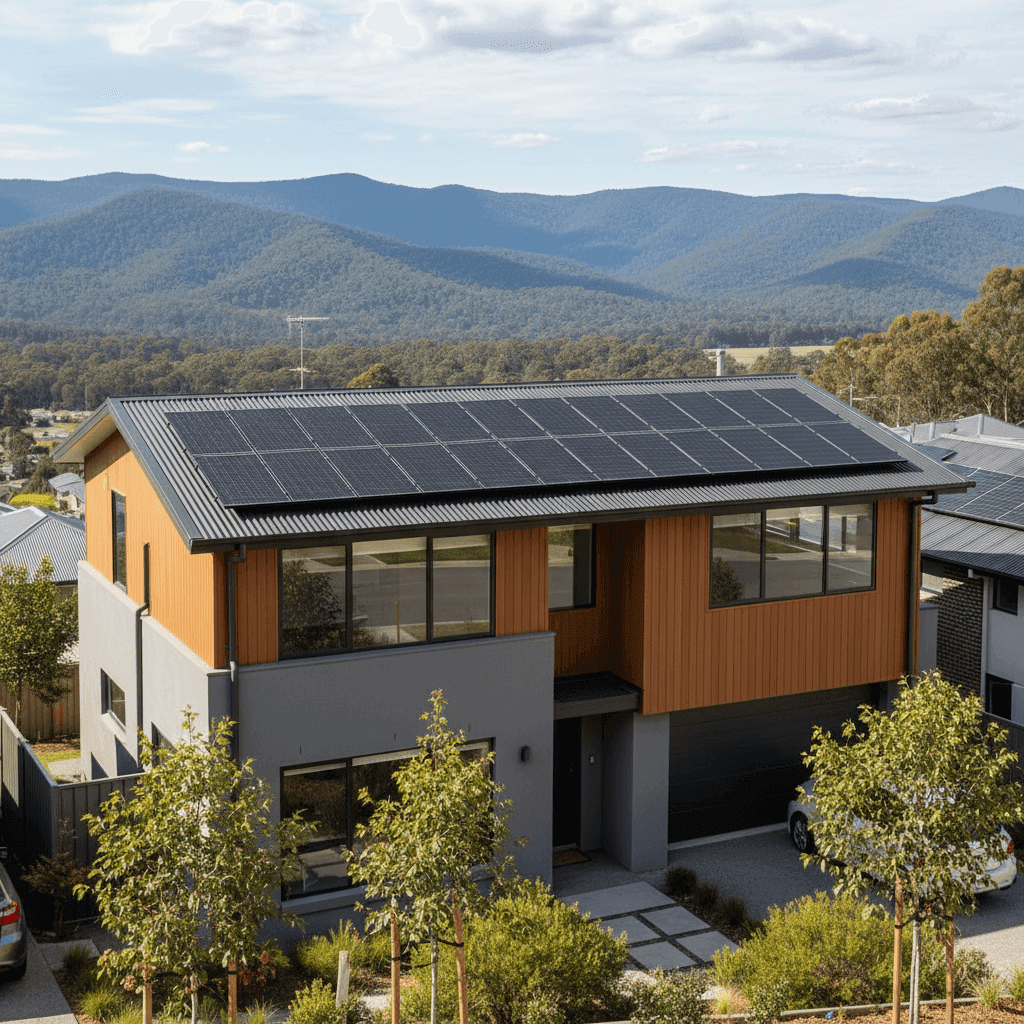
Nestled in the heart of the Blue Mountains, Katoomba is one of New South Wales' most iconic regional towns — and an increasingly popular choice for homeowners seeking a cooler climate and stunning natural surrounds. But living close to the escarpment and dense bushland comes with its own insurance considerations. This article breaks down a recent home and contents insurance quote for a 3-bedroom townhouse in Katoomba (NSW 2780), examines how the premium stacks up against local and national benchmarks, and offers practical tips for homeowners in the area.
---
Is This Quote Fair?
The annual premium for this quote comes in at $1,767 per year (or $163/month), covering a building sum insured of $841,000 and $50,000 in contents — with a building excess of $3,000 and a contents excess of $2,000.
Our pricing analysis rates this quote as CHEAP — below average for the area. That's a meaningful result. The suburb average for Katoomba sits at $3,305/year, meaning this quote comes in at roughly 47% below what most homeowners in the postcode are paying. Even against the suburb's 25th percentile — the cheapest quarter of quotes — the figure of $2,644/year is still nearly $900 more expensive than this result.
So what's driving the competitive pricing? A combination of factors likely plays a role: the relatively modern construction year (2019), a slab foundation, a steel/Colorbond roof, and the absence of higher-risk features like a swimming pool. The property's above-average fittings quality does push the sum insured higher, but the overall risk profile appears to be working in the homeowner's favour.
That said, it's always worth comparing multiple insurers. A cheap quote today doesn't guarantee the same result at renewal — premiums can shift significantly year to year.
---
How Katoomba Compares
To put this quote in proper context, here's how Katoomba premiums sit relative to broader benchmarks:
| Benchmark | Annual Premium |
|---|---|
| This Quote | $1,767 |
| Katoomba Suburb Average | $3,305 |
| Katoomba Suburb Median | $3,405 |
| Katoomba 25th Percentile | $2,644 |
| Katoomba 75th Percentile | $4,130 |
| Blue Mountains LGA Average | $3,517 |
| NSW State Average | $3,801 |
| NSW State Median | $3,410 |
| National Average | $2,965 |
| National Median | $2,716 |
A few things stand out from this comparison. First, Katoomba premiums are notably elevated compared to the national average — the suburb average of $3,305 is around 11% higher than the national figure of $2,965. This reflects the area's elevated bushfire exposure, which insurers consistently price into Blue Mountains properties.
Second, the NSW state average of $3,801 is the highest of all the benchmarks shown — a reminder that New South Wales as a whole carries significant natural hazard risk, from bushfires in the west to storm and flood risk along the coast and ranges.
This quote at $1,767 sits well below every single benchmark in the table, making it an outlier in the best possible sense for the policyholder.
---
Property Features That Affect Your Premium
Several characteristics of this property are worth examining through an insurance lens:
Construction year (2019): Newer builds generally attract lower premiums. Modern construction standards mean better fire resistance, structural integrity, and compliance with updated building codes — all of which reduce risk in the eyes of insurers.
Steel/Colorbond roof: This is a significant positive from a risk perspective. Colorbond roofing is non-combustible, highly durable, and performs well in both bushfire-prone and storm-affected environments. Compared to older tile or timber roofs, it's one of the more insurer-friendly roofing materials available.
Slab foundation: Concrete slab foundations are considered stable and low-risk. They're less susceptible to termite damage and moisture ingress compared to raised timber stumps, which can be a concern in older Blue Mountains homes.
Solar panels: The property has solar panels installed. While these add value to the home and are generally covered under building insurance, they do represent an additional asset that insurers need to account for — and can occasionally add marginal cost to a premium depending on the insurer's approach.
Ducted climate control: Ducted systems are a higher-cost item to repair or replace compared to split systems, and their presence is typically factored into the building sum insured rather than directly inflating the premium. That said, ensuring the sum insured adequately reflects the replacement cost of these systems is important.
Fittings quality (above average): Above-average fittings — think stone benchtops, quality cabinetry, premium appliances — lift the cost of rebuilding the home. This is reflected in the $841,000 building sum insured, which is appropriate for a 186 sqm townhouse with quality finishes in a regional NSW market.
No pool: The absence of a swimming pool removes a source of liability and maintenance risk that can nudge premiums upward for some insurers.
---
Tips for Homeowners in Katoomba
1. Review your bushfire risk rating annually Katoomba and the broader Blue Mountains are designated as bushfire-prone land. Your insurer uses hazard data to price this risk, and it can change as vegetation management and climate conditions evolve. Check your property's bushfire attack level (BAL) rating and make sure your policy reflects any mitigation measures you've taken, such as ember guards or cleared buffer zones.
2. Don't underinsure your building Rebuilding costs in regional NSW have risen sharply in recent years due to supply chain pressures and labour shortages. A 186 sqm townhouse with above-average fittings and a Colorbond roof in the Blue Mountains carries real rebuild costs. Review your sum insured each year — ideally using a quantity surveyor's estimate or your insurer's calculator — to avoid being caught short in a total loss scenario.
3. Take advantage of your modern build Newer properties often qualify for discounts or preferred pricing with certain insurers. When comparing quotes, make sure you're accurately entering your construction year, roof type, and wall materials — these details can make a meaningful difference to the premium you're offered.
4. Compare at renewal, not just at inception It's common for insurers to gradually increase premiums at renewal without a corresponding change in risk. Given this quote is already well below the Katoomba average, shopping around at each renewal is the best way to ensure you're not drifting back toward the suburb mean over time. Compare quotes at CoverClub to keep your options open.
---
Ready to Compare?
Whether you're a current Katoomba homeowner or considering a move to the Blue Mountains, understanding what a fair premium looks like is the first step to making a confident insurance decision. CoverClub makes it easy to compare home and contents quotes side by side, with transparent pricing data drawn from real quotes across Australia.
Get a home insurance quote for your Katoomba property and see how your premium compares to your neighbours — you might be surprised by the difference a single comparison can make.