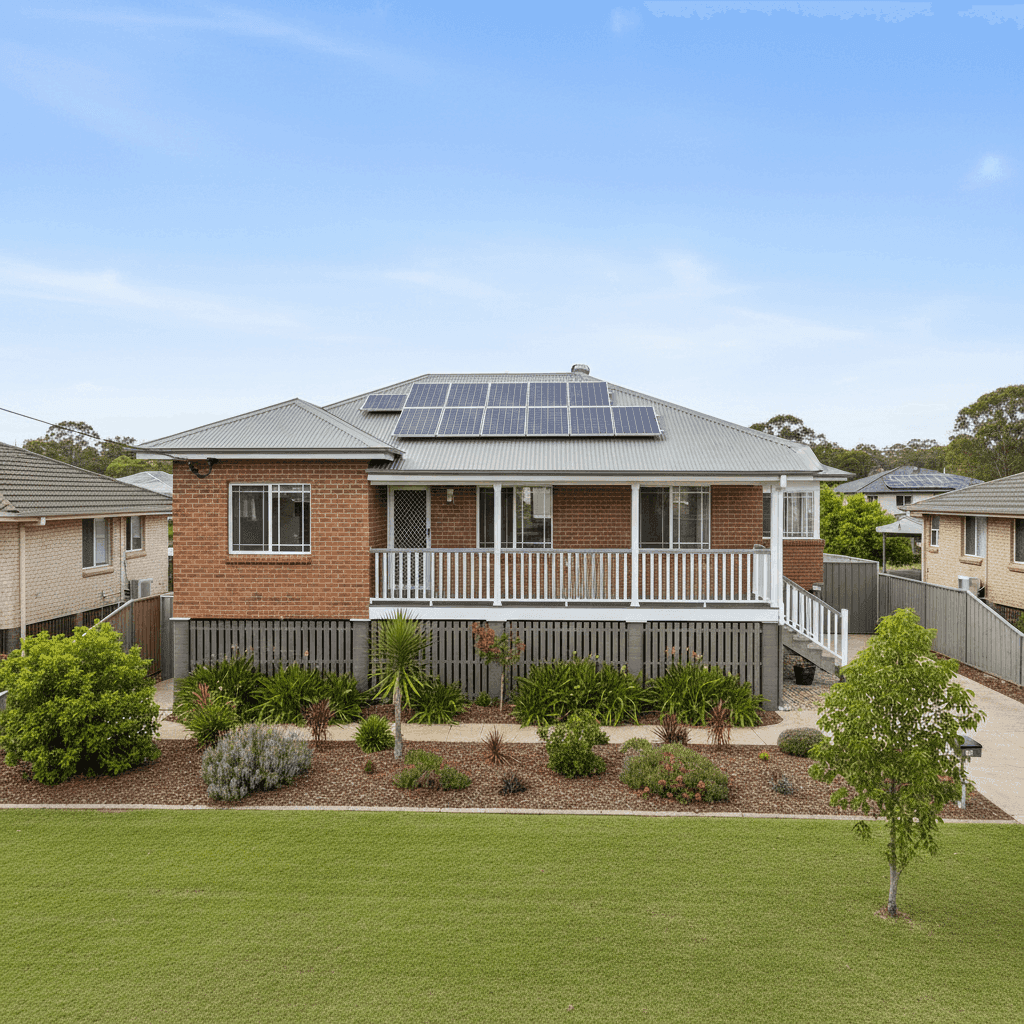
If you own a free standing home in Kawungan, QLD 4655, you're probably well aware that insurance costs in Queensland can vary enormously depending on where you live and how your property is built. This article breaks down a recent building-only insurance quote for a three-bedroom, two-bathroom brick veneer home in Kawungan — and puts the numbers into context using real suburb, state, and national data.
---
Is This Quote Fair?
The short answer: yes, and then some. The quote in question comes in at $1,878 per year (or $180/month) for building-only cover on a home insured for $789,000, with a $1,000 building excess. Our price rating for this quote is CHEAP — below average for the suburb.
To put that in perspective, the suburb average for Kawungan sits at $2,958/year, with a median of $2,604/year. That means this quote is roughly $726 below the suburb median and more than $1,080 below the suburb average — a meaningful saving for any household budget.
Even compared to the suburb's 25th percentile (the cheapest end of the range), which sits at $1,987/year, this quote still comes in lower. That places it firmly among the most competitive premiums seen in the area, based on a sample of 31 quotes collected for postcode 4655.
For Queensland homeowners who've grown accustomed to eye-watering insurance bills — particularly in flood- or cyclone-prone regions — a quote like this is genuinely noteworthy.
---
How Kawungan Compares
To truly appreciate this result, it helps to zoom out and look at the broader picture.
| Benchmark | Annual Premium |
|---|---|
| This Quote | $1,878 |
| Kawungan Suburb Average | $2,958 |
| Kawungan Suburb Median | $2,604 |
| QLD State Average | $9,129 |
| QLD State Median | $3,903 |
| National Average | $5,347 |
| National Median | $2,764 |
The Queensland state average of $9,129/year is heavily influenced by high-risk postcodes — think cyclone-prone Far North Queensland or flood-affected regions in Western Queensland — which skews the figure significantly upward. Even the QLD median of $3,903 is more than double this particular quote.
At the national level, the average sits at $5,347/year, with a median of $2,764. Again, this quote sits comfortably below both figures.
Kawungan, located in the Fraser Coast region near Hervey Bay, benefits from a relatively benign risk profile compared to many Queensland postcodes. It sits outside designated cyclone risk zones, which is a major factor in keeping premiums lower than much of regional Queensland.
---
Property Features That Affect Your Premium
Several characteristics of this particular home work in the homeowner's favour when it comes to insurance pricing.
Brick veneer construction is generally viewed favourably by insurers. While not as robust as full double-brick, brick veneer offers solid weather resistance and is less susceptible to fire and storm damage than timber-framed cladding alternatives. Combined with a steel/Colorbond roof, this home has a durable exterior that tends to attract more competitive premiums.
Stumped foundations (elevated less than 1 metre) are common in Queensland and can actually assist with underfloor ventilation and some flood resilience, though insurers assess elevation on a case-by-case basis. Being elevated — even modestly — can be a positive factor in certain flood-risk assessments.
The timber and laminate flooring throughout is standard for homes of this era and construction type. While timber floors can be more expensive to replace than concrete or tile, they're a known quantity for insurers and don't typically flag unusual risk.
Built in 1994, this home sits in a comfortable middle ground — old enough to have settled construction, but not so old that ageing materials or outdated wiring become a significant concern for underwriters.
The presence of solar panels is worth noting. Some insurers include solar panels under building cover automatically, while others treat them as an optional extra or exclude them entirely. It's worth confirming with your insurer exactly how your panels are covered — particularly for storm damage or hail, which can be a real risk in South-East Queensland.
The absence of a swimming pool simplifies the risk profile, and the lack of ducted climate control means there are fewer mechanical systems that could contribute to a claim.
At 214 sqm, this is a mid-sized home, and the $789,000 sum insured reflects a reasonable rebuild cost estimate for a property of this size and specification in the current construction environment.
---
Tips for Homeowners in Kawungan
Whether you're reviewing your existing policy or shopping around for the first time, here are a few practical steps worth taking.
1. Don't rely solely on your insurer's suggested sum insured. Building costs have risen sharply in recent years. Make sure your sum insured reflects the actual cost to rebuild your home from scratch — including demolition, debris removal, and professional fees. Underinsurance is one of the most common and costly mistakes Australian homeowners make.
2. Confirm your solar panel coverage. As mentioned above, solar panels aren't always automatically included in building cover. Ask your insurer specifically whether your panels are covered, under what circumstances, and whether there's a separate sub-limit applying to them.
3. Review your excess level. A $1,000 building excess is fairly standard, but increasing your excess can reduce your annual premium. Conversely, if cash flow is a concern, a lower excess means less out-of-pocket in the event of a claim. Strike a balance that suits your financial situation.
4. Shop the market at renewal time. Loyalty doesn't always pay in insurance. Premiums can shift significantly from year to year, and insurers don't always pass on competitive pricing to existing customers. Even if your current quote looks good, it's worth comparing at renewal to ensure you're still getting value.
---
Compare Your Own Quote
Curious how your Kawungan home insurance stacks up? CoverClub makes it easy to benchmark your premium against real data from your suburb, state, and across Australia. Whether you're renewing soon or just doing your research, get a quote at CoverClub and see how your property compares — no obligation, no hassle.
You can also explore the latest Kawungan insurance statistics, Queensland-wide data, and national benchmarks to get a clearer picture of what Australians are paying for home insurance right now.