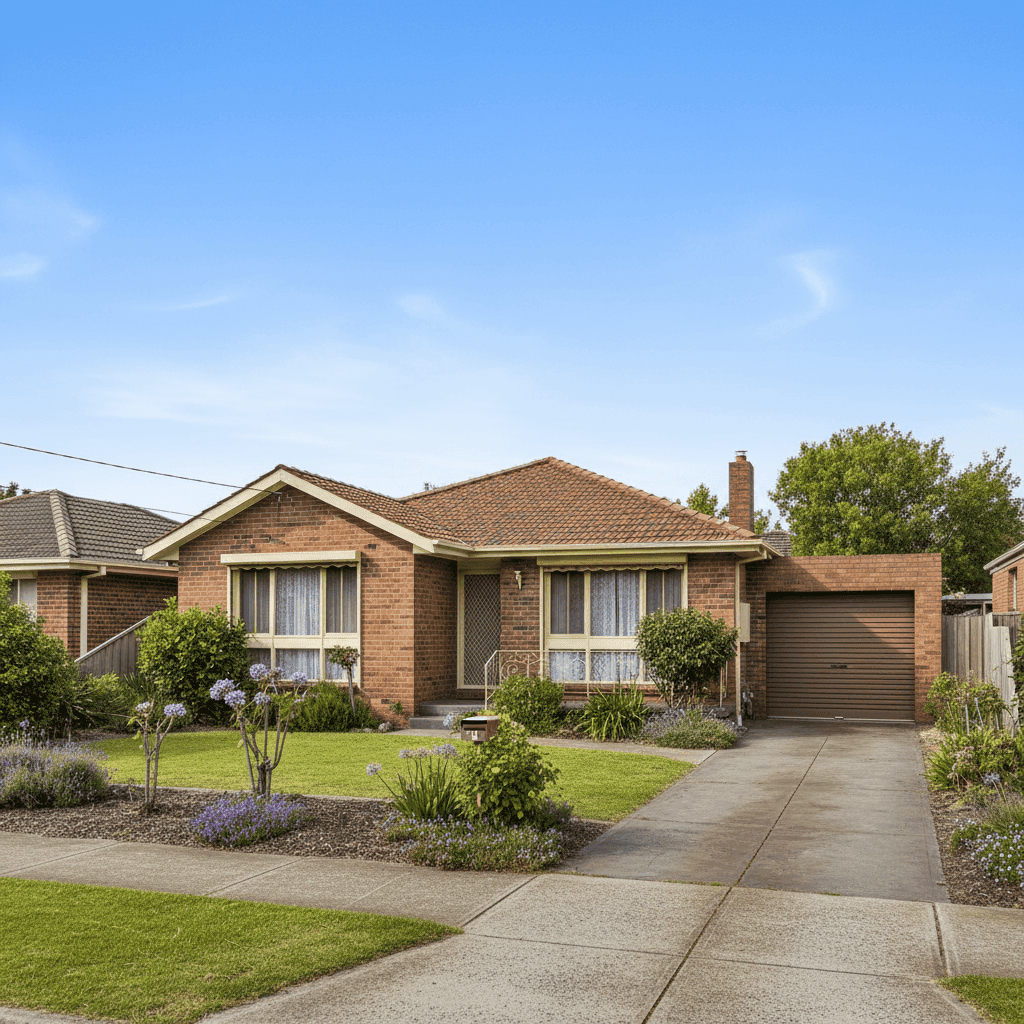
If you own a free standing home in Kealba, VIC 3021, you're probably curious about whether your home insurance premium is competitive — or whether you're leaving money on the table. This article breaks down a real building-only insurance quote for a three-bedroom brick veneer home in Kealba, benchmarking it against local, state, and national data so you can make a more informed decision at renewal time.
---
Is This Quote Fair?
The quote in question comes in at $1,340 per year (or $137 per month) for building-only cover, with a $400,000 sum insured and a $3,000 building excess. Our price rating for this quote is FAIR — Around Average.
That assessment holds up well under scrutiny. The premium sits below both the suburb average of $1,411/yr and the suburb median of $1,485/yr, placing it comfortably in the middle of the pack for Kealba. It's not the cheapest quote you could find — the 25th percentile for the suburb sits at $1,226/yr — but it's meaningfully better than the 75th percentile of $1,542/yr. In other words, roughly three-quarters of comparable quotes in the area cost more.
For a homeowner who values a recognised insurer and solid coverage terms, paying close to the suburb average for a well-built brick veneer home is a reasonable outcome. That said, "fair" doesn't mean you shouldn't shop around — there's still a $259/yr gap between this quote and the cheapest quartile, which adds up to over $1,200 across a five-year period.
---
How Kealba Compares
One of the most striking takeaways from this data is just how affordable Kealba is relative to broader benchmarks. Here's a quick snapshot:
| Benchmark | Premium |
|---|---|
| This quote | $1,340/yr |
| Kealba suburb average | $1,411/yr |
| Kealba suburb median | $1,485/yr |
| Brimbank LGA average | $1,707/yr |
| VIC state average | $3,000/yr |
| VIC state median | $2,718/yr |
| National average | $5,347/yr |
| National median | $2,764/yr |
The numbers tell a clear story. At $1,340/yr, this quote is 55% below the Victorian state average and a remarkable 75% below the national average. Even compared to the broader Brimbank LGA average of $1,707/yr, Kealba homeowners are getting a noticeably better deal.
It's worth noting that national and state averages are heavily influenced by high-risk regions — cyclone-prone areas in Queensland and the Northern Territory, bushfire-exposed properties in rural Victoria and New South Wales, and flood-affected communities across multiple states. Kealba's location in Melbourne's north-western suburbs, away from these elevated natural hazard zones, is a significant factor in keeping premiums down.
You can explore more localised data on the Kealba suburb stats page, compare figures across Victoria, or see how the whole country stacks up on the national stats page.
---
Property Features That Affect Your Premium
Insurers don't just look at your postcode — the physical characteristics of your home play a significant role in how your premium is calculated. Here's how the features of this particular property come into play:
Brick Veneer Construction Brick veneer is one of the most common wall types in Melbourne's suburban housing stock, and insurers generally view it favourably. It offers solid fire resistance and structural durability compared to timber-framed or clad homes, which can contribute to a more competitive premium.
Tiled Roof Terracotta or concrete tile roofs are considered low-to-moderate risk by most insurers. They're durable, relatively easy to repair, and less susceptible to fire than some alternatives. This roof type won't push your premium up unnecessarily.
Slab Foundation A concrete slab foundation is standard for homes of this era and construction type in Victoria. It's generally considered stable and low-risk, provided there are no known subsidence or soil movement issues in the area.
Built in 1980 Homes from this era are well past the teething stage but old enough that some components — roofing, plumbing, electrical wiring — may be approaching the end of their serviceable life. Insurers factor in age when assessing risk, though a well-maintained 1980s home typically doesn't attract significant loading.
130 sqm Building Size At 130 sqm, this is a modestly sized home, and the $400,000 sum insured reflects a reasonable estimate for full rebuild costs in metropolitan Melbourne, accounting for labour, materials, and demolition. It's worth reviewing your sum insured annually, as construction costs have risen sharply in recent years.
No Pool, Solar Panels, or Ducted Climate Control The absence of these features simplifies the risk profile. Pools, solar systems, and ducted HVAC units can all add to rebuild costs and, in some cases, increase liability exposure. Not having them keeps things straightforward and avoids potential premium loading.
---
Tips for Homeowners in Kealba
1. Review Your Sum Insured Every Year Building costs in Victoria have increased significantly since the pandemic, driven by labour shortages and rising material prices. A sum insured that was appropriate three years ago may no longer cover a full rebuild today. Use an online building cost calculator or speak to a quantity surveyor to make sure your $400,000 cover is still adequate for a 130 sqm home in Melbourne's west.
2. Consider Whether Building-Only Cover Is Enough This quote covers the building structure only — it doesn't protect your furniture, appliances, clothing, or other personal belongings. If you own your home outright or have significant contents, it's worth getting a combined building and contents quote to compare. Many insurers offer package discounts that can make the combined option surprisingly cost-effective.
3. Understand Your Excess Before You Claim The $3,000 building excess on this policy is on the higher side. A higher excess typically reduces your annual premium, which is a sensible trade-off for minor claims — but make sure you have that amount readily accessible in case of a significant event. If cash flow is a concern, it may be worth comparing policies with a lower excess, even if it costs a little more per year.
4. Shop Around at Every Renewal Insurers don't always reward loyalty. In fact, many providers offer their best rates to new customers. With Kealba's 25th percentile sitting at $1,226/yr, there's a realistic chance you could save $100–$200/yr simply by comparing quotes at renewal time rather than auto-renewing.
---
Compare Quotes for Your Kealba Home
Whether this quote matches your own or you're starting fresh, comparing multiple insurers is the single most effective way to ensure you're getting genuine value. CoverClub makes it easy to see real quotes side by side, tailored to your property's specific features and location.
Get a quote for your Kealba home today — it takes just a few minutes and could save you hundreds of dollars a year.