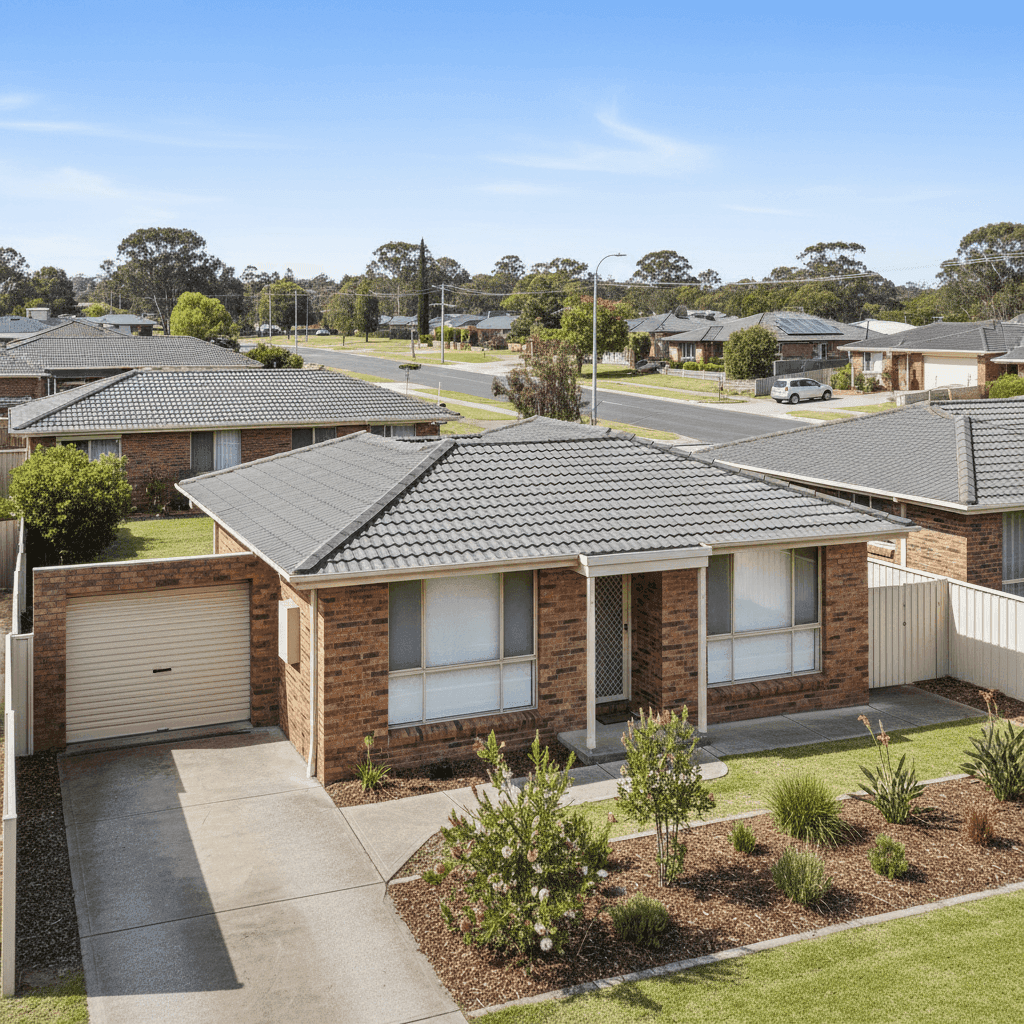
If you own a free standing home in Kearns, NSW 2558, you've probably wondered whether you're paying a fair price for home insurance — or whether there's a better deal waiting. Kearns is a quiet, established suburb in the Campbelltown LGA in Sydney's south-west, characterised by solid brick homes built during the late 1980s and 1990s housing boom. In this article, we break down a real home and contents insurance quote for a 3-bedroom property in the area and compare it against local, state, and national benchmarks so you can make a more informed decision.
---
Is This Quote Fair?
The quote we're analysing comes in at $1,083 per year (or roughly $103 per month) for combined home and contents cover — with a building sum insured of $543,000 and contents valued at $50,000. Both the building and contents carry a $2,000 excess.
Our pricing tool rates this quote as CHEAP — Below Average, which is excellent news for the homeowner. To put that in perspective:
- The NSW state average premium is $3,801/yr, and the median sits at $3,410/yr
- The national average is $2,965/yr, with a median of $2,716/yr
- The Campbelltown LGA average is $2,555/yr
At $1,083/yr, this quote is less than half the LGA average and roughly 28% of the NSW state average — a genuinely strong result. Homeowners in New South Wales tend to pay more than the national average, partly due to storm and flood exposure in parts of the state, which makes a below-average result here even more noteworthy.
That said, it's always worth remembering that a lower premium doesn't automatically mean better value — policy inclusions, exclusions, and claim handling all matter. But on price alone, this is a very competitive outcome.
---
How Kearns Compares
Kearns sits within the Campbelltown LGA, an area where insurance premiums tend to be more moderate compared to coastal or flood-prone suburbs. While we don't have suburb-specific average data for Kearns at this time, the LGA average of $2,555/yr gives us a useful local benchmark.
Here's how the numbers stack up:
| Benchmark | Annual Premium |
|---|---|
| This Quote | $1,083 |
| Campbelltown LGA Average | $2,555 |
| NSW State Average | $3,801 |
| NSW State Median | $3,410 |
| National Average | $2,965 |
| National Median | $2,716 |
You can explore more pricing data for the area on the Kearns suburb stats page, or broaden your view with NSW-wide insurance statistics and national home insurance data.
The gap between this quote and the LGA average is significant — over $1,400 per year. Over a five-year period, that's potentially more than $7,000 in savings, assuming premiums remain stable. It's a reminder of just how much variation exists in the market and why comparing quotes is so important.
---
Property Features That Affect Your Premium
Every home insurance quote is shaped by the specific characteristics of the property. Here's how the features of this Kearns home likely influence the premium:
Brick Veneer Construction Brick veneer is one of the most common wall types in Australian suburban homes built from the 1970s onwards. It's generally regarded as a lower-risk construction type compared to weatherboard or fibre cement, as it offers solid fire resistance and structural durability — both of which can work in your favour at quote time.
Tiled Roof A tiled roof is similarly well-regarded by insurers. Tiles are durable, fire-resistant, and long-lasting when properly maintained. Compared to older corrugated iron or Colorbond roofs in poor condition, a tiled roof typically attracts more favourable underwriting treatment.
Stump Foundation The property sits on stumps, which is a traditional foundation type common in older Australian homes. Stumped homes can be more susceptible to movement and settling over time, and some insurers may factor this in. However, well-maintained stumps pose minimal risk and are widely covered.
Timber/Laminate Flooring Timber and laminate flooring can influence contents and building valuations, as these materials can be expensive to replace following water damage or fire. It's worth ensuring your sum insured accurately reflects the cost of replacing these finishes.
1988 Construction A home built in 1988 is now nearly 40 years old. While this is not unusual for the Campbelltown area, older homes can carry a higher risk of ageing systems (plumbing, wiring, roofing) that may affect both premium pricing and claim outcomes. Regular maintenance is key.
No Pool, Solar, or Ducted Climate Control The absence of a pool, solar panels, and ducted air conditioning simplifies the risk profile. Each of these features can add complexity and cost to a policy, so their absence likely contributes to the competitive premium in this case.
---
Tips for Homeowners in Kearns
Whether you're renewing your policy or shopping around for the first time, here are some practical steps to help you get the most from your home insurance:
1. Review Your Sum Insured Annually Building costs in south-western Sydney have risen considerably in recent years. Make sure your $543,000 sum insured still reflects what it would actually cost to rebuild your home from scratch — not its market value. Underinsurance is one of the most common and costly mistakes homeowners make.
2. Document Your Contents Thoroughly With $50,000 in contents cover, it's worth creating a home inventory — photos, receipts, and serial numbers for valuable items. This makes claims faster and more straightforward, and helps you confirm whether $50,000 is truly sufficient for everything you own.
3. Maintain Your Home Regularly Older homes like this one benefit enormously from proactive upkeep. Keep gutters clear, check roof tiles after storms, and monitor subfloor ventilation around your stumps. Insurers can deny claims where damage results from a lack of maintenance, so staying on top of repairs protects both your home and your cover.
4. Compare Before You Renew Even if your current premium is competitive, the insurance market shifts constantly. Don't assume last year's best deal is still the best available. Shopping around at renewal time — even just to confirm you're still well-priced — is a habit that pays off.
---
Ready to Compare Home Insurance in Kearns?
Whether this quote is yours or you're simply researching what home insurance costs in Kearns, the best way to know you're getting a fair deal is to compare. At CoverClub, we make it easy to see real quotes side by side, so you can choose cover that fits both your property and your budget.