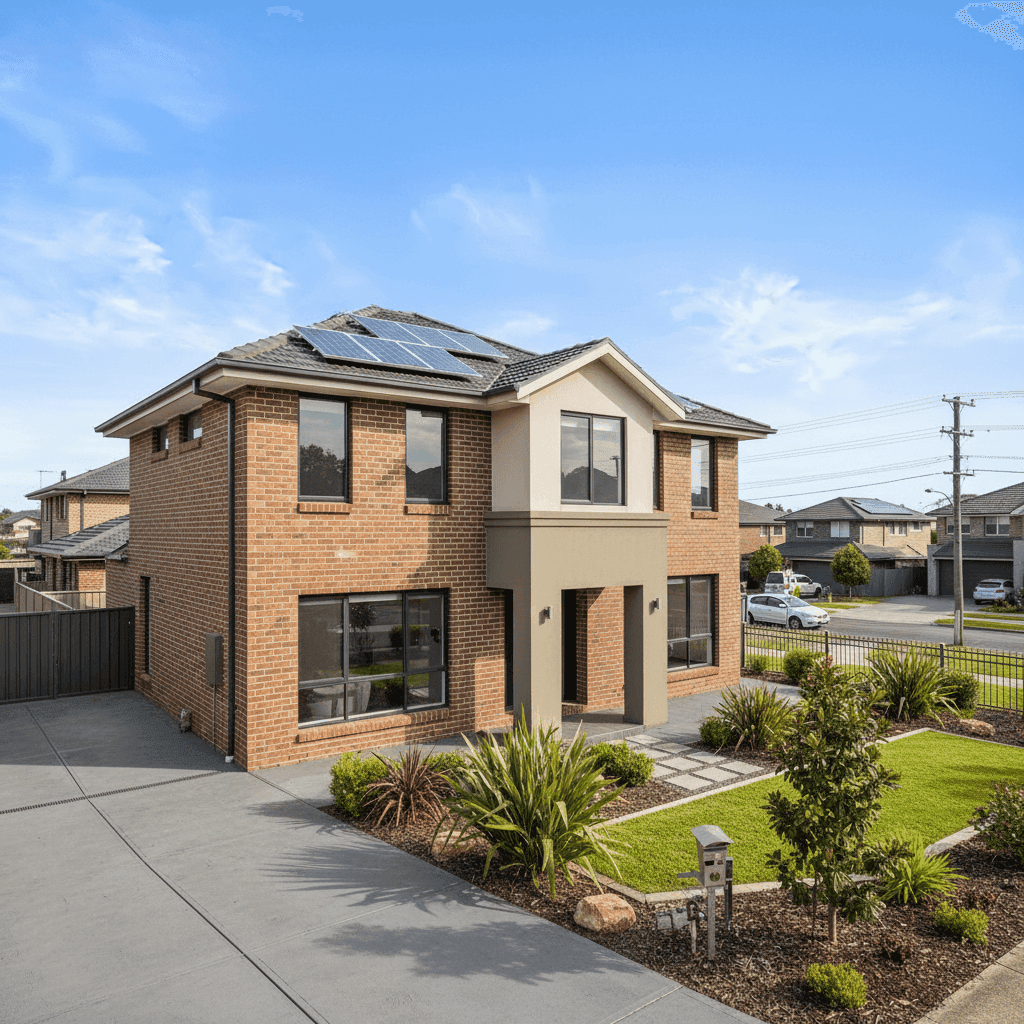
If you own a free standing home in Keilor East, VIC 3033, you're probably wondering whether your home insurance premium is reasonable — or whether you're paying more than you need to. In this article, we break down a real home and contents insurance quote for a four-bedroom, three-bathroom brick veneer home in Keilor East, comparing it against local, state, and national benchmarks to help you make a more informed decision.
---
Is This Quote Fair?
The annual premium for this quote comes in at $1,588 per year (or $167 per month), covering both building and contents. The building is insured for $1,170,000 and contents for $50,000, with a building excess of $3,000 and a contents excess of $1,000.
Our price rating for this quote is FAIR — Around Average.
That assessment holds up when you look at the numbers. The suburb average for Keilor East sits at $1,519 per year, with a median of $1,535. At $1,588, this quote is only modestly above the median — well within the normal range for the area. In fact, it falls comfortably inside the interquartile range, between the 25th percentile ($1,299/yr) and the 75th percentile ($1,770/yr), which means it's neither a standout bargain nor an overpriced outlier.
For a property of this size and specification — 235 sqm, above-average fittings, solar panels, and ducted climate control — landing near the suburb median is a reasonable outcome.
---
How Keilor East Compares
One of the most striking things about this quote is just how well Keilor East performs relative to broader benchmarks.
| Benchmark | Average Premium |
|---|---|
| Keilor East (suburb avg) | $1,519/yr |
| Brimbank LGA average | $1,707/yr |
| Victoria average | $3,000/yr |
| Victoria median | $2,718/yr |
| National average | $5,347/yr |
| National median | $2,764/yr |
Keilor East homeowners are paying, on average, roughly half what Victorian homeowners pay statewide, and less than a third of the national average. Even against the Victorian state figures, the suburb looks very affordable. Compared to national benchmarks, the difference is even more dramatic.
It's worth noting that national averages are heavily influenced by high-risk regions — particularly cyclone-prone parts of Queensland and the Northern Territory, as well as flood-affected areas across New South Wales. Keilor East benefits from a relatively benign risk profile: no cyclone risk, no coastal exposure, and a stable suburban environment in Melbourne's north-west.
This quote, at $1,588, sits $69 above the suburb average — a modest premium that's well within normal variation across insurers and policy structures.
---
Property Features That Affect Your Premium
Several characteristics of this property influence where the premium lands. Here's what's most relevant:
Brick veneer construction and tiled roof Brick veneer walls paired with a tiled roof is one of the more insurer-friendly combinations in Australia. Both materials are considered durable and resistant to fire spread, which tends to attract lower premiums compared to weatherboard or Colorbond alternatives. For a home built in 2014, the materials are also relatively new, reducing the likelihood of age-related claims.
Slab foundation A concrete slab foundation is standard for homes of this era and is generally viewed favourably by underwriters. It eliminates many of the subsidence and pest-related concerns associated with older timber subfloor construction.
Timber and laminate flooring While attractive and popular, timber and laminate floors are more susceptible to water damage than tiles, which can marginally influence contents and building claim risk. That said, the impact on premium is typically modest.
Above-average fittings quality This is one of the more significant premium drivers. Above-average fittings — think stone benchtops, quality cabinetry, premium fixtures — increase the cost to rebuild or repair, which is reflected in both the sum insured and the premium. The $1,170,000 building sum insured for a 235 sqm home reflects this higher finish level.
Solar panels Solar panels add replacement value to the building and introduce a small additional risk (particularly around electrical faults and storm damage). Most insurers cover fixed solar systems as part of the building, but it's always worth confirming this is explicitly included in your policy wording.
Ducted climate control Ducted systems are a significant fixed asset and are typically covered under the building sum insured. As with solar, verifying that your policy covers mechanical breakdown or storm damage to the system is worthwhile.
No pool The absence of a pool removes a meaningful liability and maintenance risk from the equation, which keeps the premium lower than it might otherwise be for a property of this size.
---
Tips for Homeowners in Keilor East
1. Review your building sum insured regularly With above-average fittings and solar panels, your rebuild cost can shift meaningfully year to year as construction costs change. The $1,170,000 sum insured should be validated against a current building cost estimate — underinsurance is a common and costly mistake.
2. Consider raising your excess to reduce your premium This quote carries a $3,000 building excess and a $1,000 contents excess. If you have sufficient savings to cover a higher excess in the event of a claim, increasing these figures could bring your annual premium down — sometimes by a meaningful amount.
3. Check that solar panels and ducted systems are explicitly covered Not all policies automatically include solar panels or ducted HVAC systems in their standard building cover. Read the Product Disclosure Statement (PDS) carefully to confirm these are included, and check whether there are any sub-limits that might leave you underinsured.
4. Compare quotes before your renewal date The home insurance market is competitive, and premiums for equivalent cover can vary significantly between insurers — even for the same property. With 31 quotes sampled in the Keilor East area, there's clearly a range of pricing available. Shopping around at least 30 days before your renewal gives you time to compare properly without feeling rushed.
---
Find a Better Deal with CoverClub
Whether this quote is the right one for you depends on your specific circumstances, risk tolerance, and what's included in the policy. The best way to know for certain is to compare. At CoverClub, we make it easy to get a home insurance quote and see how different insurers price your property — so you can make a confident, informed decision rather than just accepting your renewal notice.
Explore more data for your area on the Keilor East insurance stats page, or browse Victorian home insurance trends to see the bigger picture.