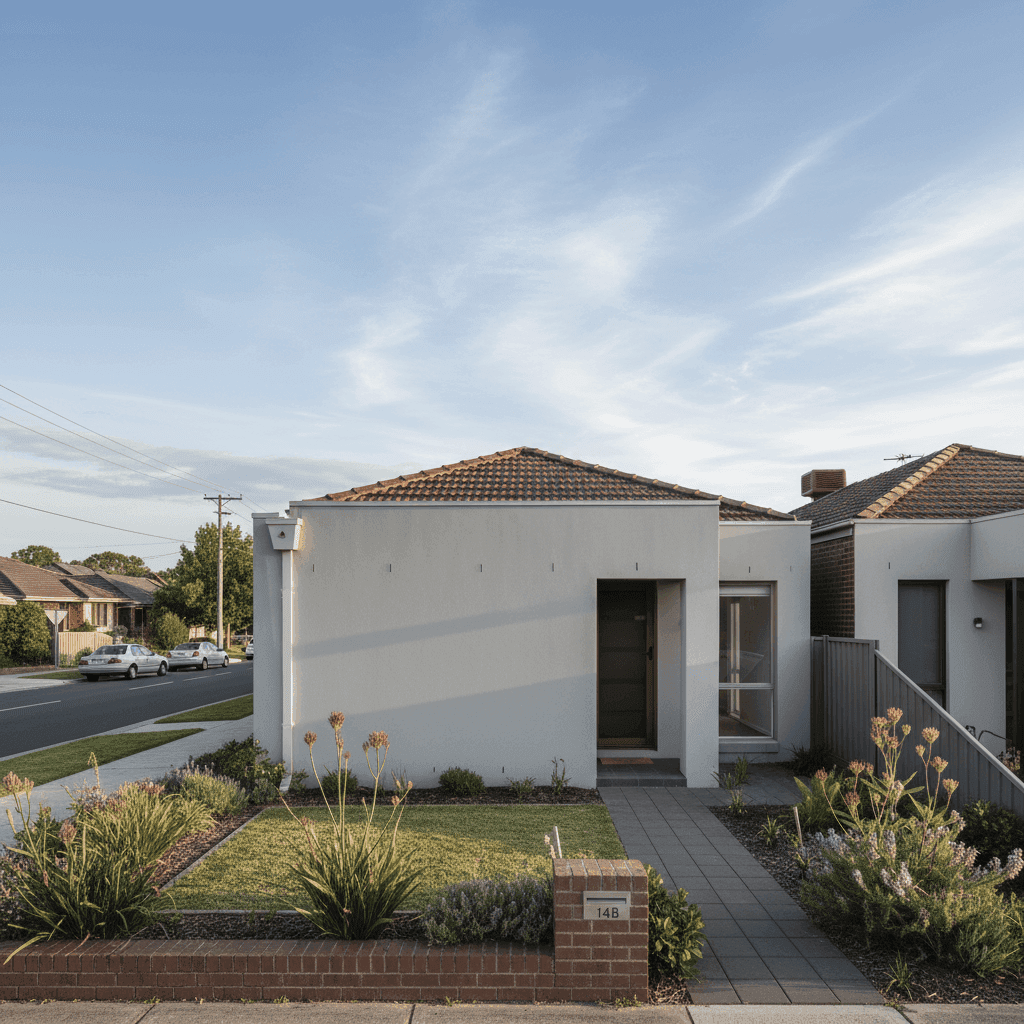
If you own a townhouse in Keilor East, VIC 3033, you've probably wondered whether your home insurance premium is competitive — or whether you're quietly overpaying year after year. This article breaks down a real home and contents insurance quote for a three-bedroom townhouse in the suburb, compares it against local, state, and national benchmarks, and offers practical advice for homeowners in the area.
---
Is This Quote Fair?
The annual premium for this quote comes in at $1,412 per year (or $143 per month), covering both building and contents. The building is insured for $700,000, with contents valued at $20,000. The building excess sits at $3,000, and the contents excess at $1,000.
Our price rating for this quote is FAIR — Around Average.
That assessment holds up when you look at the numbers. The suburb average premium for Keilor East is $1,519/year, and the median sits slightly higher at $1,535/year. At $1,412, this quote lands below both figures — meaning it's more affordable than what most comparable properties in the area are paying. It also falls comfortably within the interquartile range: the 25th percentile is $1,299/year and the 75th percentile is $1,770/year, placing this quote in the lower-to-middle portion of the local market.
So while "fair" might sound underwhelming, in this context it's actually a reasonably positive result. The quote isn't the cheapest available in the suburb, but it's well clear of the more expensive end of the market.
---
How Keilor East Compares
One of the more striking takeaways from this data is just how affordable Keilor East is relative to broader benchmarks. Here's a quick snapshot:
| Benchmark | Average Premium | Median Premium |
|---|---|---|
| Keilor East (suburb) | $1,519/yr | $1,535/yr |
| Brimbank LGA | $1,707/yr | — |
| Victoria (state) | $3,000/yr | $2,718/yr |
| Australia (national) | $5,347/yr | $2,764/yr |
The suburb average of $1,519/year is less than half the Victorian state average of $3,000/year, and a fraction of the national average of $5,347/year (which is heavily skewed by high-risk areas such as cyclone-prone regions in Queensland and Western Australia). Even compared to the broader Brimbank LGA average of $1,707/year, Keilor East comes in noticeably cheaper.
This suggests that Keilor East is a relatively low-risk suburb from an insurer's perspective — no cyclone exposure, lower flood or bushfire risk compared to regional Victoria, and a stable, established residential character. You can explore the full suburb data on the Keilor East insurance stats page, compare it against all of Victoria, or see where it sits in the national picture.
---
Property Features That Affect Your Premium
Every property has its own risk profile, and a number of features specific to this townhouse will influence how insurers price the policy.
Concrete External Walls
Concrete construction is generally viewed favourably by insurers. It offers strong resistance to fire, impact, and weathering — all of which reduce the likelihood of a major claim. This is a meaningful advantage over weatherboard or cladded homes, which can be more vulnerable to fire spread and moisture damage.
Tiled Roof
A tiled roof is a solid, mid-range choice in the eyes of insurers. Tiles are durable and fire-resistant, though they can be susceptible to cracking under impact (think hailstorms) and may require more costly repairs than metal roofing. Overall, tiles are well-regarded and unlikely to attract a loading on your premium.
Stump Foundation
The property sits on stumps — a common foundation type in older Melbourne homes, particularly those built in the 1960s and 70s. Stumps can be a point of attention for insurers because they may be subject to movement, subsidence, or deterioration over time. If the stumps haven't been inspected or replaced recently, it's worth getting a building inspection to confirm their condition, as foundation issues can affect both your property value and your insurance terms.
Timber and Laminate Flooring
Timber and laminate floors add aesthetic value and are reflected in the "above average" fittings quality noted for this property. From an insurance standpoint, higher-quality fittings generally push the sum insured upward — which is appropriate here, with a building sum insured of $700,000 for a 105 sqm townhouse.
Ducted Climate Control
The presence of ducted climate control is a notable inclusion. This is a relatively expensive system to repair or replace, and it's good to see it accounted for in the policy. Homeowners should confirm that their sum insured reflects the full replacement cost of systems like this, as they're often underestimated.
Year of Construction (1970)
At over 50 years old, this townhouse falls into the category of older dwellings that can carry slightly higher risk for insurers — not because of age alone, but because older homes may have outdated wiring, plumbing, or structural elements. That said, concrete construction from this era tends to be robust, and there's no indication of elevated risk here beyond the usual considerations for period properties.
---
Tips for Homeowners in Keilor East
1. Review your sum insured annually Building costs have risen sharply in recent years across Victoria. A sum insured of $700,000 for a 105 sqm townhouse may be appropriate today, but it's worth reassessing each year to ensure you wouldn't be underinsured in the event of a total loss. Use a building cost calculator or speak with a quantity surveyor if you're unsure.
2. Get your stumps inspected If you haven't had a recent building inspection, it's worth organising one — particularly to assess the condition of the stump foundation. Insurers may ask questions about the foundation's condition, and addressing any issues proactively can prevent complications at claim time.
3. Compare quotes before your renewal date Even if your current premium feels reasonable, the insurance market shifts regularly. Shopping around 4–6 weeks before your renewal gives you time to compare options without pressure. Get a quote through CoverClub to see how your current policy stacks up.
4. Check what your contents cover actually includes A contents value of $20,000 is on the modest side, especially for a property with above-average fittings. Take stock of your furniture, electronics, appliances, and personal belongings — it's easy to underestimate the replacement cost of everyday items. Many homeowners find they need to revise their contents sum upward once they do a proper audit.
---
Compare Your Own Quote
Whether you're renewing soon or just curious about what the market looks like, CoverClub makes it easy to compare home and contents insurance quotes tailored to your property. Our data is drawn from real quotes across Australia, so you can see exactly how your premium stacks up against your neighbours. Start comparing quotes today — it only takes a few minutes.