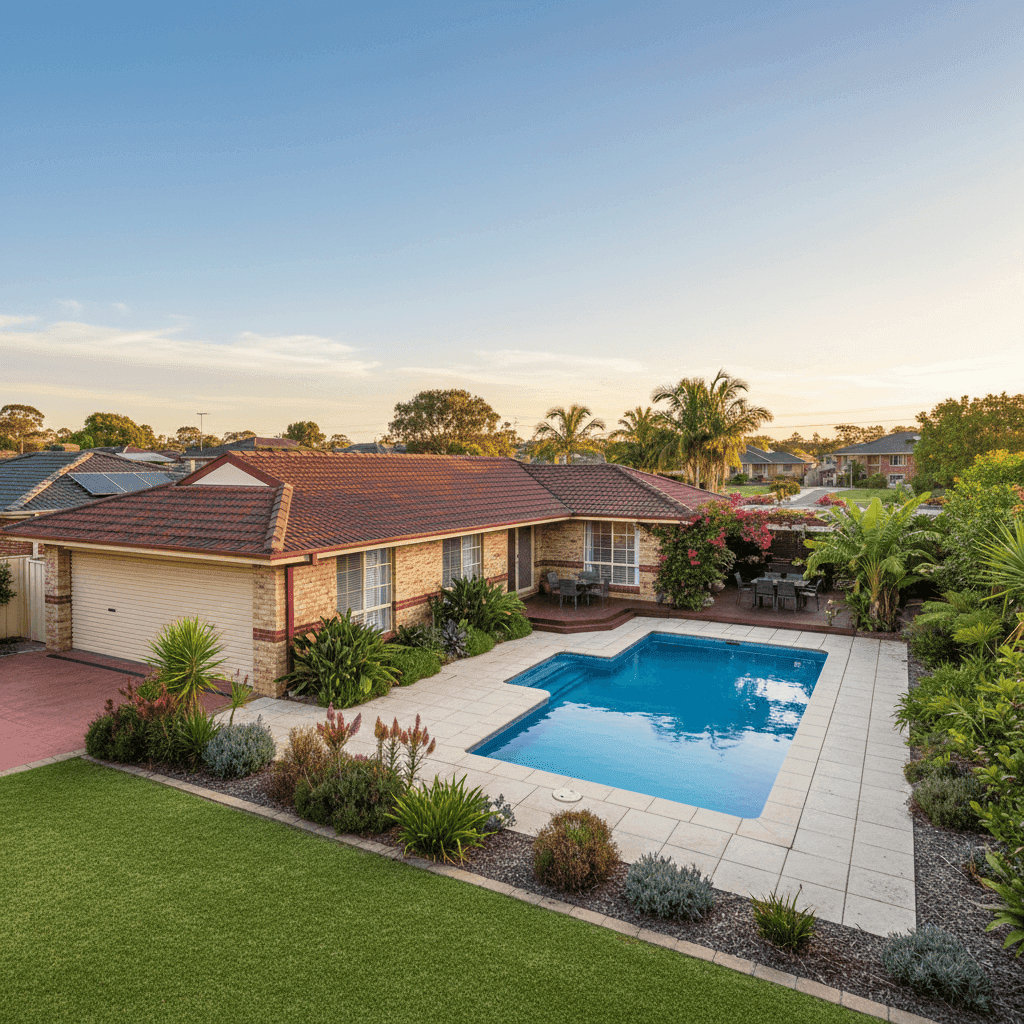
If you own a free standing home in Keilor East, VIC 3033, you've probably wondered whether you're paying a fair price for home insurance — or whether there's a better deal out there. In this article, we break down a real home and contents insurance quote for a five-bedroom, three-bathroom brick veneer home in the suburb, and put it in context against local, state, and national benchmarks.
---
Is This Quote Fair?
The quote in question comes in at $2,455 per year (or $240/month) for combined home and contents cover, with a building sum insured of $1,007,000 and contents valued at $120,000. Both the building and contents excess are set at $500.
Our price rating for this quote is EXPENSIVE — above average for the area.
To understand why, it helps to look at what other homeowners in Keilor East are paying. Based on 31 quotes collected for the suburb, the suburb average sits at $1,519/year and the median at $1,535/year. This quote lands well above the 75th percentile of $1,770/year — meaning it's higher than roughly three-quarters of comparable quotes in the area.
That said, context matters. The building sum insured here is $1,007,000, which is on the higher end for a suburban Melbourne property. A larger insured value naturally pushes premiums up, and the property's size (334 sqm) and features — including a swimming pool and ducted climate control — add further to the insurer's risk calculation.
Still, even accounting for these factors, homeowners in this position would be well served by shopping around.
---
How Keilor East Compares
Understanding where Keilor East sits in the broader insurance landscape is useful context when evaluating any quote.
| Benchmark | Average Premium | Median Premium |
|---|---|---|
| Keilor East (suburb) | $1,519/yr | $1,535/yr |
| Brimbank LGA | $1,707/yr | — |
| Victoria (state) | $3,000/yr | $2,718/yr |
| National | $5,347/yr | $2,764/yr |
At a glance, Keilor East is actually a relatively affordable suburb to insure compared to the broader Victorian average of $3,000/year and the national average of $5,347/year. The high national average is largely driven by high-risk regions such as Far North Queensland, cyclone-prone coastal areas, and flood-affected zones — none of which apply here in Melbourne's north-west.
Within the Brimbank LGA, the average premium of $1,707/year is also modest, reflecting the area's relatively low exposure to natural hazards like cyclones and coastal flooding. This makes the $2,455 quote stand out even more — it's 62% above the suburb average and 44% above the LGA average.
For a deeper look at how premiums vary across the postcode, visit the Keilor East insurance stats page.
---
Property Features That Affect Your Premium
Several characteristics of this particular property are likely contributing to a higher-than-average premium. Here's how each factor plays a role:
Large Building Sum Insured ($1,007,000)
At 334 sqm, this is a substantial home, and rebuilding costs in Victoria have risen sharply in recent years due to labour shortages and materials inflation. A sum insured above $1 million places this property in a higher coverage tier, which directly increases the base premium.
Swimming Pool
Having a pool adds to both the replacement cost of the property and the insurer's liability exposure. Pool fencing compliance, equipment replacement, and potential liability claims all factor into how insurers price properties with pools.
Brick Veneer Construction
Brick veneer is generally viewed favourably by insurers — it's more fire-resistant than timber weatherboard and less susceptible to termite damage. This should work in the homeowner's favour compared to other wall types.
Tiled Roof
Terracotta or concrete tiles are a durable roofing option and generally attract standard or slightly lower premiums compared to corrugated iron or older materials. However, tiles can be more expensive to repair or replace after hail events.
Stump Foundation
Homes on stumps (as opposed to concrete slab) can be more susceptible to movement and moisture-related issues over time. Some insurers factor this in, particularly for homes built in the 1980s where original stumps may be timber and showing age.
Construction Year: 1984
At roughly 40 years old, this home sits in a category where insurers may apply a loading for older electrical wiring, plumbing, and structural components. A property this age may benefit from updated certificates of compliance for electrical and plumbing work, which can sometimes reduce premiums.
Ducted Climate Control
Ducted heating and cooling systems are expensive to replace and add to the overall insured value of the home. They can also be a source of claims if they fail or cause damage, which may contribute marginally to a higher premium.
---
Tips for Homeowners in Keilor East
If you're looking to get better value on your home and contents insurance, here are four practical steps worth considering:
- Review your sum insured regularly. With a building sum insured of over $1 million, it's worth verifying this figure against a current building cost estimate. Overinsuring inflates your premium unnecessarily, while underinsuring leaves you exposed. Tools like the Cordell Sum Sure Calculator can help.
- Compare quotes before renewal. The single most effective way to reduce your premium is to shop around. Insurers price risk differently, and the spread in Keilor East — from $1,299/year at the 25th percentile to $1,770/year at the 75th — shows there's meaningful variation in the market.
- Ask about bundling discounts. Some insurers offer discounts when you combine home and contents cover, or when you hold multiple policies (such as car insurance) with the same provider. It's always worth asking.
- Consider your excess level. Increasing your excess from $500 to $1,000 or higher can reduce your annual premium. This works well if you have sufficient savings to cover a larger out-of-pocket cost in the event of a claim, and if you're unlikely to make small claims.
---
Compare Home Insurance Quotes in Keilor East
Whether your renewal is coming up or you've just received a new quote, it pays to compare. CoverClub makes it easy to see how your premium stacks up against other homeowners in your suburb — and to find a policy that offers genuine value for your property. Get a quote today at CoverClub and see what you could be saving.