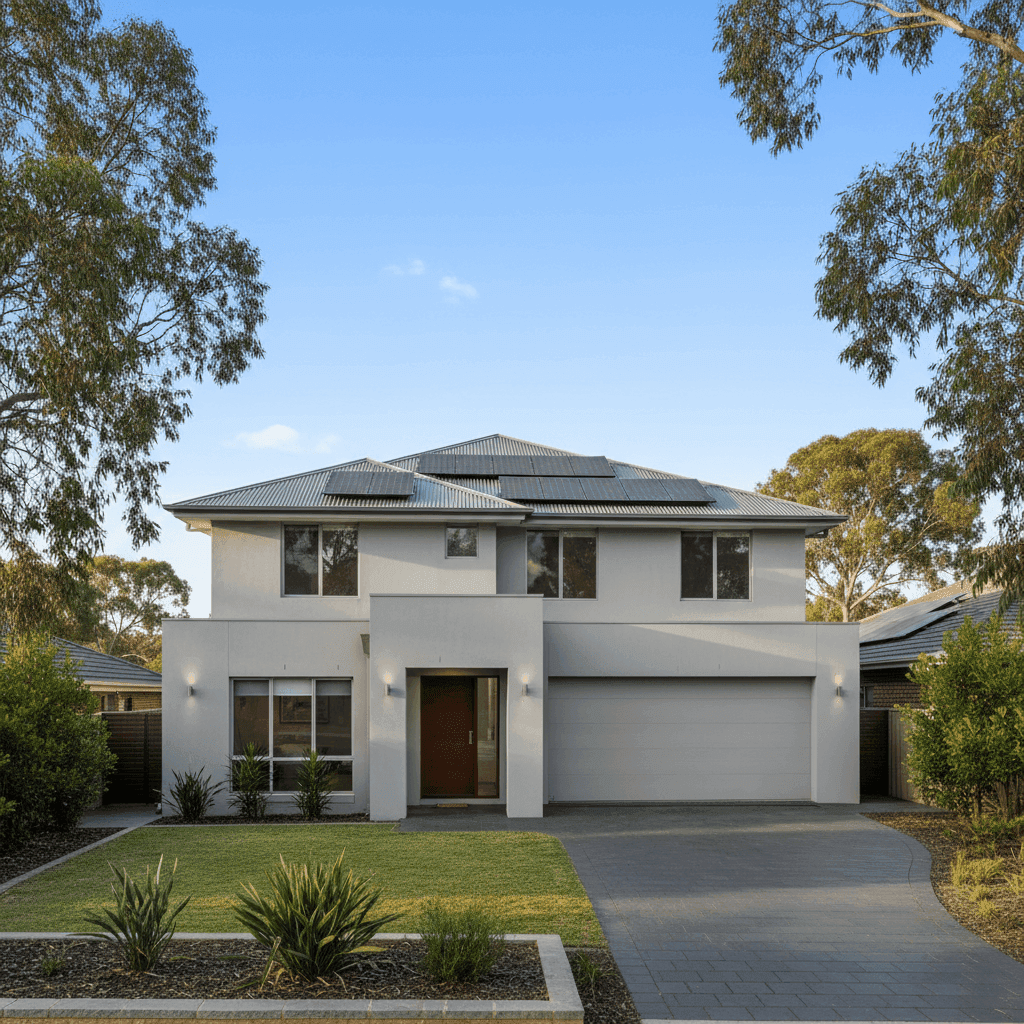
Keilor is a well-established suburb in Melbourne's north-west, sitting within the City of Hume and offering a mix of spacious family homes, leafy streetscapes, and easy freeway access. For owners of a free standing home in this area, understanding what a fair home insurance premium looks like — and why — can make a real difference when it comes to renewal time. This article breaks down a real home and contents quote for a four-bedroom property in Keilor, benchmarks it against local, state, and national data, and offers practical tips to help you get the most out of your cover.
---
Is This Quote Fair?
The quote in question sits at $2,544 per year (or around $229 per month) for combined home and contents insurance, covering a building sum insured of $1,005,000 and contents valued at $130,000. Both the building and contents excess are set at $1,000.
Our pricing engine rates this quote as Fair — Around Average, which is a reasonable outcome for a property of this size and specification. It's not the cheapest available, but it's well within a sensible range and reflects the characteristics of the home accurately.
To put that in context: the suburb average for Keilor sits at $3,276 per year, and the median is slightly higher at $3,415 per year. This quote comes in meaningfully below both figures, which suggests the homeowner is getting a competitive deal relative to their immediate neighbours. In fact, based on our Keilor suburb insurance data, this premium falls between the 25th percentile ($2,173/yr) and the 75th percentile ($4,107/yr) — solidly in the middle of the pack, but closer to the lower end.
---
How Keilor Compares
It's useful to zoom out and look at how Keilor stacks up against broader benchmarks.
| Benchmark | Average Premium | Median Premium |
|---|---|---|
| Keilor (3036) | $3,276/yr | $3,415/yr |
| Victoria | $3,000/yr | $2,718/yr |
| Australia (National) | $5,347/yr | $2,764/yr |
| LGA (Hume) | $1,775/yr | — |
A few things stand out here. First, Keilor's average and median premiums are both higher than the Victorian state figures — suggesting the suburb carries slightly elevated risk or higher property values compared to the state-wide mix. You can explore the full Victorian insurance data to see how different postcodes compare across the state.
Second, the national average of $5,347 looks dramatically high, but this is heavily skewed by high-risk regions — particularly cyclone-prone areas in Queensland and Western Australia, as well as bushfire-exposed zones. The national median of $2,764 is a more representative figure for most Australian homeowners, and Keilor sits comfortably close to that benchmark.
Third, the LGA average for Hume ($1,775/yr) is notably lower than the Keilor suburb average. This is likely because Hume covers a wide range of property types and areas, some of which are newer estates with lower rebuild costs and different risk profiles. Keilor's older, larger homes naturally attract higher premiums.
---
Property Features That Affect Your Premium
Several characteristics of this particular property influence where the premium lands.
Concrete external walls are generally viewed favourably by insurers. Concrete is resilient against fire, wind, and impact damage, and tends to reduce the likelihood of structural claims compared to timber-framed homes. This is a positive factor for pricing.
Steel/Colorbond roofing is another asset. Colorbond is durable, low-maintenance, and performs well in both heat and storms. It's widely used across Victoria and is considered a lower-risk roofing material by most underwriters.
Stump foundations are common in homes of this era (built in 1990) and in this part of Melbourne. While stumps can require periodic maintenance and restumping over time, they don't typically attract significant premium loading unless there's evidence of subsidence or movement in the area.
Timber and laminate flooring can be a factor in contents and internal fitout valuations. These materials are moderately priced to replace but can be sensitive to water damage — something worth keeping in mind when reviewing your policy's water damage provisions.
Solar panels are an increasingly common feature and are worth confirming with your insurer. Most modern home and contents policies cover rooftop solar systems as part of the building sum insured, but it's worth checking whether your panels are explicitly listed and whether the coverage extends to inverters and associated equipment.
Ducted climate control adds to the overall replacement value of the home and is reflected in the building sum insured. Systems like these can be expensive to repair or replace, so ensuring your sum insured accounts for this is important.
At 367 square metres, this is a generously sized home. The $1,005,000 building sum insured works out to roughly $2,738 per square metre — a reasonable figure for a concrete-walled home with quality fixtures in Melbourne's north-west.
---
Tips for Homeowners in Keilor
1. Review your sum insured annually Construction costs have risen significantly in recent years across Victoria. A building sum insured that was accurate two or three years ago may now be insufficient to cover a full rebuild. Use a building cost calculator or speak with a quantity surveyor if you're unsure — underinsurance is one of the most common and costly mistakes homeowners make.
2. Confirm solar panel coverage explicitly With solar panels on the roof, check your policy documents carefully. Ask your insurer whether the panels, inverter, and mounting hardware are covered under the building section, and what the claim process looks like if they're damaged in a storm or by falling debris.
3. Consider your excess strategically Both excesses on this policy are set at $1,000. Opting for a higher voluntary excess can reduce your annual premium, which makes sense if you have the financial buffer to cover a larger out-of-pocket cost in the event of a claim. Conversely, if cash flow is a concern, keeping the excess lower provides more predictability.
4. Shop around at renewal Even a "Fair" rating means there may be better deals available. Insurers reprice their books regularly, and loyalty doesn't always pay. Using a comparison tool at renewal — even just to benchmark your existing policy — is one of the easiest ways to avoid overpaying year after year.
---
Compare Your Own Quote
Whether you're a first-time buyer in Keilor or a long-term homeowner reviewing your cover, it pays to know where your premium sits relative to the market. CoverClub makes it easy to get a home and contents quote and see how it stacks up against real data from your suburb and state. Get a quote today and find out if you're paying a fair price — or if there's a better deal waiting for you.