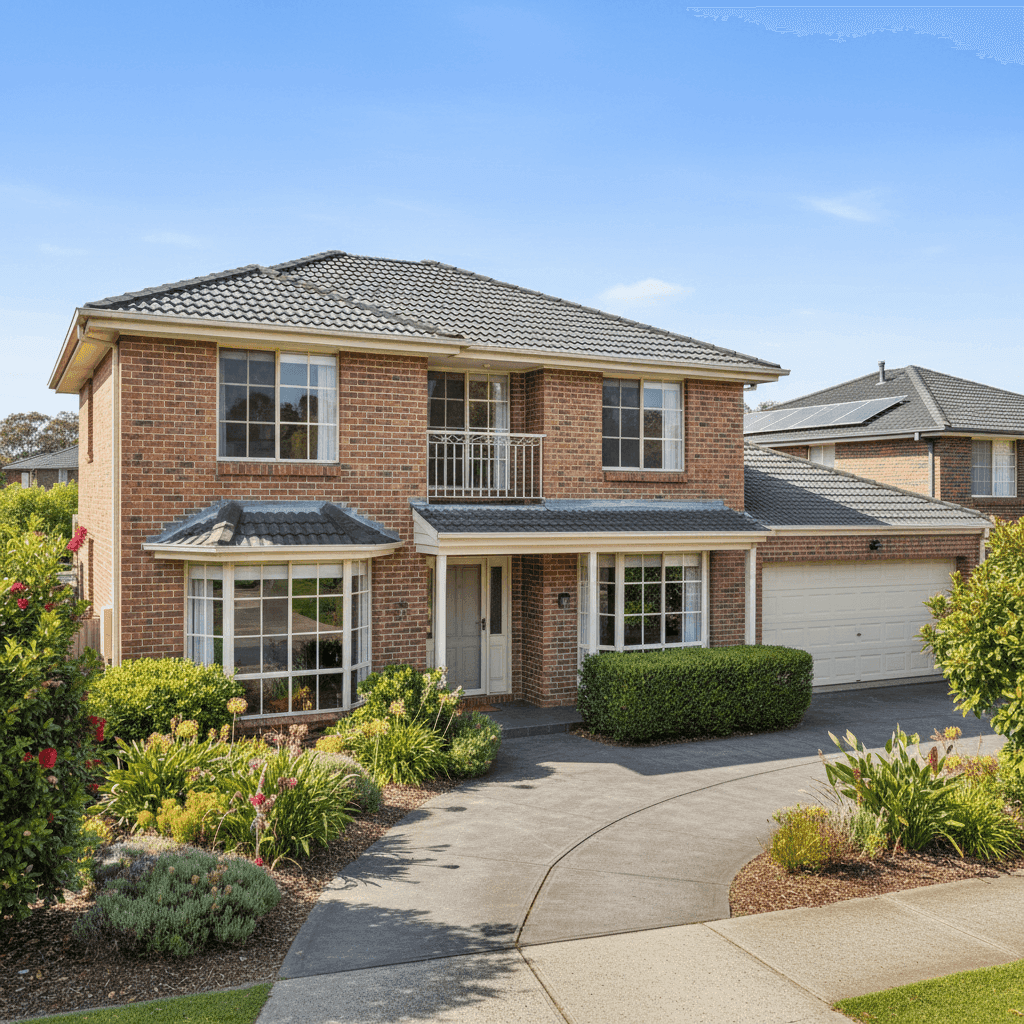
Kellyville, nestled in Sydney's north-west corridor, is one of those suburbs that ticks a lot of boxes for Australian families — well-established streetscapes, good schools, and solid brick homes that have stood the test of time. But when it comes to home insurance, how much should owners of a free standing home in this part of the Hills District expect to pay? This article breaks down a real building insurance quote for a 4-bedroom, 3-bathroom property in Kellyville (postcode 2155) and puts it in context against local, state, and national benchmarks.
---
Is This Quote Fair?
The quote in question comes in at $2,876 per year (or $276/month) for building-only cover on a 235 sqm brick veneer home, with a $1,000 excess and a sum insured of $1,050,000.
Our price rating for this quote is Expensive — above average for the area.
To understand why, it helps to look at what other Kellyville homeowners are paying. Based on 36 quotes collected for the Kellyville area, the suburb average sits at $1,726/yr and the median is $1,393/yr. This quote lands well above the 75th percentile for the suburb ($2,064/yr), meaning it's pricier than at least three-quarters of comparable quotes we've seen in the postcode.
That's a meaningful gap. At $2,876/yr, this homeowner is paying $1,483 more per year than the suburb median — enough to fund a decent family holiday or knock a chunk off the mortgage. It's worth asking whether that premium is justified by the property's characteristics, or whether there's room to shop around.
---
How Kellyville Compares
One thing worth noting straight away: Kellyville is actually a relatively affordable suburb by NSW standards — and NSW is one of the more expensive states for home insurance in Australia.
Here's how the numbers stack up:
| Benchmark | Average Premium | Median Premium |
|---|---|---|
| Kellyville (2155) | $1,726/yr | $1,393/yr |
| LGA (Blacktown) | $2,242/yr | — |
| NSW State | $9,528/yr | $3,770/yr |
| National | $5,347/yr | $2,764/yr |
The NSW state average of $9,528/yr is heavily skewed by high-risk coastal and flood-prone areas, which is why the median ($3,770/yr) is a more useful reference point. Even so, Kellyville's median of $1,393/yr is comfortably below the national median of $2,764/yr, suggesting the suburb enjoys relatively favourable risk conditions overall.
This makes the quote of $2,876/yr stand out even more — it's above the national median, despite Kellyville generally being a lower-risk suburb. That's a strong signal to compare alternatives.
---
Property Features That Affect Your Premium
Several characteristics of this particular property will influence how insurers price the risk:
Brick veneer construction and tiled roof This is generally a favourable combination for insurers. Brick veneer walls offer solid fire resistance and structural durability, while a tiled roof is considered one of the more resilient roofing options available. Homes with these materials typically attract lower premiums than those with timber or Colorbond construction — so this property should, in theory, be benefiting from these features.
Slab foundation A concrete slab is the standard foundation type for homes built in this era and region. It's generally considered low-risk from an insurance perspective, with fewer concerns around subsidence or pest damage compared to raised timber floors.
Year built: 2002 At around 23 years old, this home is relatively modern. Newer builds tend to comply with updated building codes, which can reduce risk in the eyes of insurers. That said, properties from this era may be approaching the age where certain systems (roofing, plumbing, electrical) start requiring maintenance — something insurers may factor in.
Ducted climate control The presence of ducted air conditioning adds to the replacement cost of the home, which is reflected in the $1,050,000 sum insured. Ducted systems are expensive to replace and can contribute to a higher building premium.
No pool, no solar panels The absence of a pool and solar panels simplifies the risk profile. Both can add complexity (and cost) to a policy, so their absence is a mild positive for the premium.
Standard fittings With standard-quality fittings throughout, the rebuild cost is more predictable and typically lower than homes with premium or custom finishes. This should work in the homeowner's favour.
---
Tips for Homeowners in Kellyville
If you're a Kellyville homeowner looking to get better value from your building insurance, here are four practical steps worth taking:
1. Shop around — seriously The gap between this quote and the suburb median is significant. Using a comparison platform like CoverClub to pull multiple quotes side by side is the single most effective way to identify whether you're overpaying. Insurers price risk differently, and the same property can attract very different premiums across providers.
2. Review your sum insured A sum insured of $1,050,000 for a 235 sqm home works out to roughly $4,468 per square metre — on the higher end for standard construction. It's worth having your rebuild cost independently assessed to ensure you're not over-insured (which inflates your premium) or under-insured (which can leave you exposed at claim time).
3. Consider your excess A $1,000 excess is fairly standard, but opting for a higher excess — say $2,000 or $2,500 — can meaningfully reduce your annual premium. If you have a solid emergency fund and are unlikely to make small claims, this trade-off often makes financial sense.
4. Ask about discounts Many insurers offer discounts for things like paying annually instead of monthly, bundling building and contents cover, or having security features installed. It's always worth asking what's available — these can add up to a noticeable saving.
---
Compare Your Home Insurance Today
Whether you're renewing an existing policy or taking out cover for the first time, it pays to know what the market looks like. CoverClub makes it easy to compare building insurance quotes for homes across Kellyville and the wider Hills District — so you can make a confident, informed decision. Get a quote today and see how your current premium stacks up.