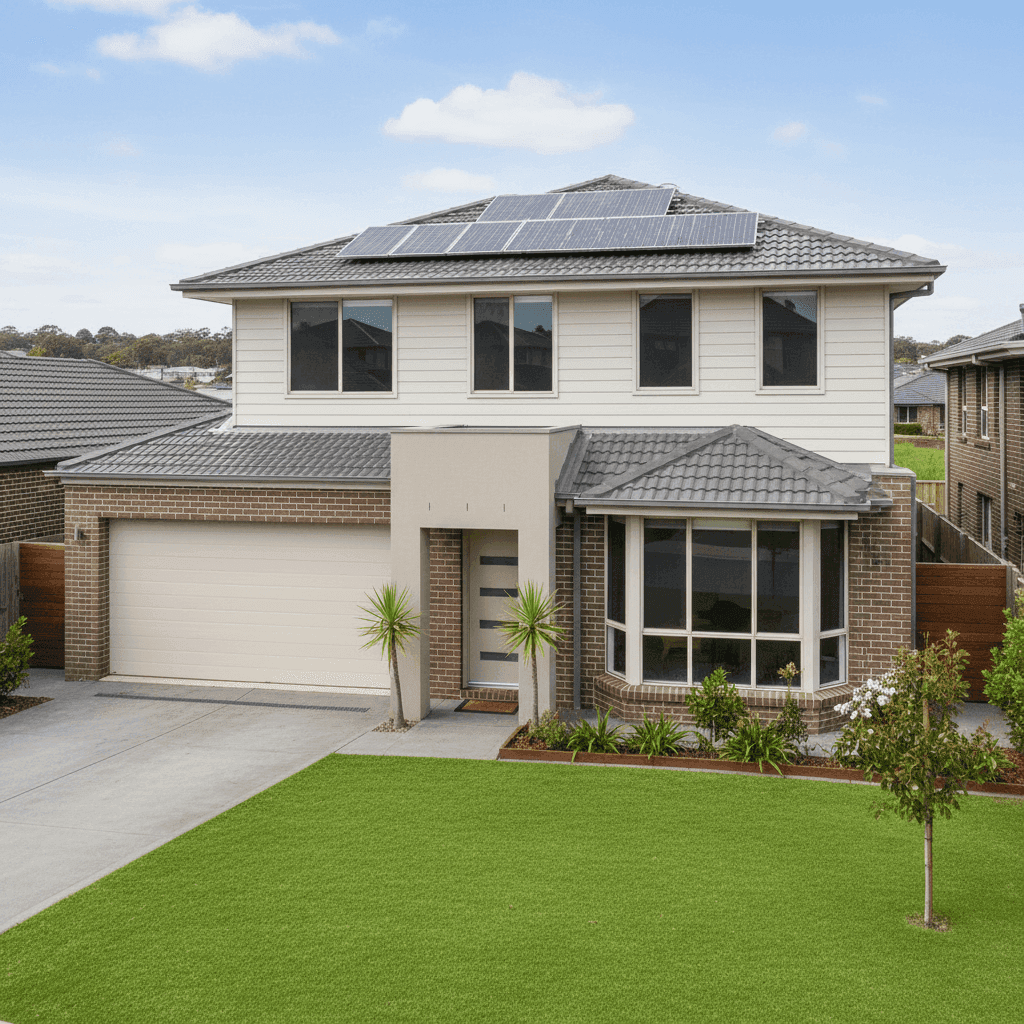
Kellyville Ridge, nestled in Sydney's north-west growth corridor, is home to a mix of modern family residences built during the suburb's rapid development in the early 2000s. If you own a free standing home here, understanding what you should be paying for home and contents insurance — and why — can make a real difference to your household budget. This analysis breaks down a real quote for a 4-bedroom, 2-bathroom brick veneer home in the 2155 postcode, and puts it in context against local, state, and national benchmarks.
---
Is This Quote Fair?
The quote in question comes in at $1,901 per year (or $182/month) for combined home and contents cover, with a building sum insured of $661,000 and contents valued at $174,000. Both the building and contents excess are set at $1,000.
Our price rating for this quote is FAIR — Around Average, and the data backs that up. The suburb average premium for Kellyville Ridge sits at $2,132/year, and the median is $2,002/year. At $1,901, this quote lands just below the median — meaning it's slightly better than what most homeowners in the area are paying, but it's not in the cheapest tier either.
To put it another way: the cheapest quarter of quotes in the suburb come in at or below $1,615/year (the 25th percentile), while the most expensive quarter exceed $2,492/year (the 75th percentile). This quote sits comfortably in the middle band — not a bargain, but certainly not overpriced.
For a property of this size and specification — 214 sqm, standard fittings, slab foundation, timber/laminate flooring, ducted climate control, and solar panels — a "fair" rating reflects a reasonable alignment between risk profile and premium.
---
How Kellyville Ridge Compares
One of the most striking things about this quote is how it looks when placed alongside broader NSW and national figures. Check out the full NSW insurance statistics and you'll notice just how wide the spread is across the state.
| Benchmark | Average Premium | Median Premium |
|---|---|---|
| Kellyville Ridge (suburb) | $2,132/yr | $2,002/yr |
| Blacktown LGA | $2,242/yr | — |
| NSW (state) | $9,528/yr | $3,770/yr |
| National | $5,347/yr | $2,764/yr |
The NSW state average of $9,528/year looks alarming at first glance, but it's heavily skewed by high-risk areas — think flood-prone regions, bushfire corridors, and coastal zones that push individual premiums into the tens of thousands. The median of $3,770/year is a more grounded figure, and even then, Kellyville Ridge's median of $2,002/year sits well below it.
Nationally, the median premium across Australia is $2,764/year — again, higher than what Kellyville Ridge homeowners are typically paying. This reflects the suburb's relatively low natural hazard exposure: no cyclone risk, no significant flood history in most parts, and a well-established suburban streetscape.
The Blacktown LGA average of $2,242/year is slightly above the suburb figure, suggesting Kellyville Ridge is among the more favourably priced pockets within the broader local government area. You can explore more granular suburb-level stats for Kellyville Ridge here.
> Note: The suburb sample size for this analysis is 8 quotes, so while directionally useful, these figures should be interpreted with some caution. More data over time will sharpen these benchmarks.
---
Property Features That Affect Your Premium
Every insurer weighs up a combination of property characteristics when calculating your premium. Here's how the key features of this home play into the pricing:
Brick Veneer Walls & Tiled Roof Brick veneer is one of the most common wall constructions in Australian suburbia, and insurers generally view it favourably. It offers solid fire resistance and durability compared to lightweight cladding. Similarly, a tiled roof is considered a standard, low-risk roofing material — less susceptible to fire spread than some alternatives. Together, these features help keep the premium in a reasonable range.
Slab Foundation A concrete slab is the dominant foundation type in homes built in this era and region. It carries no particular premium loading and is well understood by insurers operating in the Sydney basin.
Construction Year: 2005 Homes built in the mid-2000s benefit from relatively modern building codes, including improved structural standards. This works in the homeowner's favour when it comes to pricing, compared to older homes that may have outdated wiring, plumbing, or structural elements.
Solar Panels This property has solar panels installed, which is worth flagging. Most insurers cover rooftop solar under the building policy, but it's important to confirm this explicitly with your insurer. Panels add replacement value to the structure, so ensuring they're captured in your sum insured is essential.
Ducted Climate Control Ducted air conditioning systems are a meaningful asset — and a meaningful cost to replace. At 214 sqm, a full ducted system could easily run $10,000–$20,000 or more to replace. This should be factored into your building sum insured calculation.
Timber & Laminate Flooring These flooring types are susceptible to water damage, which is a common home insurance claim driver. It's worth reviewing your policy's terms around escape of liquid and storm-related water ingress to ensure you're adequately covered.
No Pool The absence of a pool removes one liability and maintenance variable from the equation — pools can sometimes affect premiums depending on the insurer's risk appetite.
---
Tips for Homeowners in Kellyville Ridge
1. Review your building sum insured regularly Construction costs have risen significantly in recent years. A home built in 2005 and last valued several years ago may be underinsured today. Use a building cost calculator or speak with a quantity surveyor to ensure your $661,000 sum insured still reflects current rebuild costs — especially with a 214 sqm footprint and ducted systems to replace.
2. Confirm solar panel coverage Ask your insurer directly: are your rooftop solar panels covered under the building policy? What events are they covered for — storm damage, hail, fire? Some policies exclude panels or apply sub-limits, so it's worth getting clarity in writing before you need to make a claim.
3. Consider your excess strategically Both the building and contents excess on this policy are set at $1,000. While a higher excess typically reduces your annual premium, make sure the saving is meaningful relative to the increased out-of-pocket cost in a claim scenario. For a $1,901 annual premium, the maths may or may not stack up — run the numbers with your insurer.
4. Don't set and forget your contents value $174,000 in contents cover sounds substantial, but it can erode quickly when you account for furniture, appliances, clothing, electronics, and valuables. Do a room-by-room inventory periodically — especially after major purchases — to make sure you're not underinsured on the contents side.
---
Compare Your Options with CoverClub
Whether you're reviewing an existing policy or shopping for the first time, comparing quotes is the single most effective way to ensure you're not overpaying. CoverClub makes it easy to see how your premium stacks up against real data from your suburb and beyond. Get a home insurance quote today and find out if you could be doing better.