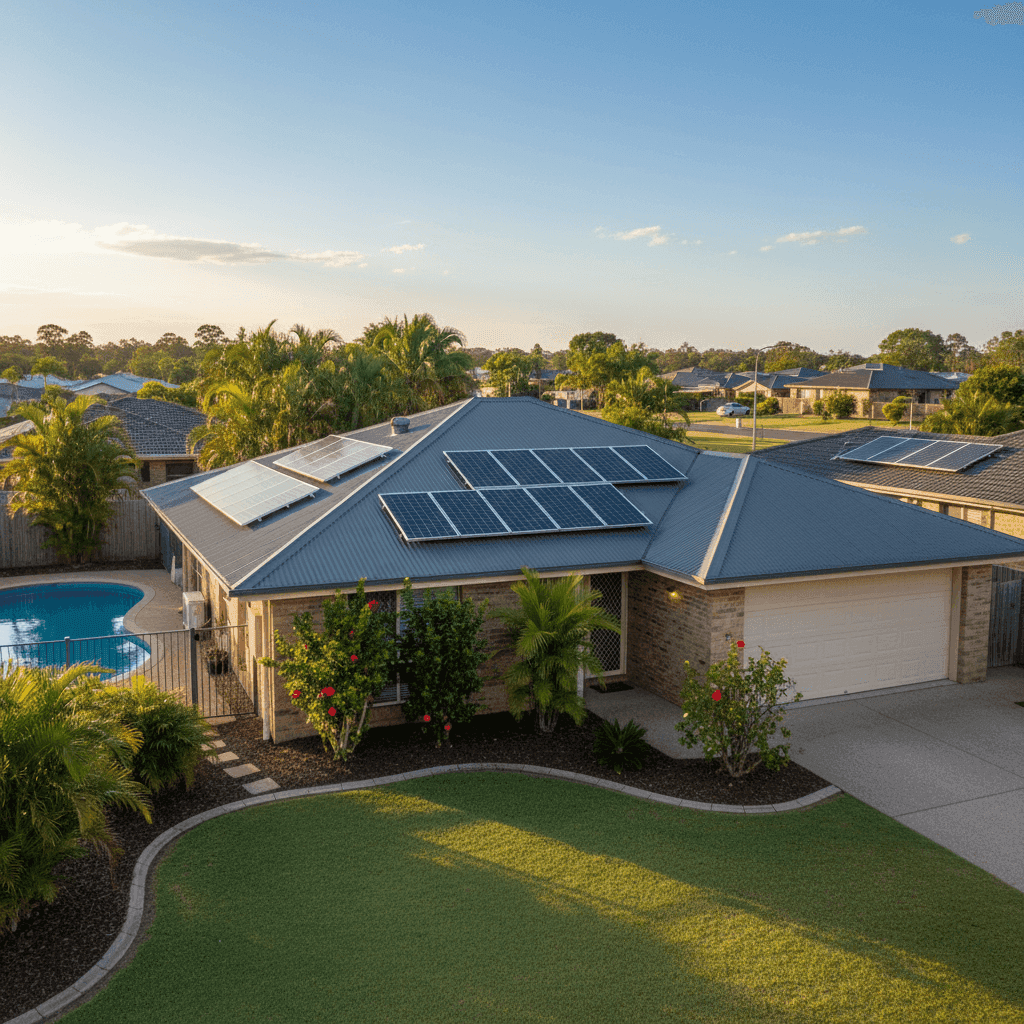
If you own a free standing home in Kelso, QLD 4815, you already know that insuring a property in the Townsville region comes with its own set of considerations — not least of which is the area's cyclone exposure. This article breaks down a real building insurance quote for a four-bedroom brick veneer home in Kelso, compares it against local, state and national benchmarks, and offers practical guidance for homeowners looking to get the best value on their cover.
---
Is This Quote Fair?
The quote in question sits at $3,515 per year (or $343 per month) for building-only cover on a 205 sqm free standing home with a sum insured of $778,000. CoverClub's pricing engine rates this as FAIR — around average for the area.
That's actually a reassuring result for a property in a cyclone risk zone. Kelso sits within the Townsville LGA, where the average home insurance premium across all quotes tracked by CoverClub is a substantial $7,340 per year. Against that local benchmark, this quote is performing well below average — roughly 52% cheaper than the LGA mean.
The building excess is set at $3,000, which is on the higher side and is likely contributing to the more competitive premium. A higher excess means the insurer carries less risk on smaller claims, which is typically reflected in a lower annual cost. It's worth weighing whether that trade-off suits your financial situation before committing.
---
How Kelso Compares
Understanding where your premium sits relative to the broader market is one of the most useful things you can do as a homeowner. Here's how this quote stacks up across three levels of comparison:
| Benchmark | Premium |
|---|---|
| This Quote | $3,515/yr |
| Kelso suburb average | $5,004/yr |
| Kelso suburb median | $4,004/yr |
| Kelso 25th percentile | $2,649/yr |
| Kelso 75th percentile | $6,007/yr |
| Townsville LGA average | $7,340/yr |
| QLD state average | $9,129/yr |
| QLD state median | $3,903/yr |
| National average | $5,347/yr |
| National median | $2,764/yr |
(Based on 47 quotes sampled in the Kelso suburb. Source: [CoverClub Kelso suburb stats](https://coverclub.com.au/stats/QLD/4815/kelso))
A few things stand out here. First, the QLD state average of $9,129 is dramatically higher than the state median of $3,903 — a sign that a relatively small number of very expensive policies (often in high-risk coastal or flood-prone areas) are pulling the mean upward. Queensland homeowners should focus on the median as a more representative figure.
Second, when compared to the national picture, this quote sits comfortably below the national average of $5,347 and only slightly above the national median of $2,764. For a property in a declared cyclone risk area, that's a solid outcome.
At $3,515, this quote falls between the Kelso suburb's 25th and 50th percentile — meaning it's cheaper than more than half of quotes in the area, though not quite in the lowest quartile. There may still be room to shop around.
---
Property Features That Affect Your Premium
Several characteristics of this property have a meaningful influence on what insurers are willing to charge. Here's a breakdown of the key factors at play:
Cyclone risk area This is the single biggest premium driver for homes in Kelso. The Townsville region is classified as a cyclone risk zone, and insurers price this risk heavily into their models. Cyclone cover typically includes damage from wind, rain ingress, and associated storm surge — and the potential for catastrophic loss means premiums across the board are elevated compared to southern states.
Brick veneer construction with Colorbond roof Brick veneer walls are generally viewed favourably by insurers due to their resilience against fire and moderate wind events. A steel Colorbond roof is also well-regarded in cyclone-prone areas — it's lightweight, durable, and less likely to become a projectile hazard compared to heavier roofing materials. This combination likely contributes to a more competitive rate.
Slab foundation and tile flooring A concrete slab foundation is considered low-risk from a structural standpoint, with no subfloor space to trap moisture or allow pest ingress. Tile flooring similarly reduces the risk of water damage claims, which can be a cost factor in tropical climates.
Swimming pool The presence of a pool adds a small amount of liability and structural risk to the property. Insurers may factor in the cost of pool surrounds, fencing compliance, and equipment when assessing the sum insured.
Solar panels Solar panels are increasingly common on Queensland homes, but they do add replacement cost to the building sum insured. It's important to confirm with your insurer that panels are explicitly covered under your building policy — not all policies include them by default, and at $778,000 sum insured, you'll want to be sure the figure accounts for their full replacement value.
Above average fittings With above average fittings quality, the $778,000 sum insured reflects a higher-spec interior. Underinsurance is a significant risk for homeowners with quality fixtures — make sure your sum insured is reviewed regularly as construction costs rise.
---
Tips for Homeowners in Kelso
1. Review your sum insured annually Construction costs in Queensland have risen sharply in recent years. A sum insured that was accurate two years ago may no longer cover a full rebuild today. Use a building cost calculator or speak to a local builder to sense-check your figure — especially given the above average fittings in this property.
2. Understand your cyclone excess Many policies in cyclone-prone areas apply a separate, higher excess specifically for cyclone events — sometimes expressed as a percentage of the sum insured rather than a flat dollar amount. Read your Product Disclosure Statement (PDS) carefully to understand what you'd actually pay out of pocket after a major weather event.
3. Confirm solar panels and pool equipment are covered Ask your insurer directly whether solar panels and pool equipment (pumps, filters, heating) are included in your building cover. Some policies treat these as optional extras or exclude them altogether. Given the cost of replacing a full solar system, this is worth clarifying before you need to make a claim.
4. Compare quotes before renewal The 47-quote sample for Kelso shows a wide spread — from $2,649 at the 25th percentile to $6,007 at the 75th percentile. That's a difference of over $3,300 per year for broadly similar properties. Shopping around at renewal time is one of the easiest ways to ensure you're not overpaying.
---
Compare Home Insurance Quotes in Kelso
Whether you're reviewing an existing policy or shopping for cover on a new property, CoverClub makes it easy to see how your quote stacks up against real data from your suburb and beyond. Get a home insurance quote today and find out if you're getting a fair deal — or if there's a better option waiting for you.