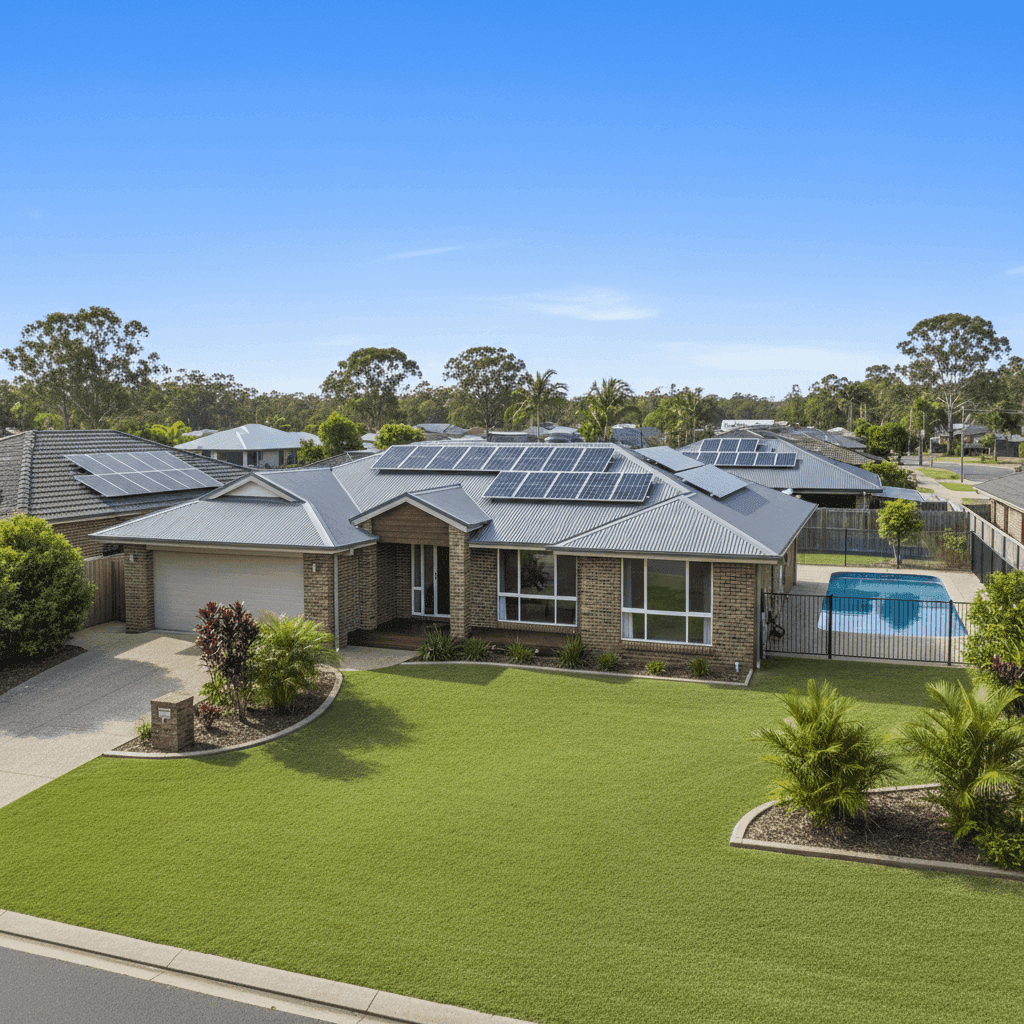
If you own a free standing home in Kelso, QLD 4815, you already know that getting the right home insurance isn't just a formality — it's a genuine financial safeguard in one of Australia's more weather-exposed regions. This article breaks down a real home and contents insurance quote for a three-bedroom property in Kelso, compares it against local, state, and national benchmarks, and offers practical guidance for homeowners looking to get the best value on their cover.
---
Is This Quote Fair?
The quote in question comes in at $3,664 per year (or $351 per month) for combined home and contents cover, with a building sum insured of $655,000 and contents valued at $30,000. The building excess is set at $2,000, with a separate $1,000 excess for contents claims.
Our price rating for this quote is FAIR — Around Average, which is a reasonable outcome for a property in this postcode. Here's why that matters: Kelso sits within the Townsville LGA, a region that insurers treat as elevated risk due to its cyclone exposure, flood history, and storm activity. Premiums in North Queensland are notoriously high, so landing near the middle of the local range is genuinely worth noting.
At $3,664, this quote sits between the suburb's 25th percentile ($2,649/yr) and the median ($4,004/yr), meaning roughly half of comparable Kelso properties are paying more. That's a solid position — not the cheapest on the market, but well clear of the upper end of the range.
---
How Kelso Compares
Understanding where your premium sits relative to the broader market is one of the most useful things you can do as a homeowner. Here's how this quote stacks up across different comparison points:
| Benchmark | Premium |
|---|---|
| This Quote | $3,664/yr |
| Kelso Suburb Average | $5,004/yr |
| Kelso Suburb Median | $4,004/yr |
| Kelso 25th Percentile | $2,649/yr |
| Kelso 75th Percentile | $6,007/yr |
| Townsville LGA Average | $7,340/yr |
| QLD State Average | $9,129/yr |
| QLD State Median | $3,903/yr |
| National Average | $5,347/yr |
| National Median | $2,764/yr |
A few things stand out here. The QLD state average of $9,129 per year is extraordinarily high — a figure heavily skewed by properties in extreme-risk areas across Far North Queensland and flood-prone zones. The state median of $3,903 is a far more representative figure, and this quote sits just slightly above it.
Compared to the national average of $5,347, this quote is about 31% cheaper — which is a meaningful saving. However, it's worth noting that the national median is $2,764, meaning that on a national scale, Kelso homeowners are generally paying above-median rates. This reflects the genuine risk premium that comes with living in a cyclone-declared zone in tropical Queensland.
You can explore more localised data on the Kelso suburb stats page, which draws on a sample of 47 quotes from the area — a reasonable dataset for a suburb of this size.
---
Property Features That Affect Your Premium
Every property is different, and insurers weigh up a range of physical characteristics when calculating your premium. For this particular home, several features are worth unpacking:
Cyclone Risk Area
This is the single biggest factor influencing premiums in Kelso. Properties in cyclone-declared zones attract a loading that can be substantial — insurers factor in the cost of potential structural damage from high winds, flying debris, and storm surge. There's no way around this if you live in the region, but it does make shopping around all the more important.
Double Brick Construction
Double brick walls are generally viewed favourably by insurers. They offer strong resistance to wind, fire, and impact damage compared to timber or lightweight cladding. This construction type may contribute to a more competitive premium relative to other homes in the area.
Steel/Colorbond Roof
Colorbond roofing is widely regarded as one of the better choices for cyclone-prone regions. It's lightweight, resistant to corrosion, and when correctly installed with appropriate fixings, performs well under high-wind conditions. Insurers in North Queensland often look at roof type closely, and Colorbond can work in your favour.
Slab Foundation & Tile Flooring
A concrete slab foundation provides stability and reduces the risk of subsidence or underfloor flooding. Combined with tile flooring, this home has a moisture-resistant profile that limits certain categories of water damage risk.
Swimming Pool
A pool adds to the insurable value of the property and may contribute a modest loading to the premium. It also introduces liability considerations, though these are typically covered under the building policy's legal liability section.
Solar Panels
Solar panels are increasingly common in Queensland and are generally covered under building insurance, but it's worth confirming with your insurer. Some policies include panels automatically; others treat them as an optional extra. Given the cost of a quality solar system, ensuring they're adequately covered is important.
Ducted Climate Control
Ducted air conditioning is a significant fixed asset and is typically covered as part of the building sum insured. At $655,000, the building cover here appears to account for these inclusions, but it's always worth reviewing your sum insured periodically to ensure it reflects current replacement costs.
---
Tips for Homeowners in Kelso
1. Review your sum insured annually Building costs have risen sharply in recent years. The $655,000 sum insured on this property may be appropriate today, but construction costs in regional Queensland can shift quickly. Use a building calculator or speak with a quantity surveyor to ensure you're not underinsured — a common and costly mistake after a major claim.
2. Cyclone-proof your home where possible Insurers can't ignore the risk, but some offer discounts for properties with cyclone-rated roofing, shutters, or other mitigation features. Investing in these upgrades may reduce your premium over time and, more importantly, reduce the likelihood and severity of damage.
3. Compare quotes before renewal A "fair" rating is good, but it's not the same as "best available." With 47 quotes in the Kelso sample ranging from $2,649 to $6,007+, there's clearly significant variation in what insurers are willing to charge for similar properties. Shopping around at renewal time is one of the most effective ways to keep costs in check.
4. Check what's excluded under storm vs. flood cover In North Queensland, the distinction between storm damage and flood damage matters enormously. Many standard policies cover storm but exclude flood, or offer flood cover as an optional add-on. Given Townsville's flood history, make sure you understand exactly what your policy covers before you need to make a claim.
---
Ready to Compare?
Whether you're reviewing an existing policy or shopping for cover on a new property, comparing quotes is the smartest first step. At CoverClub, you can get a home insurance quote tailored to your property in minutes — and see how it stacks up against what others in your suburb are paying. Don't settle for the first number you're given; the data shows there's real money to be saved by comparing.